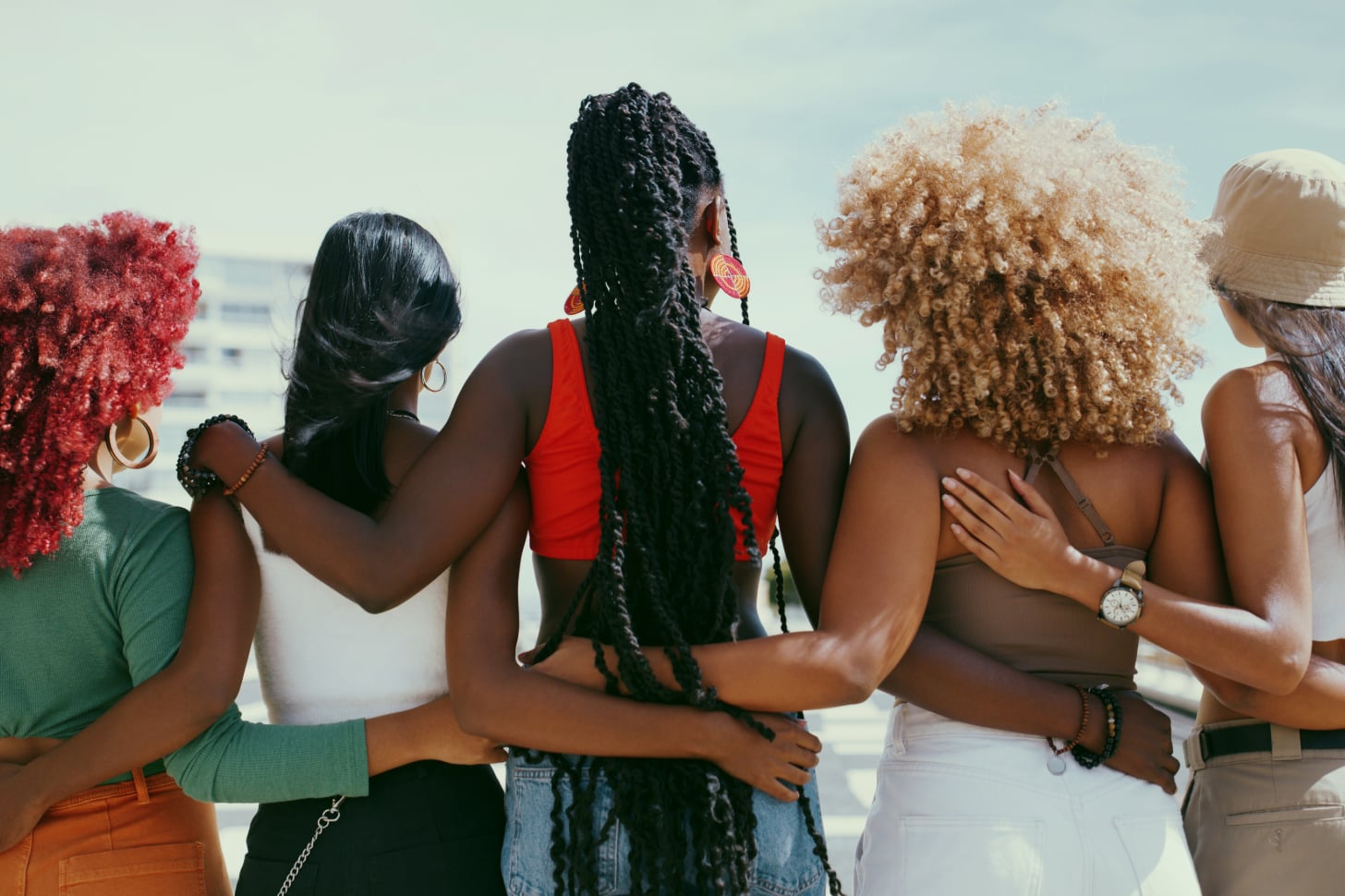
 There's an African proverb that says, "It takes a village to raise a child," and my village took that seriously. Before I even entered this world, my mother often reminds me that it was my great-grandmother and grandmother who cleaned our home in preparation for my arrival. They prayed over her pregnancy and over my life before I ever took my first breath. My grandfathers babysat me. My aunts cared for me before they had children of their own. Long before I understood what community meant, I was surrounded by people who quietly modeled it. Because of that, I've never questioned whether villages exist. I've questioned what happens to them once we grow up.
Like a lot of women, I thought adulthood would come with its own version of that same village. I thought mine would look like a combination of "Girlfriends," "Living Single," "Insecure," and "Sex and the City [1]." I imagined there would always be dinners after work, girls' trips, spontaneous phone calls [2], birthdays, weddings, babies, promotions, and somehow we'd all keep choosing one another through every version of ourselves. Instead, adulthood looked like calendar invites for dinner, catching up through eight-minute voice notes instead of Saturday morning coffee, and rescheduling the same girls' night three times before it finally happened. Somewhere between careers, breakups, businesses, moves, marriages, babies, grief, and simply growing up, my village disappeared, and I was angry about it. Lately there's been so much online discourse about how everyone wants a village, but nobody wants to be a villager and in many ways, I'd have to agree.
Because villages require something from us. They require inconvenience. They require us to sit through an hour of traffic to celebrate a friend's promotion; pick someone up from the airport after a long day at work; drive across town after a breakup [3] because they shouldn't have to be alone; babysit your friend's children so she doesn't have to pay for childcare; show up to the baby shower [4] even when you're quietly wondering if motherhood will ever happen for you; or spend your Saturday helping someone move instead of crossing things off your own to-do list. Sometimes, being a villager simply means choosing someone else's needs alongside your own, even when you don't always see the benefits.
In exploring the village dynamics, I spoke with three women in very different seasons of life: a wife and new mother who recently earned her PhD; a successful nurse navigating singlehood;and a divorced professional organizer rebuilding her village after the end of her marriage. I wanted to know what friendship had taught each of them about showing up, being seen, and what it actually takes to build — and sustain — a village in adulthood.
A Village Must Be Tended
Maintaining a village is one thing. Doing so while becoming a wife, a mother, moving to a new state, and earning a doctorate alongside your partner is another. But that's exactly what Courtney Clarke-Tracey, PhD accomplished. When asked how she did it, Dr. Clarke-Tracey uses a poignant metaphor: "I think of my village as a garden that I tend to. Seasons change, and gardens require different things in different seasons. There are seasons when everything blooms effortlessly, and there are seasons when you're simply watering roots you can't yet see. Both are acts of love that I actively choose to engage in because I care."
Each season, the garden yields different flowers or crops, Dr. Clarke-Tracey explains. "Becoming a wife reshaped me. Becoming a mother unraveled and remade me into a braver version of myself. Moving to a new state stretched the miles between what I regard as 'familiar' and forced me to learn more about what I need from my village. Earning my doctorate demanded long nights and quiet sacrifices that were hard as hell, especially while pregnant."
At the same time, none of those identities replaced the woman who loved and needed her people. "They simply asked me to be more intentional about how I show care and communicate my needs to those who care about me," Dr. Clarke-Tracey says.
What's important to remember as you're balancing multiple identities: intentionality doesn't have to be extravagant. More often than not, it looks like choosing your people in small, ordinary ways. Dr. Clarke-Tracey suggests simple acts like writing down the important dates that matter to your people, reaching out instead of waiting to be reached for, taking the trip for quality time with your homegirl — even if it's just to their house when it would be easier to stay home.
In other words, sustaining a village, "is about refusing to let life's additions become reasons for someone's subtraction," Dr. Clarke-Tracey says. "It's choosing, over and over again, to be there, even when 'here' looks different than it once did. People just want to know you're there."
Your Village Isn't Finished
Petulia Pierre, a registered nurse, offers another perspective, being the friend who often feels let down by their village. "Because I'm single and I have a more flexible work schedule, I'm usually the friend people call. 'Can you pick up my kids?' 'Can you do this?' 'Can you do that?' Throughout the year[s] I've shown up for birthdays, anniversaries, baby showers and holidays. I've celebrated everybody else's milestones. But when it came to mine — especially my birthday — I realized I wasn't always getting that same energy back."
Her advice for others feeling disappointment in your village: consider expansion. "Your village can't only be the people you've known since middle school, high school, or college," Pierre says. "People's lives change, and your community should be allowed to change too. Some of my strongest villages have come through work, through fitness, and through spaces where I've intentionally built relationships. Don't limit yourself to one friend group. Give yourself permission to build community wherever life takes you."
The Best Villages Evolve
For Rebekah Love, a professional organizer, when life took her to a place she never expected her village became crucial. Long before Love got married, she made a quiet promise to herself that sisterhood would remain a priority. When she married and later became a mother, those same friendships grew alongside her family. When her marriage ended [5], they became something else entirely.
"Those same friendships became my sister circle, my circle of counselors, coaches, and sometimes therapists. My friendships have always adapted with my needs, and vice versa. Me and my girlfriends always talk about how we love each other's souls because no matter how things change, I still see them."
Her divorce also revealed which relationships were rooted in who she was, rather than the role she occupied. "I also had some friendships that went with the marriage. What I learned is that some of those people were more attached to the version of me that was married, not necessarily the core of me." That's something she struggled with, but eventually learned to accept: "I realized I don't want to just connect with people during milestones," Love says. She wants to have a village she can build a life with — and vice versa.
Maybe that's the biggest mistake we make when it comes to curating community. We spend so much time searching for the right people that we've forgotten to ask whether we're becoming the kind of people someone else can build a life with. Villages and building community requires reciprocity. They require curiosity. They require grace. They require us to love people beyond the season they're in and to leave room for new friendships instead of expecting one friend — or even one friend group — to meet every need we'll ever have.
Perhaps that's what adulthood is asking of us. To stop measuring our friendships by how often we see each other and start measuring them by how intentionally we show up. It also asks us to rethink what a village is supposed to look like. Maybe we've been searching for one perfect circle when, in reality, we're allowed to build many. Unlike romantic love, friendship gives us permission to be expansive. Our village can include childhood friends, coworkers who become chosen family, fitness class [6] friends, volunteer work, parenthood, or the hobbies we discover later in life. We don't have to expect one person, or one group of friends, to carry every version of who we are becoming.
Maybe the village we've been yearning for isn't as far away from us as we think. So the next time you feel like asking yourself, "Where is my village?" Perhaps the question you should be asking is, "Who in my life needs me to be a better villager, and what kind of village am I building along the way?
Yasmine Jameelah [7] is a seasoned wellness journalist, editor, and community builder, and the founder of Transparent Black Girl, a groundbreaking wellness platform that has reached over five million Black women worldwide. Her insightful work and leadership have been featured in The New York Times, Essence, Popsugar, Coveteur, and Oprah Daily.