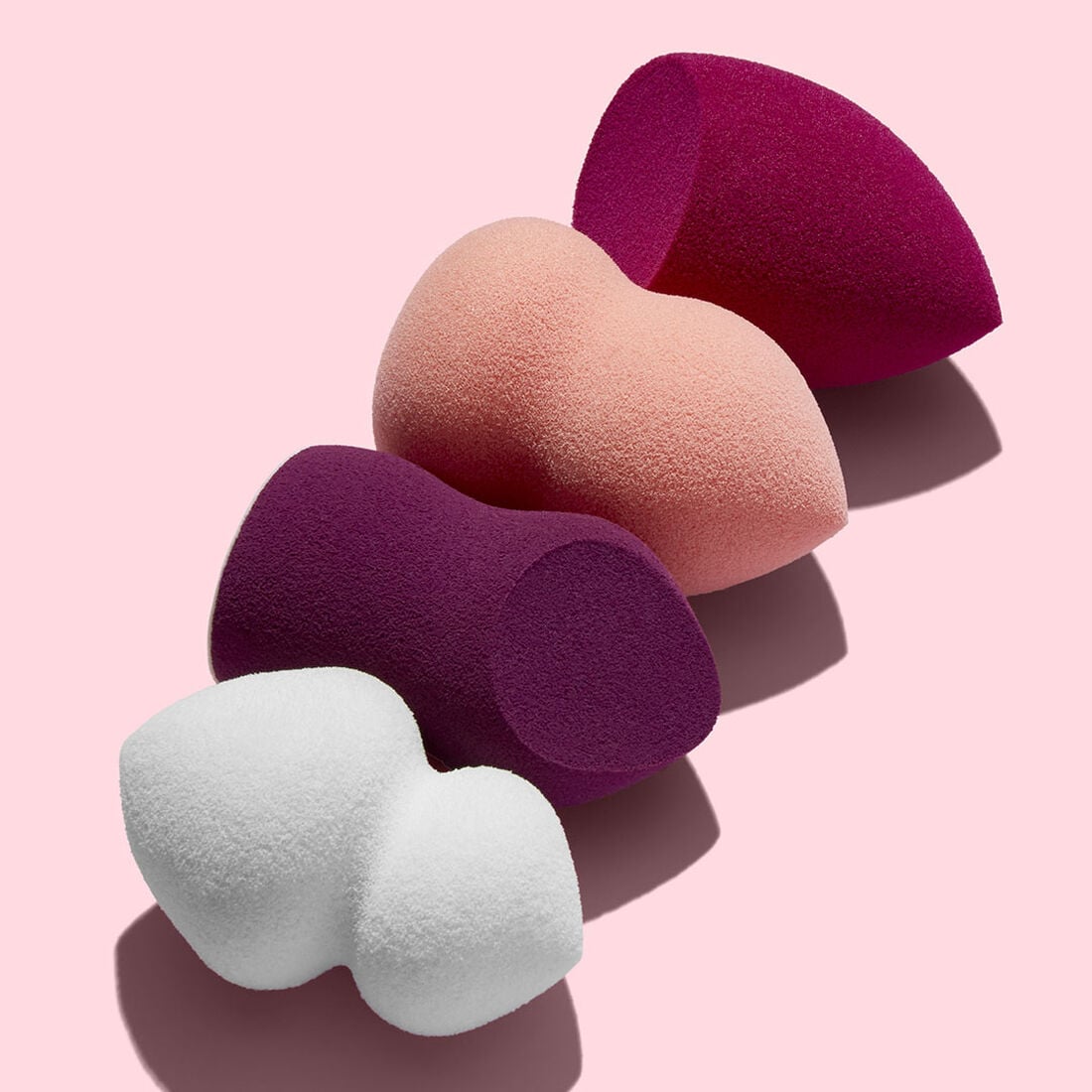
It's safe to say that the three most popular tools for applying foundation [1] are a foundation brush, a blending sponge, and your own fingertips.
I have always favored using a sponge. I can count on mine to create a sheer, natural-looking finish with just a little bouncing and a fuller-coverage look with a little more time and product. That being said, I will also admit that I haven't really given formal brushes or my fingertips a fair chance against my go-to sponge.
So, in the spirit of experimentation, I decided to road-test them all to see which I preferred for blending four very small pumps of foundation — one on each cheek, one on my forehead, and one on my chin. Ahead, my personal musings on each method.
Applying Foundation With a Sponge
For the record, I don't believe there is a tool that's the "best" for applying foundation. I think a lot of it comes down to personal preference and how you feel most comfortable blending. For me, even after this experiment, that is undeniably with a sponge, like the e.l.f. Cosmetics Blending Sponge [2] ($6).
I always apply the foundation directly to my skin using the product's pump or dropper and then use the sponge to blend. For this foundation study, I wet my sponge, squeezed out the excess water, and then used it to blend my foundation by continuously tapping it against my skin in circular motions. I usually only use two foundation pumps, so for this makeup look, the sponge delivered more of a medium-coverage finish rather than a sheer look. Still, I felt like my skin looked natural and dewy, and I didn't notice any lines of demarcation.

Applying Foundation With a Foundation Brush
Compared to a sponge, I felt like my foundation brush allowed me to target and conceal specific areas, especially those hard-to-reach ones like on either side of my nostrils, better than my sponge.
I was dealing with some redness and a pimple on my chin at the time, and my foundation brush allowed me to concentrate on covering up these areas before blending out and distributing the product around the other areas of my face. I also thought my foundation coverage appeared a little more opaque than what I experienced with the sponge.
From a cleanup perspective, I prefer brushes to sponges, as I think it's easier to effectively cleanse bristles of dirt, oil, and grime.
Overall, though, I still feel more confident in applying foundation without any rogue blending marks with a sponge. However, now that I've experienced the real benefits of using a foundation brush, I'd like to upgrade my tool kit with a product like the W3ll People Foundation Brush [4] ($20).
Applying Foundation With My Fingertips
I totally understand the appeal of using your fingertips to apply foundation. Other than washing your hands and putting away your products, there's absolutely no cleanup. This method allowed me to easily cover up hard-to-reach areas, but I found that I wasn't following a uniformed blending approach. Because of that, I noticed a few random splotches that needed some attention. I don't think I was distributing the product equally across my face either, and a ton of product ended up sticking to my fingers.
I think this method would have been more successful if I used less pumps or a more tinted moisturizer.