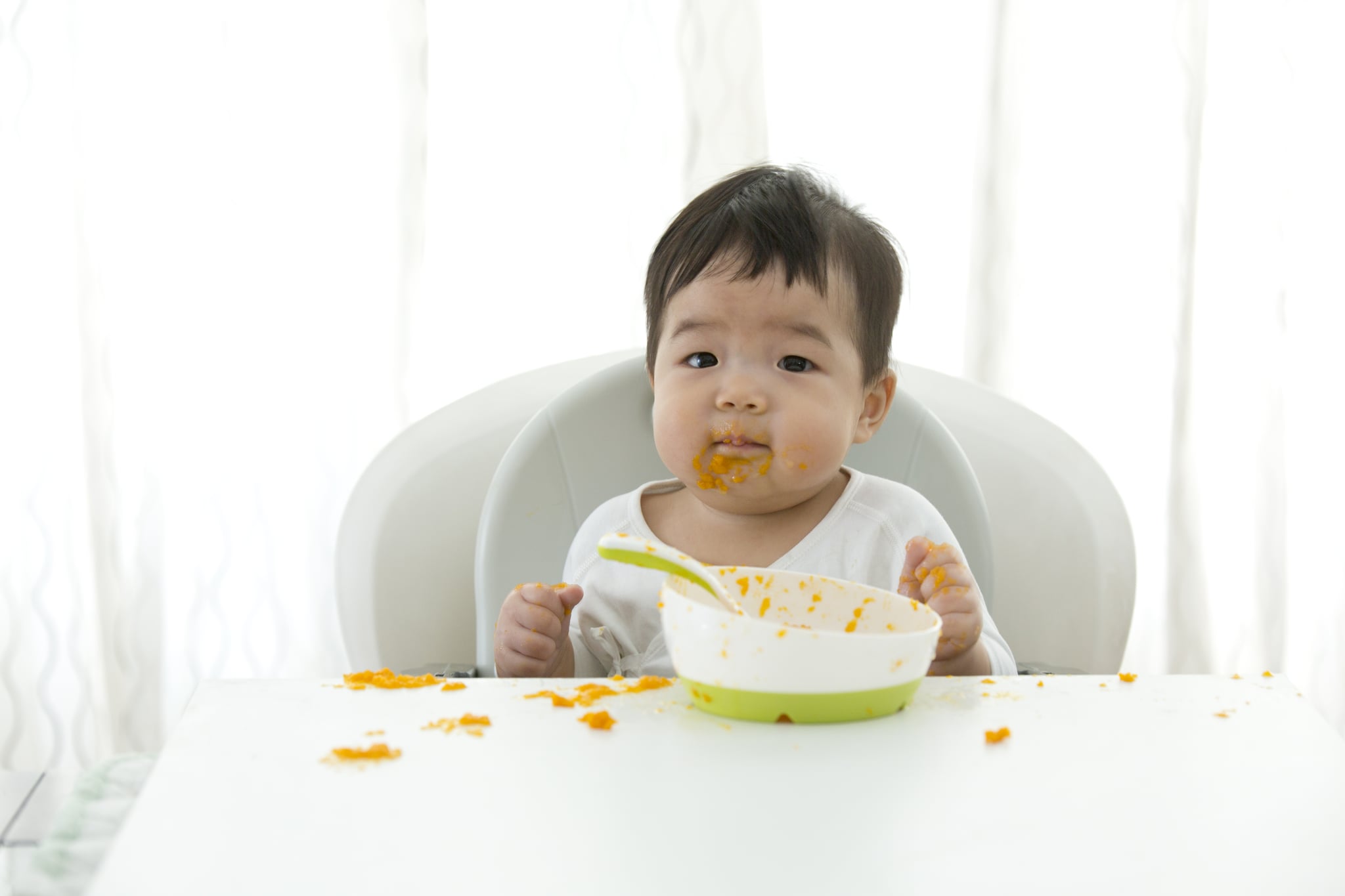
Once a baby is ready to start solid foods [1], families have three main options: feeding babies store-bought baby foods, following baby-led weaning guidelines, or making their own baby food from scratch [2]. Many families dabble in all three routes — but making your own baby food in particular can be intimidating, since you want to make sure you're making foods that are both nutritious and safe, which can be easier said than done.
Meal-prepping baby food can help reduce the time it takes to make baby food from scratch, making it a more manageable project. But it also requires some forethought and know-how. So we put together this handy guide that answers all your questions about meal-prepping baby food, from how to make homemade baby food to how to freeze it.
Why Should I Make My Own Baby Food?
Families choose to make their own baby food for various reasons. Some parents view homemade baby food as the most controlled option to provide fresh, tasty, and nutritious ingredients to their children. And with studies showing that some brands of store-bought baby food contain toxic metals [3], some may feel safer knowing that they control what goes into their baby's foods.
Cost can also be a huge motivator for people whipping out the blender and making a homemade puree: homemade foods are around 45 percent cheaper than their store-bought equivalents, according to the budgeting app Mint [4].
What's the Best Way to Prepare Homemade Baby Food?
Food safety is of utmost importance when preparing homemade baby food. Hands should be washed thoroughly, and all working surfaces and equipment should be scrubbed with antibacterial soap and hot water.
Once your space, equipment, and hands are squeaky-clean, the ingredients should be prepared appropriately. Produce should be scrubbed, peeled (if needed), and seeded (if seeds could pose a choking hazard). Bones, skin, gristle, and connective tissue should be removed if meats are included.
To cook the food, here are some simple tips from the University of Maine Cooperative Extension [5] to keep in mind:
- If you're boiling any ingredients, use a small, covered saucepan with the least amount of water possible. The less water used, the more nutrients will be retained in the food.
- When pureeing, you can use a blender, food processor, baby food grinder, baby food maker, spoon, or fork.
- If you need to thin the puree out, use a liquid such as breast milk, infant formula, or cooking broth to achieve the desired consistency. But wait to thin it out until you're going to serve it; don't thin it quite yet if you plan to freeze it first.
How you puree the food will depend on what texture you're going for, which depends on your baby's age and developmental stage. "Whether a baby tolerates the texture of pureed baby food depends on a number of different factors, including whether the baby is showing the developmental signs of readiness for solids. For younger babies starting solids closer to 4 months of age, smooth purees tend to work best to begin, while babies who are about six months of age or older can often tolerate both smooth and/or chunky purees with mixed textures," says Malina Malkani [6], RDN, the creator of the online course for parents, Safe & Simple Baby-Led Feeding [7] and author of the best-selling book, "Simple & Safe Baby-Led Weaning [8]."
"Babies each develop at their own rate but waiting beyond 10 months to progress to lumpier textures and finger foods is associated with less food acceptance and more feeding issues down the road, so try not to get stuck on one pureed texture during the process of starting solids," she adds. (A study in the Journal of Human Nutrition and Dietetics [9] bears that out.)
That being said, work closely with your pediatrician to assess your baby's readiness, and if a particular texture or food seems difficult for your baby to manage, it's fine to wait a week or so and then gradually reintroduce it as your baby's feeding skills develop.
How to Store Homemade Baby Food
If you made more baby food than what your little peanut is going to eat at a meal, you have a few options for how to store your baby food:
- In the refrigerator: Store the food in an airtight and clean container in the refrigerator at or below 40 degrees Fahrenheit. According to the USDA [10], when sealed in an airtight container, baby food can last for up to 24 hours (if the food contains egg yolks or meat) to 48 hours (if it's fruit and vegetables) in the refrigerator.
- In the freezer: To freeze baby food, parents tend to lean on ice cube trays as a vessel. Katie Thompson, a registered dietitian and founder of Square Baby [11], explains that you can "scoop pureed baby food into clean ice cube trays, cover them with plastic, and stack them in the freezer. Ice cube trays are ideal for creating individual, one-ounce servings so less food goes to waste. And you can mix and match one-ounce cubes for variety." Families can also explore two- to four-ounce containers with a resealable lid. She suggests choosing an option that is microwave, dishwasher, and freezer-safe if possible. The USDA states that baby food lasts up to one month in the freezer.
A safety note: don't store food that you've served to your baby but hasn't been finished, and potentially has your baby's saliva mixed into the food. If you're planning to serve some now and store some for later, "separate out a portion of homemade baby food from the [larger] batch with a clean spoon before serving it to your baby," Malkani suggests. If they don't finish anything from their eating container, toss what's left out.
How to Defrost Homemade Baby Food
"The best way to thaw baby food is to put tomorrow's food in the fridge and let it thaw overnight," Thompson says. The USDA notes that you can also safely thaw it under cold running water. Once it's thawed, use it within 24 hours (if it contains meat or egg) or 48 hours (if it's produce). If it ever smells or looks "off," trust your instincts and toss it. And never re-freeze thawed baby food.
How to Heat Homemade Baby Food
There are a few options for how to heat homemade baby food. "Many meals are best when warmed," says Thompson "Many ingredients like bone broth and coconut milk are naturally more solid when cold, so warming the meals makes them smoother and tastier."
Thompson explains two heating options for thawed baby food:
- Microwave: Put the desired portion into a glass or microwave-safe container and microwave for 10 seconds at a time. Stir (to eliminate hot spots), check the temperature, and microwave again if needed until the desired temperature is reached. Do not microwave the plastic containers.
- Stove: Put a glass container of baby food in a saucepan with shallow water (the water level should be about one-half to three-quarters up to the top of the jar/dish — don't submerge it). Slowly warm over low heat, stirring often.
Be sure to stir and test the temperature of food before feeding it to your baby, Thompson instructs. The food should be lukewarm before being served — remember that your baby's mouth is more sensitive than your own.