Whether you're in the market for a new trench or you've had the same one for over a decade, this classic coat is a piece that belongs in every woman's wardrobe [1]. The sleek style actually has a rich history that allegedly dates back all the way to the 1850s. Originally worn by army officers, it's now a look that every street style star keeps in their arsenal [2]. If you've ever wondered what the trench is all about (and why it has so many flaps and buckles), we've got you covered. Consider this your complete guide to the classic trench [3], so you'll know just what to look for when you're investing in the wardrobe staple. Then, shop out our favorite pieces for your wardrobe ahead.
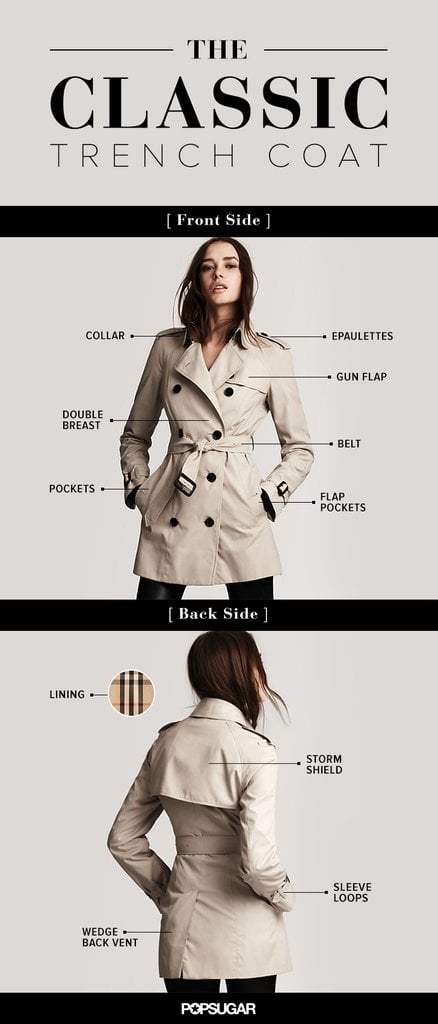
- Color: Classic trench coats tend to be khaki or beige, though the exact tone may differ. Make sure to try on both cool- and warm-colored coats to find the one that best matches your skin tone.
- Lining: A removable lining can be a must-have element if you're looking for a coat that can carry you through all seasons. The lining offers extra warmth during colder months, while removing it means you can keep cool when the temperatures begin to climb.
- Double Breast: Trench coats are traditionally double-breasted, which ties in to the coat's military history. Traditionally, the coat also features 10 buttons.
- Collar: A trench coat usually has a collar that can be turned up to keep nasty weather out of your face. Also, many collars have a clasp at the top to keep the sides together.
- Pockets: Pockets in trench coats are often accessible from both the inside and outside so the outer opening can be closed (traditionally by button) to prevent rain from getting in.
- Belt: Many trench coats feature a belt at the waist.
- Storm Shield: The extra fabric across the back allows the coat to be breathable, preventing wearers from having a sweaty back.
- Sleeve Loops: Trench coats often tighten at the bottom of the sleeves to prevent water from seeping in.
- Storm Patch: In original trench coats, this flap served a double purpose, to wick away more rain and also to protect from the kickback of a rifle.
- Material: Traditionally, a trench coat is made of a water-resistant cotton twill. Other variations include Gore-Tex or leather.
- Raglan sleeves: The sleeves of a trench coat extend fully to the collar, leaving a diagonal seam instead of one on top of the shoulder.
- Epaulettes: These shoulder straps come as part of the coat's military background. These tabs are often used to indicate rank. They also have a utility purpose for securing items such as gloves.
- Length: Trench coats vary in length from long — hovering around the ankle — to shorter thigh length.
- D Rings: Coats featured small rings for attaching items to carry along like a canteen.
Additional reporting by Aemilia Madden
Everything You Need to Know About a Trench Coat
Everlane The Drape Trench Coat

Choose a classic style like this Everlane The Drape Trench Coat [4] ($138).
Zara Trench Coat

For a pop of color, try this Zara Trench Coat [5] ($100).
Lauren Ralph Lauren Gingham Double-Breasted Trench Coat
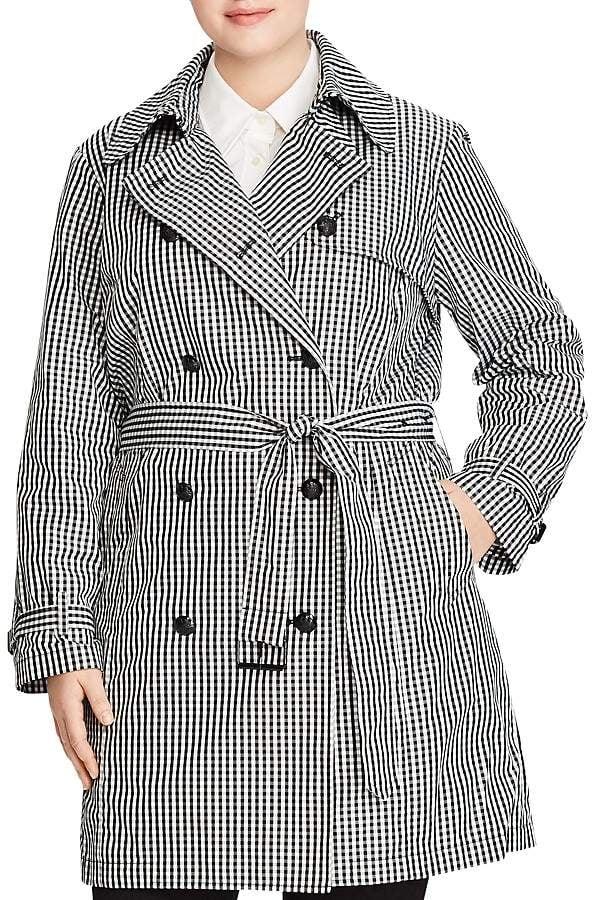
For a fun print, try this Lauren Ralph Lauren Plus Gingham Double-Breasted Trench Coat [6] ($255).
Monki Vinyl Trench Coat
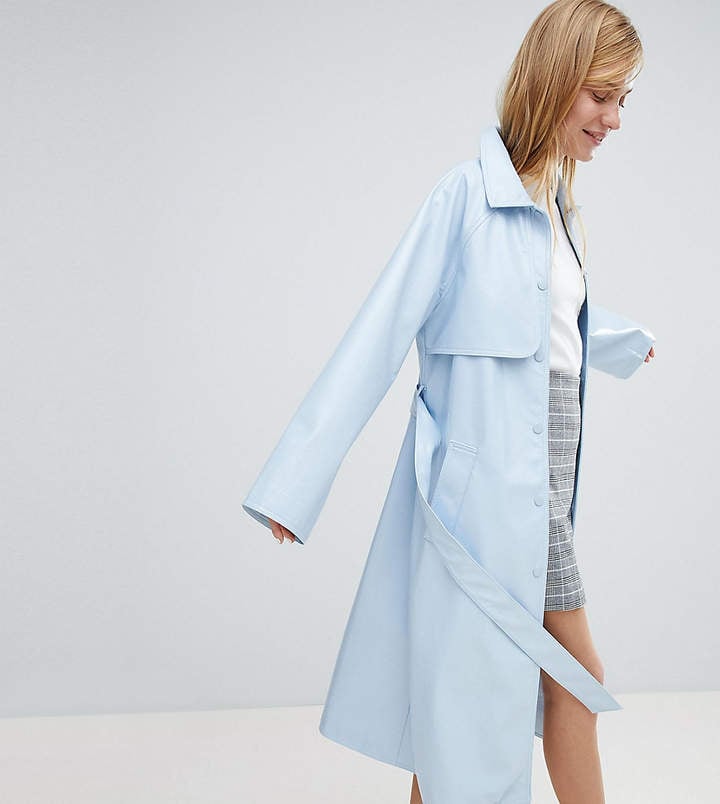
How pretty is this sky blue Monki Vinyl Trench Coat [7] ($79)
Tibi Drape Twill Trench
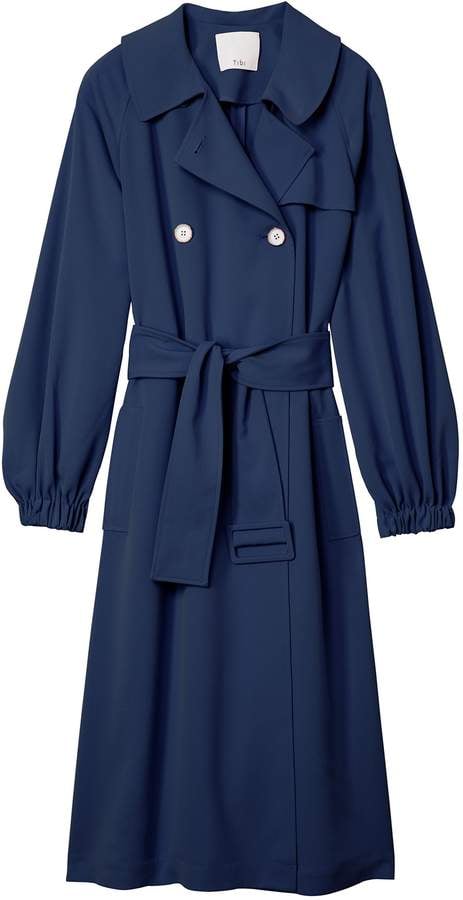
This Tibi Drape Twill Trench [8] ($750) is a elegant twist on a classic.
Asos Crepe Duster Trench
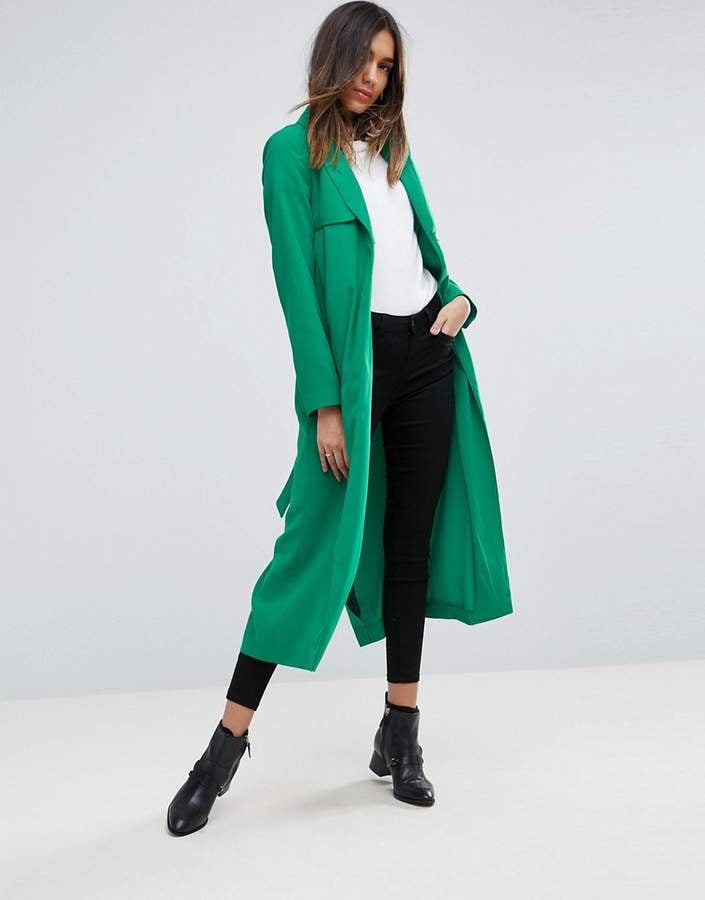
Stick out in a sea of boring coats in this emerald green Asos Crepe Duster Trench [9] ($41, originally $103).
Gucci Roses Print Leather Trench Coat

There's nothing boring about this Gucci Roses Print Leather Trench Coat [10] ($7,900)
City Chic Classic Belted Trench Coat
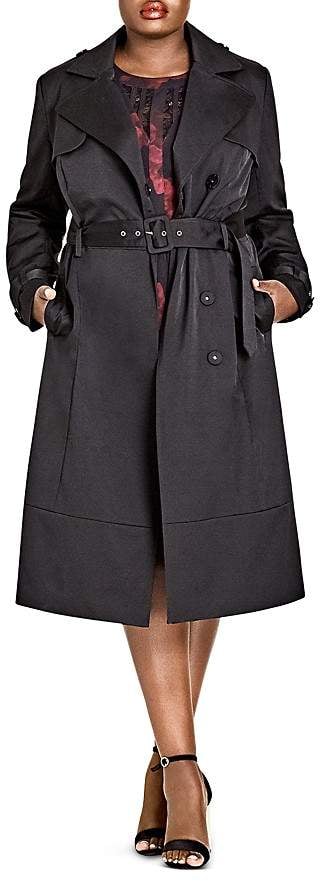
Cinch in your waist with this City Chic Classic Belted Trench Coat [11] ($149).
On Parle De Vous Fevrier Trench

Style this Parle De Vous Fevrier Trench [12] ($197) with a pair of jeans and heels.