Most sex-ed programs cover the basics of conception [1], but when it comes to ovulation, many are left in the dark. And even if you were lucky enough to learn about ovulation in school, it's typically not covered in great depth. Fast forward to when ovulation becomes a more important part of your life, and you might find yourself scrambling to find reliable information on the subject. Thankfully, we've got you covered.
Whether you're actively trying to conceive [2], looking to avoid conception, or just curious to learn more about your body, it's important to understand ovulation and the role it plays in fertility [3]. To dive deeper, we asked experts to answer some of the most frequently asked questions about ovulation, including when it happens, how long it lasts, and how to track it. Read on to learn everything from the signs and symptoms of ovulation, to the way it impacts pregnancy.
Experts Featured in This Article:
Christine Greves [4], MD, is a board-certified ob-gyn at the Winnie Palmer Hospital for Women and Babies.
Loriana Soma [5], MD, is an ob-gyn at the Ohio State University Wexner Medical Center.
Asima Ahmad [6], MD, MPH, FACOG, is a reproductive endocrinologist and infertility specialist and chief medical officer and cofounder of Carrot Fertility.
What Is Ovulation?
Let's start with the basics. According to the American College of Obstetricians and Gynecologists [7] (ACOG), ovulation is what happens when one of your ovaries — the pair of glands inside your pelvis — release an egg. Typically, ovulation happens every month as part of the menstrual cycle, says ob-gyn Christine Greves, MD. If you ovulate and the egg is fertilized, it can result in a pregnancy. But if you ovulate and the egg isn't fertilized, you will typically have a period afterward, Dr. Greves explains.
When Does Ovulation Happen?
Every person is different, so it's hard to say exactly when ovulation will happen for everyone. "Women typically ovulate 14 days before the next cycle starts," says ob-gyn Loriana Soma, MD. "However, this can vary slightly — from 12 to 16 days." As a rough estimate, the average menstrual cycle is 28 days, so ovulation would usually begin on day 14. "If the cycle is longer, ovulation is later," Dr. Sima says. "For example, in a 32-day cycle, ovulation would be around day 18." After ovulation (when the egg is released) the egg remains viable for fertilization for approximately 12 to 24 hours, per the Cleveland Clinic [8].
Signs and Symptoms of Ovulation
The signs of ovulation also vary from person to person. "For some individuals, there are no apparent signs of ovulation," says reproductive endocrinologist Asima Ahmad, MD, MPH, FACOG. According to Dr. Ahmad some of the most common signs and symptoms include:
- Bloating
- Breast tenderness
- Increased cervical mucus
- Change in the appearance of cervical mucus (may resemble egg whites)
- Pain or cramping (known as mittelschmerz [9])
Ovulation and Pregnancy
Ovulation is an important first step in getting pregnant. If you don't ovulate, you can't conceive without reproductive assistance, Dr. Greves says. Here's what the process of getting pregnant without reproductive assistance looks like, according to the ACOG [10]:
- An egg is released during ovulation.
- The egg moves into one of the fallopian tubes.
- The egg and sperm meet in the fallopian tube.
- The egg and sperm join, fertilizing the egg.
- The fertilized egg moves down the fallopian tube and into the uterus.
- The egg attaches to the uterine wall to grow during pregnancy.
How to Track Your Ovulation
There are many different ways to track your ovulation, including blood tests and an ultrasound conducted by your doctor (and a reminder that you should speak with a healthcare professional for any personalized medical advice). That said, the following can also help you track your ovulation at home:
- Quick Math: If you're someone who has predictable cycles and menstruates on the same day every month, Dr. Ahmad says you could start tracking your ovulation by counting backwards 14 days from the start of your period. If you're someone who has 31-day cycles, this may occur on day 17, she says. "In most cases, this simple method may work for tracking ovulation," Dr. Ahmad explains.
- Cervical Mucus: Cervical mucus tends to increase when you're fertile and "has more of a clear, stretchy, and 'egg white' appearance," Dr. Ahmad says.
- Basal Body Temperature: Basal body temperature is your lowest body temperature at rest. This temperature will fluctuate slightly throughout your menstrual cycle, rising when you ovulate. Tracking it can help "predict ovulation in future cycles," Dr. Ahmad says. In order to track your basal body temperature, you need to check your temperature at the same time every day, when you wake up and before you do anything. "Once someone ovulates, their temperature rises by at least 0.5 degrees Fahrenheit and will stay elevated for a few days," Dr. Ahmad says. According to the Mayo Clinic [11], you are most fertile during the two to three days before your temperature rises.
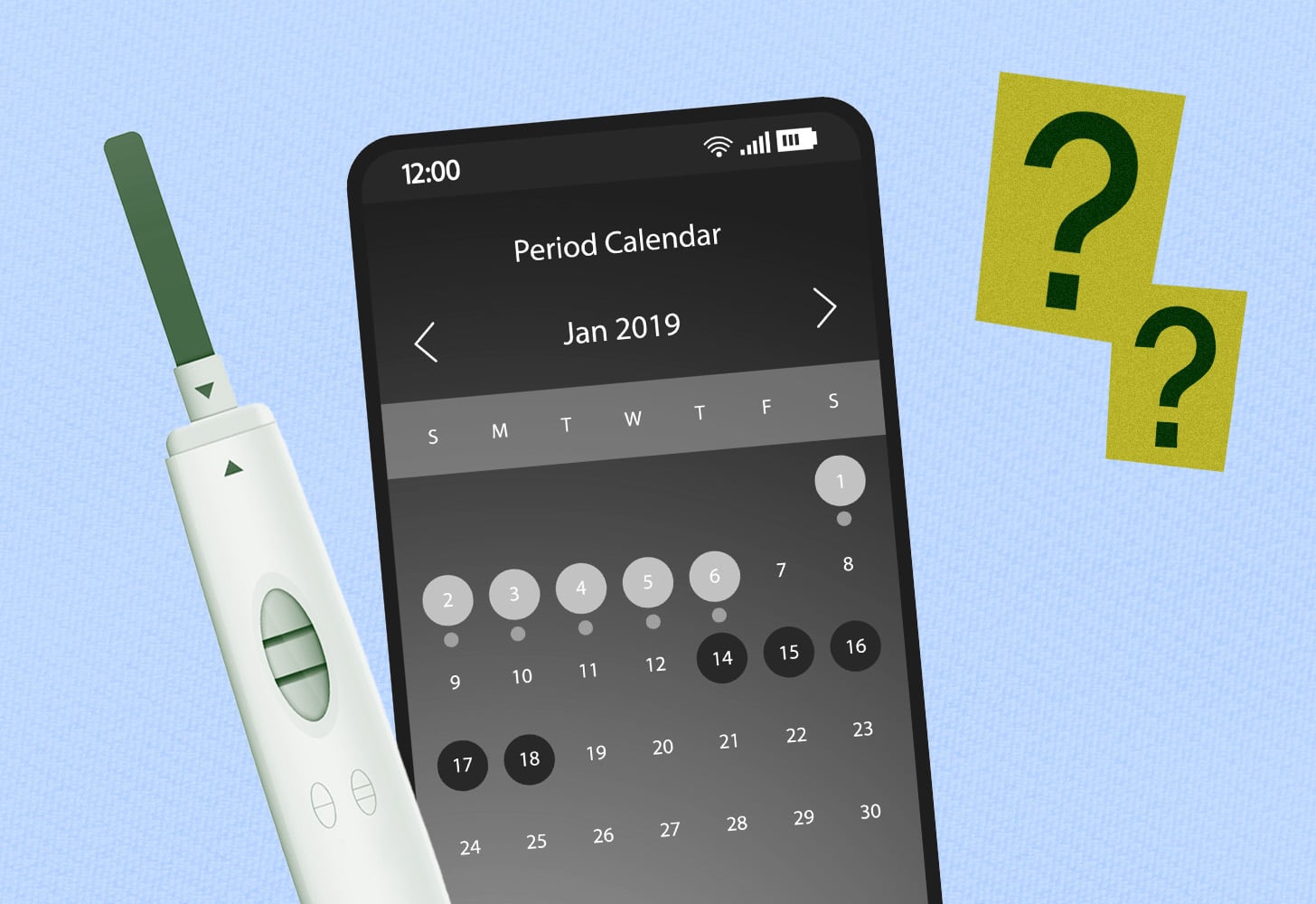
- Pee Strips: Dr. Greves says these tests typically track the levels of luteinizing hormone in your urine (aka the chemical responsible for triggering certain reproductive processes, like ovulation). You can pee on them to see if you're ovulating or to track your cycle.
- Smart Ovulation Tracking: At-home wearables — like ovulation-tracking wristbands — track metrics like your heart rate, skin temperature, and respiratory rate to try to predict when you'll ovulate, Dr. Ahmad says. They're not 100 percent reliable, but they can give you a better idea of timing. Fertility and period-tracking apps may also be able to help in a similar way.
How Do Ovulation Kits Work?
Ovulation test kits [12] are designed to let users know when there's a surge of luteinizing hormone (LH), Dr. Soma explains. "In a normal menstrual cycle, the LH hormone rises 24 to 36 hours before ovulation occurs," she says. "Patients start testing the LH level a few days before expected ovulation, around day 10 in a 28-day cycle." These urine tests usually involve a strip with a control line that's dark and a test line. "The test line should be as dark or darker than the control line when the test is positive, indicating the LH surge has occurred," Dr. Soma says.
If you get a positive result and are trying to conceive, "I recommend having intercourse that day," Dr. Greves says. Ovulation and its role in pregnancy can be a little confusing, especially if you don't have regular cycles. If you're unsure of when you ovulate and you're trying to conceive, talk to your doctor for more information. "We're here to help," Dr. Greves says.
— Additional reporting by Chandler Plante
Korin Miller [13] is a writer specializing in general wellness, health, and lifestyle trends. Her work has appeared in Women's Health, Self, Health, Forbes, and more. When she's not writing, you can find her chasing around her four young kids and drinking too much coffee.
Chandler Plante [14] (she/her) is an assistant health and fitness editor for PS. She has over four years of professional journalism experience, previously working as an editorial assistant for People magazine and contributing to Ladygunn, Millie, and Bustle Digital Group.
