Book clubs already involve getting together with friends, eating, and drinking [1], so why not make it the focus? As a member of a cookbook club, you'll become a better cook, actually put your collection of cookbooks to good use — raise your hand if you have at least a few on your shelf that you've yet to cook from — and (most importantly) have fun.
What's a Cookbook Club?
Like with a book club, members meet to discuss a specific book, in this case a cookbook, and enjoy each other's company over libations and nibbles. Unlike with a book club, where the host is often in charge of providing much of the food and drink, meetings are a potluck meal; the dishes come from the cookbook in question. Members don't have to be serious, experienced cooks; enthusiasm for cooking is more important, so don't be afraid to extend invitations to both that co-worker who's always regaling officemates with the last killer meal they cooked and also your best friend who is just beginning to feel comfortable in the kitchen.
A Few Logistical Suggestions
- Meet monthly or every other month: Having a set meeting date (the first Sunday of every month at 6 p.m., for example) can help eliminate endless emails trying to find a time that works for all.
- Make the gathering a potluck: Ideally, each member should cook a couple recipes from the cookbook before meeting so that they get a good feel for it. Each member should bring one dish to the potluck meeting. A shared Google spreadsheet is an easy way to ensure that people don't double up on the recipes they bring to the potluck. (Everyone fills out what they'll bring!)
- Take turns hosting: Like with any potluck, the host is generally in charge of the main dish for logistical reasons (especially if it is something that won't reheat well or isn't portable), though this isn't a hard and fast rule. Some members might not have the space to host or be comfortable doing so, but if possible, it's great to take turns.
- Group size: A good amount of members is how many you'd invite to a dinner party, four to 10. Larger groups do exist, but it's more challenging logistically, both in finding a time to meet and in having enough space to host.
- Ask members to take brief notes on the recipes they tried: They don't have to be detailed, but it's good to know if a recipe was a must make or a total flop, if they substituted or added any ingredients, if it's good for leftovers, etc.
Money-Saving Tips
- Buying a new cookbook every month (or every other month) and cooking from it can get pricey; many cookbooks are available at your local library or can be shared among members (photocopy recipes as needed).
- If cooking from an ingredient-heavy cookbook (particularly those for foreign cuisines), it can be helpful to go shopping with a friend in the club and split up common pantry ingredients like spices and condiments. Alternatively, a market that sells bulk spices and other ingredients is a great place to shop, since you can get just the amount needed for a recipe.
Cookbook Ideas (and Types) to Get You Started
A buzzy cookbook of the moment:
- Food52 Genius Recipes: 100 Recipes That Will Change the Way You Cook [2] by Kristen Miglore
- NOPI: The Cookbook [3] by Yotam Ottolenghi and Ramael Scully
- Near & Far: Recipes Inspired by Home and Travel [4] by Heidi Swanson
- Thug Kitchen Party Grub [5] by Michelle Davis and Matt Holloway
A classic:
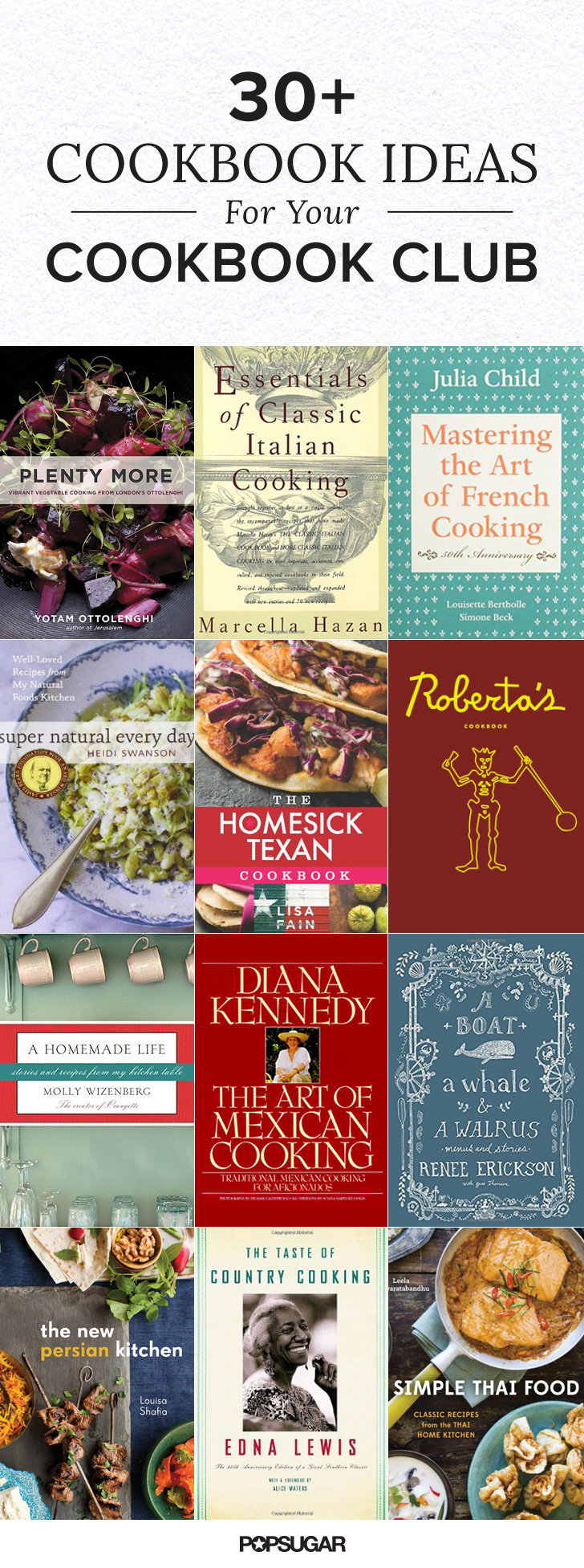
- Essentials of Classic Italian Cooking [6] by Marcella Hazan
- The Silver Palate Cookbook [7] by Sheila Lukins and Julee Rosso
- Mastering the Art of French Cooking [8] by Julia Child, Louisette Bertholle, and Simone Beck
- James Beard's American Cookery [9] by James Beard
- The Taste of Country Cooking [10] by Edna Lewis
An international cookbook:
- Simple Thai Food: Classic Recipes From the Thai Home Kitchen [11] by Leela Punyaratabandhu
- The New Portuguese Table [12] by David Leite
- Couscous and Other Good Food From Morocco [13] by Paula Wolfert
- The New Persian Cookbook [14] by Louisa Shafia
- Land of Plenty: A Treasury of Authentic Sichuan Cooking [15] by Fuchsia Dunlop
- The Art of Mexican Cooking [16] by Diana Kennedy
A regional American cookbook:
- The Texas Food Bible: From Legendary Dishes to New Classics [17] by Dean Fearing
- The New Midwestern Table [18] by Amy Thielen
- My New Orleans: The Cookbook [19] by John Besh
- The Lee Brothers' Southern Cookbook [20] by Matt and Ted Lee
- Chez Panisse Vegetables [21] by Alice L. Waters
A vegetarian or special diet cookbook:
- Super Natural Every Day: Well-Loved Recipes from My Natural Foods Kitchen [22] by Heidi Swanson
- Nom Nom Paleo: Food For Humans [23] by Michelle Tam and Henry Fong
- Eat Your Vegetables [24] by Joe Yonan
- Yummy Supper: 100 Fresh, Luscious, and Honest Recipes From a Gluten-Free Omnivore [25] by Erin Scott
- Vegetarian Suppers From Deborah Madison's Kitchen [26] by Deborah Madison
A blogger cookbook:
- A Homemade Life: Stories and Recipes from My Kitchen Table [27] by Molly Wizenberg
- The Smitten Kitchen Cookbook [28] by Deb Perelman
- Joy the Baker Homemade Decadence: Irresistibly Sweet, Salty, Gooey, Sticky, Fluffy, Creamy, Crunchy Treats [29] by Joy Wilson
- My Paris Kitchen: Recipes and Stories [30] by David Lebovitz
- The Homesick Texan Cookbook [31] by Lisa Fain
A restaurant cookbook:
- A Boat, a Whale, and a Walrus: Menus and Stories [32] by Renee Erickson and Jess Thomson
- The Zuni Cafe Cookbook: A Compendium of Recipes and Cooking Lessons From San Francisco's Beloved Restaurant [33] by Judy Rogers
- Roberta's Cookbook [34] by Carlo Mirarchi, Brandon Hoy, Chris Parachini, Katherine Wheelock
- Sunday Suppers at Lucques: Seasonal Recipes From Market to Table [35] by Suzanne Goin and Teri Gelber
- Momofuku [36] by David Chang and Peter Meehan