Since Inauguration Day [1], we've endured an onslaught of legislative, rhetorical, and cultural shifts undermining the practice of diversity, equity, and inclusion. Federal employees have been fired, policies have been dissolved, national programs have been suspended, schools have been defunded, and companies have been threatened. From the removal of books [2] from our schools to the stripping of historic Black figures from our national park websites, all of this has left many of us with whiplash. But most of all, it's left most of us wondering, "What can I do?"
Even as a DEI strategist and racial justice practitioner who's been invited to work with global brands from Lululemon [3] and Burton to The University of Texas and the World Economic Forum, I have found myself overwhelmed, exhausted, and discombobulated. Have the thousands of programs we've built, articles we've written, and protests we've marched in been in vain? How do we respond to such an affront on our humanity, dignity, and civil liberties? How do we navigate this moment with hope and meaningful action?
Well, in the words of Sen. Cory Booker, 18 hours into his historic 25-hour no-bathroom break filibuster [4], "These are not normal times in our nation. And they should not be treated as such. . . . The threats to the American people and American democracy are grave and urgent, and we all must do more to stand against them." Sen. Booker's words offer us a bold invitation, noting that "moments like this require us to be more creative or more imaginative, or just more persistent and dogged and determined."
We all have agency in being the architects of a new reality.
But what does that mean for people working in corporate spaces with little agency, for those of us struggling to purchase the week's groceries, and for many of our communities enduring the ramifications of harmful legislation? What does "standing against" look like tangibly and practically, when it may be difficult or dangerous to do so? I want to be careful not to offer empty platitudes or pretend to have any certain solutions, but I hope I can create space for renewed intentions and imagination.
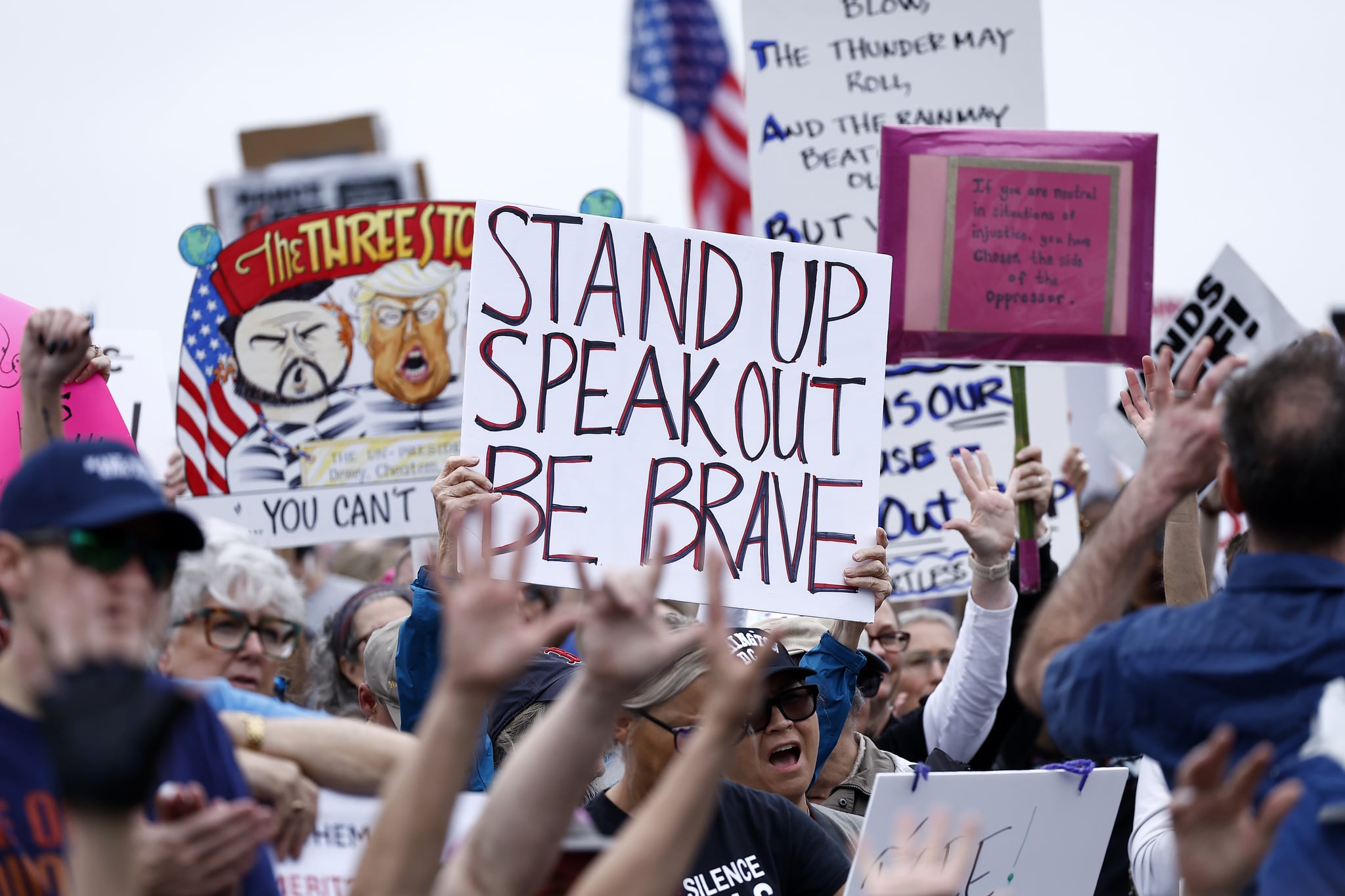
The call to actively dismantle systemic racism and oppression is not merely a response to how long a hashtag remains in our Instagram or TikTok feed, nor complete after our participation in a protest march (like the well-intentioned but perhaps underwhelming "Hands Off" protest [5]) in April). No, business leaders and consumers are being called to move beyond the intellectualization or performance of DEI to actively disrupt oppressive systems, and this will require moving your investment from merely a company-wide book club or the updating of language on your website to intentional decision-making that alters our individual and collective practices, processes, and paradigms.
Each of us must hold ourselves, the organizations we influence, and the spaces we belong to accountable. Let us remember that we all have agency in being the architects of a new reality and the storytellers of a new story. So, let's consider the following practices in whatever space you occupy.
Corporate Money
Money talks. Where you shop and what you choose to buy matters. In fact, it's one of your most powerful tools of resistance. In a country predicated on capitalism, how we choose to invest our money is a direct reflection of our willingness to support, protect, and amplify marginalized voices. It may take more time and thoughtfulness when you purchase your next pair of jeans, go grocery shopping, or are on the hunt for that morning cup of coffee (as a reminder, it shouldn't be from Starbucks), but it is an everyday practice that can shift attitudes and spur action. Here some practices to consider:
- Boycott brands that have rolled back or dissolved their DEI efforts [6] and do your research around brands that have been silent. This includes subscriptions, streaming services, and healthcare products.
- Show love for brands that have doubled down on their commitment to equity and inclusion [7]. Not just with your dollars, but by amplifying them in your social circles and on social media.
- Be a conscious consumer. Political power is fed by consumerism and capitalism; if we slow down our spending, we disrupt the cycle. Ask yourself, do you really need it? And if you do, can you thrift it, purchase locally, or support a BIPOC-owned brand [8]?
Cultural Memory
One of the most impactful tactics of systemic oppression is cultural erasure and the manipulation of collective memory. And with an administration aiming to erase the stories of heroes like Harriet Tubman, Jackie Robinson, the Tuskegee Airmen, and more from government websites and institutions, "we the people" are the last line of defense. How can we individually protect the integrity of our collective stories?
- Explore how you can encourage your workplaces, institutions of learning, and communities of faith to share stories of marginalized identities beyond inflection points, holidays, campaigns, and annual reports.
- Share the microphone! Ask yourself, who is telling the stories in your sphere of influence? Sometimes the most meaningful action we can take is elevating other voices. From weekly staff meetings and board rooms to the event speaker or brand ambassador who gets to tell the story, figure out how you can empower a new story in the intimate and public spaces you occupy.
Collective Movement
We must remember that dismantling oppressive systems — racism, capitalism, patriarchy, and colonialism — isn't just about policy change and political power; it's also about changing our social paradigms, cultural practices, and individual postures of action. What are we willing to cede: comfort, convenience, conditioning? What are we willing to leverage: power, position, privilege?
- While echo chambers can be comforting and reassuring in a time of chaos and hateful noise, it can also undermine the work of equity. We can take simple but intentional steps to expand our understanding and deepen our posture of empathy to inform our resistance. Diversify the voices that inform your TikTok FYP. Expand the news sources that you reference for legislation or pop culture updates — whether that's online outlets or Instagram accounts. We must build empathy as a practice of equity.
- I wholeheartedly believe in the power of social media as space for connection, disruption, and elevation. But social media is not the work; it's a tool to serve our individual action and collective movement. So the challenge before us is to each move our engagement beyond the digital space and build on the ground. As the weather gets warmer, I urge you to explore the art of hosting, neighboring, and gathering. Host folks at your apartment for dinner to share ideas, imagine, and instigate change together. Celebrate Juneteenth beyond a picnic and parade; instead, invest in community action, perhaps by volunteering to register folks to vote.
Despite the continued suppression and oppression that is so intrinsic to the soil of this country, we demonstrate in each century that we won't settle for despair. We must continue to ask ourselves: How can we be purveyors of "all men are created equal"?
And can I let y'all in on a little secret? I am not scared that the letters of DEI are being villainized or eradicated. Because that is how propaganda works — it distorts truth, disguises meaning, and instills fear. No matter the terminology (DEI, CRT, or racial reconciliation), the value, the work, the impact and necessity of equity remains. The truth is, we never asked for labels (DEI), we asked for liberation. We never asked for programs, we asked for people power. We never asked for new words, we asked for a reimagined world, where all voices are honored, all stories matter, and justice prevails.
No matter what those sitting in the White House or in the halls of Congress choose to call it today, tomorrow, or five years from now, the need for community care persists, and so does the call for each of us to uniquely take up space to resist.
Virginia A. Cumberbatch [9] is a racial justice educator, writer, and creative activist and the CEO and cofounder of Rosa Rebellion, a production company for creative activism by and for women of color. She's a graduate of Williams College and the University of Texas at Austin's Lyndon B. Johnson School of Public Affairs and is the author of "As We Saw It: The Story of Integration at the University of Texas at Austin."