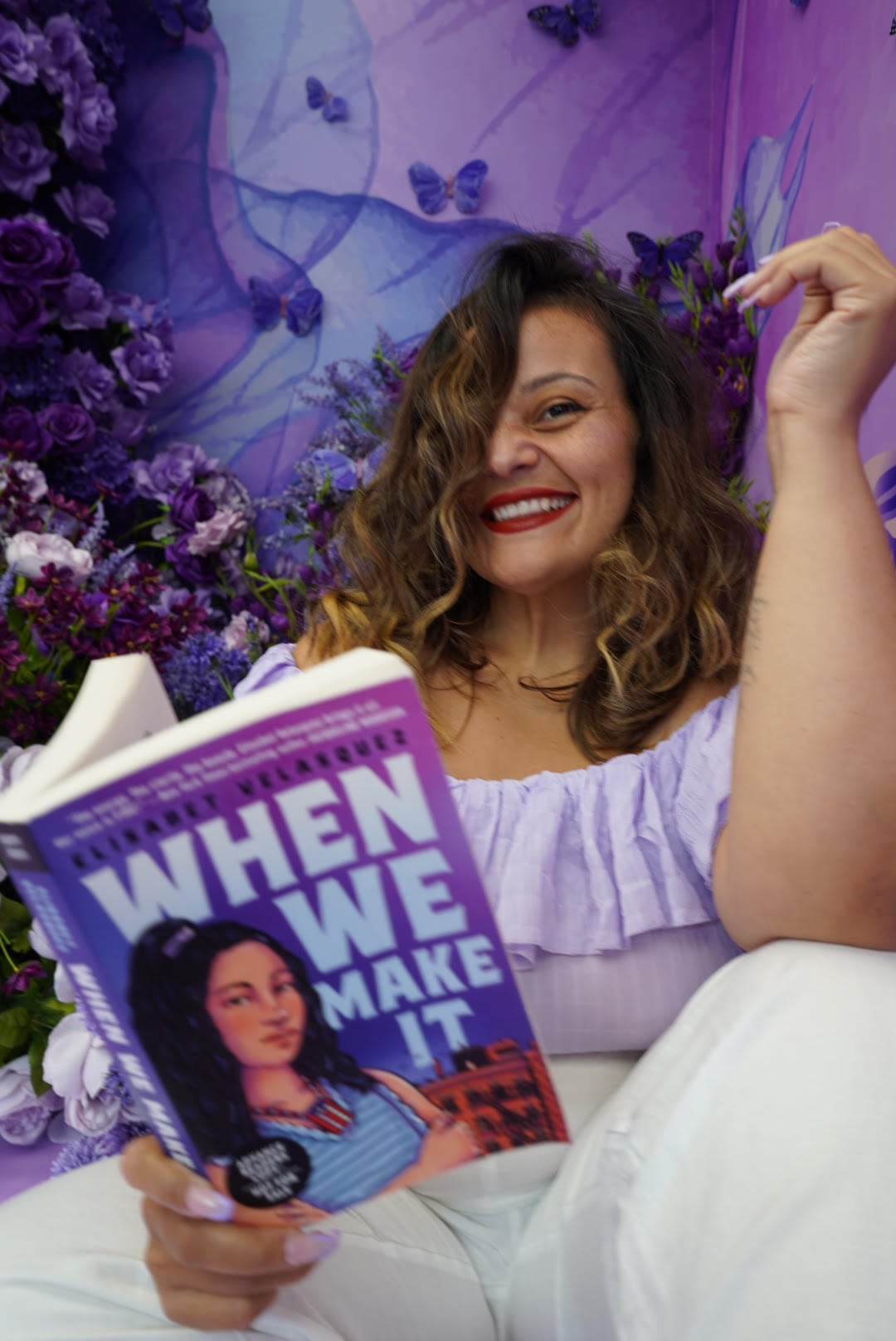
Adding to the already-proud Nuyorican and Latinx literary world [1], poet Elisabet Velasquez has written her very first novel, When We Make It, which is now available where books are sold [2] and in audiobook [3] form.
The story is about a 14-year-old Puerto Rican girl named Sarai, whose insightful perspective illustrates the trials of her personal life against the backdrop of crime, drugs, and poverty in the 1990s in Bushwick, Brooklyn. This isn't, however, an unfamiliar story. It's a story we've heard many times in our families, in our schools, and even on the news. Life is hard, and pulling ourselves up out of difficult situations is even harder.
Sarai witnesses and experiences the types of things that children shouldn't, like housing and food insecurity [4] along with abuse and physical danger. She also bears the burden of witnessing her mother's mental health [5] decline, but what Sarai never loses sight of is hope, something that Velasquez said she wrote into the novel intentionally because of who she envisioned her reader to be — young girls like Sarai.

Even though Sarai is loosely based off of Velasquez's own personal experience, she said it was an opportunity to tell her story but also do things differently. "This book actually started off as a memoir and I was stuck. I was writing it in hindsight, talking as Elisabet now about Elisabet back in the day. . . . I don't think younger me really ever got the chance to talk, and that's when it hit me to change the perspective. Changing that perspective changed the story, and I decided to write it in fiction. I feel like there was a freedom there to make a lot of choices and to add a lot of hope. Because my life is way more dismal," she laughed.
She also admitted that the novel might seem really sad to some but hopeful to others depending on their own experiences. Sarai handles life with a sense of humor to accompany her sharp observations about race, her changing body, the Pentecostal church, colonialism, and her Puerto Rican identity.
Velasquez also said that although younger Elisabet probably wouldn't have made the same choices as Sarai, they definitely would have been friends. "I think that she and I would've been really good friends. I think that we would've bonded a lot and would have been each other's support system," Velasquez added. In a way that's how the book feels, like a friend telling you about her life as she walks the line between pain and self-discovery. Or, as Sarai puts it, "trying to find good news on a bad news day."
Sarai's honest and at times heartbreaking narrative makes it clear that Velasquez took special care to ensure that no one would be left out of the reader's experience because of inaccessibility. When We Make It creates multiple entry points for the reader to enter and examine where they fit into the narrative. There are odes to ordinary things and couplets dedicated to creating a beat and a rhythm.
Velasquez used mostly couplets specifically because they allow the reader to breathe, she said. They also breathe life into the story. Each poem has its own life and its own job to do; they each stand alone but are still united as a part of a collective history. More so, they make for a novel that feels like it should be read out loud and shared verbally, which is also why she is releasing an audiobook.
I'm thinking about folks that don't even have access to the library. That's my audience.
Admittedly her goal was to give the reader, especially the young reader, a familiar expectation in a language they felt seen with. Velasquez said she wrote this book for young adults who are beginners, but also for anyone who loves a good story. "I'm thinking about folks that don't even have access to the library," she said. "That's my audience. I think a lot of conversations we have around reading and about books is because we're told our history is in books, but we come from oral traditions and it's neglected. There are so many ways to how our history lives."
"I wanted things to be simple but complex. Because I think those two things can exist simultaneously. You don't have to write complex things in complex language."
She added: "I have a very short attention span and it's very hard for me to read books. And so I think about those people that don't consider themselves readers because they're not reading the way everyone else says they should be reading. The folks who have ADHD. The folks who can't get through jargon. I think about folks with processing issues. I wanted things to be simple but complex. Because I think those two things can exist simultaneously. You don't have to write complex things in complex language. I just wanted to distill it."
When We Make It is another timestamp in the injustices and struggles faced by single moms and women of color [7]. It's also a familiar investigation into what we already know — some things never change, and yet somehow we still thrive. "I am charged with writing a snapshot of this time. And what I found is that things are not that much different. And it's a shame." But the message is hope and that the reader will also question the world around them as little Elisabet and Sarai did.
"If we allow entry points for young people to just enter into their own stories, that actually grants access to talk about these systems."
"Let's remove ourselves from the buzzwords, let's remove ourselves from these terms that a lot of our young people still don't have access to, let's go back to this lens of what is actually happening on the ground," she said. "I remember the first time I heard a term like 'economic disadvantage,' I just knew that we didn't have sh*t to eat and that we were poor. . . . If we allow entry points for young people to just enter into their own stories, that actually grants access to talk about these systems. Change begins with you and a snapshot of your life and how you operate in this world."
When We Make It challenges us to create change that comes from the actions we have used to back up our newfound awareness. Ultimately this novel asks us to redefine success, happiness, and what it means to thrive within Western Eurocentric society. Sarai reminds us that we have to be comfortable making our own rules and standing up for what we believe in, because to "make it" means to know ourselves and to know that we are enough.