We're more than three months into Donald Trump [1]'s presidency and already plenty of people are ready for him to be impeached [2]. Here's a look at how impeachment works and whether it could truly become a reality.
A brief history of impeachment
The United States Constitution [3] states that the president (and all other civil officers, for that matter) "shall be removed from Office on Impeachment for, and Conviction of, Treason, Bribery, or other high Crimes and Misdemeanors." The exact terms were hotly debated during the 1787 Constitutional Convention, as some pressed for "malpractice, or neglect of duty" to also be cited as an impeachable offense. To this day, there is still a debate around what qualifies as such an offense [4].
Only two American presidents in history have been the target of impeachment resolutions: Andrew Johnson [5] in 1868, for violating the Tenure of Office Act, and Bill Clinton [6] in 1998, for perjury and obstruction of justice. Richard Nixon [7] resigned in 1974 before his impeachment could be voted on, and the Senate ultimately voted to acquit both Johnson and Clinton.
How does the impeachment process work?
What this brief history lesson tells us is that being impeached does not automatically mean the president will be removed from office; in fact, no president has ever been removed by impeachment. Rather, the term "impeachment" refers to the whole process of indictment and trial.
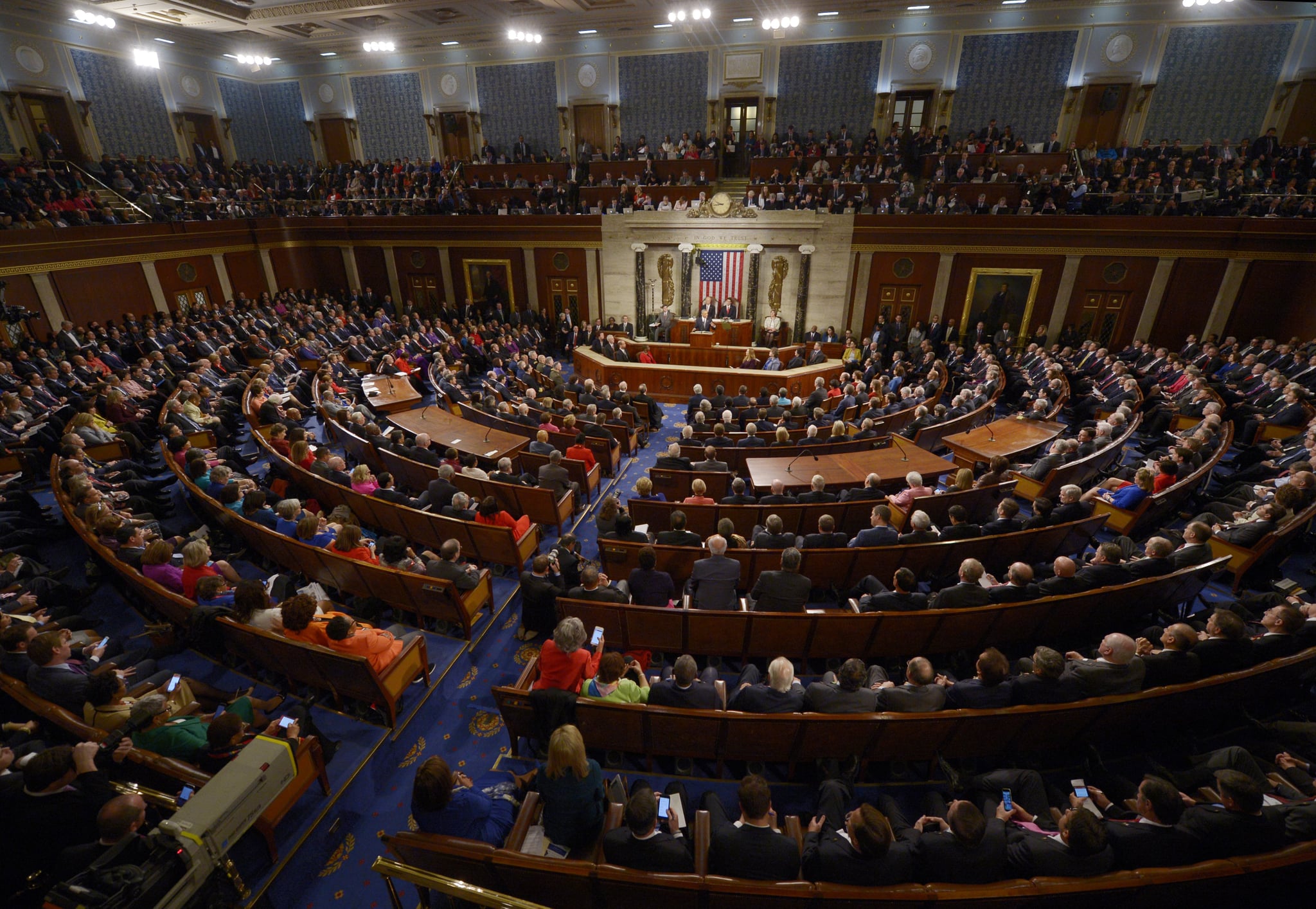
It all begins when a resolution to impeach is formally proposed [8]. Resolutions to impeach are typically presented to the House of Representatives by one of its members. The Judiciary Committee [9], which is part of the House, then decides whether there are sufficient grounds to start an impeachment inquiry, after which the House votes on the impeachment resolution.
If the resolution passes, a trial unfolds in front of the Senate [10], which then votes on whether or not to remove the president from office. In the event of removal, the vice president takes over as acting president for the remainder of the term.
It's hard to say how long the entire process could take, as so few presidents have been impeached in history. Bill Clinton was impeached on Dec. 19, 1998, and was acquitted on Feb. 12, 1999.
What are the chances Trump could be impeached and removed?
The chances of Trump being impeached at all, let alone removed in the near future, are currently looking quite slim.
First, sufficient charges have to be laid against the president, which is harder than it looks. It may sound incredible that Bill Clinton was impeached on the grounds of lying about having had an affair while Trump routinely lies about things like the size of his inauguration crowd [11] and the national murder rate [12] and remains in the clear. The difference is, Clinton lied to a federal jury, which is illegal. While Trump's stream of "alternative facts" are appalling, they are not a crime.
It also sounds incredible that, with over 70 lawsuits pending against Trump [13] (in addition to the 4,000 he has been involved in over the last 30 years), including allegations of sexual harassment and assault, no one has come forward with an impeachment resolution yet. But Trump has not been convicted of anything yet. Furthermore, the greater problem lies in how difficult it is to define "high crimes and misdemeanors." Interpretation is key, as is the House's willingness to proceed with impeachment.
Republicans currently hold majorities in both chambers of Congress, as they did when Bill Clinton was impeached, which allowed them to launch the process in 1998. House Speaker Paul Ryan and his people have so far shown a distressing tolerance toward Trump's antics [14], and it seems unlikely they would vote to impeach him before implementing their political agenda.
Removal from office is even more of a long shot, as a two-third Senate majority vote is required for that. That's 67 senators. There are currently only 46 Democrat senators (plus two independents), which means 19 Republican senators would have to vote for removal.
Of course, with this presidency, anything could happen. Different avenues could be proven to constitute undeniable grounds for impeachment. The Constitution's often cited emoluments clause [15], for instance, which prohibits presidents from receiving gifts from foreign leaders, could be invoked regarding Trump's foreign business interests [16]. And of course, there's that whole business with Russia [17] that likely won't go away.
Time will tell in what direction things evolve.