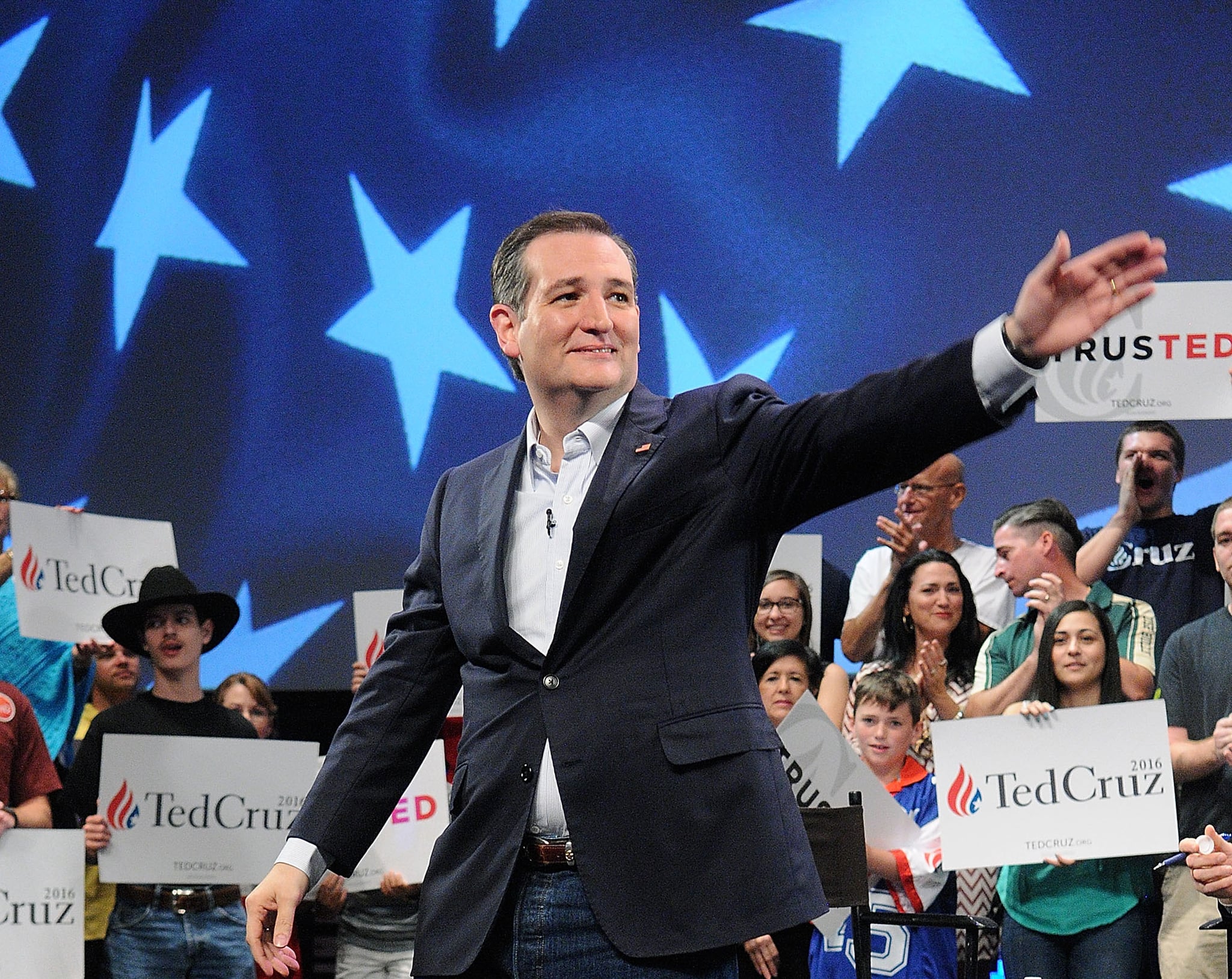
Both the Democratic and GOP presidential candidates fought for votes during Tuesday's Wisconsin primary. Check out everything else you need to know.
Here's what happened:
- Ted Cruz won the GOP contest with 50 percent of the vote, according to the AP [1].
- Bernie Sanders took the Democratic race with 56 percent of the vote.
- Wisconsin was projecting its highest voter turnout in a presidential primary since 1980.
- Eighty-six delegates were up for grabs on the Democratic side; Republicans were fighting for 42.
- Going into the Wisconsin primary, Sanders had 980 delegates, while Clinton had 1,243 out of the 2,383 needed to win the party nomination. (This count does not include superdelegates [2], many of whom have pledged to vote for Clinton but can still change their minds.)
- On the GOP side, Trump had amassed 736 delegates, Ted Cruz 469, and John Kasich 143 out of the 1,237 needed.
Here's what it means:
- Cruz's victory could be a sign that Trump's momentum is slowing down and that there might be a brokered GOP convention [3] in July.
- Part of the reason for Cruz's win could be attributed to the fact that talk radio shows in Wisconsin made a major effort to bash Trump [4], especially after he attacked Governor Scott Walker, who has a large Republican following in the state.
- Another factor could be the backlash Trump faced last week after saying women who get abortions should be punished [5]. The day before that, his campaign came under fire when his manager was charged with battery for grabbing a reporter's arm [6].
- Sanders showed that he is still a force in the Democratic race, having won seven out of the past eight contests. However, he needs to win more than 57 percent of the votes [7] going forward, according to the New York Times, in order to claim a majority of pledged delegates and knock Hillary Clinton out of the frontrunner position.
Here's how they responded:
- "Let me just say: Hillary, get ready, here we come." — Cruz, shifting his focus away from Trump and alluding to a general election matchup with Hillary Clinton.
- "What momentum is about is my belief that if we wake up the American people . . . and if people begin to stand up, fight back, and come out and vote in large numbers, there is nothing that we cannot accomplish." — Sanders
Here's what's next:
- There will be a Wyoming Democratic caucus on April 9, a Democratic debate on April 14, and a New York primary on April 19 in Clinton's home state. Follow along with all of our election coverage here. [8]