Does your dog exhibit obsessive behaviors? This article from Rover.com [1] will help you spot the signs and get your dog on the road to recovery.
This video of a dog biting his own leg has been a hit with television and Internet audiences, but if you watch closely, it's actually an alarming example of obsessive dog behaviors that should not be left untreated.
The dog in this video is resource guarding to an extreme degree, obsessing over his bone so much that he mistakenly perceives his own foot as a threat:
It's a little frustrating to hear the family laugh about something so serious, but I can relate. My own dog attacks his own leg sometimes.
Radar is a runty little rescue who came to me with a long list of obsessive habits: chewing; licking; panting; pacing; food guarding; toy hoarding; you name it, Radar has done it.
During our first year together, I was overwhelmed by his behavior, and I admit, sometimes I even thought it was funny (like the way he would carry one of my gardening shoes around the house with him and stand guard over it, never letting it out of his sight). But with time and training, I came to know better: there's nothing funny about obsessive behavior in dogs.
How to Spot Obsessive Behavior in Your Dog
How many times have you heard a dog parent say, "My dog is obsessed with tennis balls?" But there is a difference between a ball-motivated, or even a ball-fixated dog, and a dog with a true compulsion.
According to researchers Caroline Hewson and Andrew Luescher, quoted [2] in Whole Dog Journal, "Compulsive behaviors seem abnormal because they are displayed out of context and are often repetitive, exaggerated, or sustained." So if your dog gets excited about the tennis ball at the park but can chill out when you get home, she's probably OK. But if she lives, breathes, and eats tennis ball to an alarming degree, and becomes difficult to distract when the fuzzy yellow beast is out, it may be an obsession.
- Spinning or tail chasing. Dogs will get in a loop of spinning in place or chasing their own tail around in circles, and it can be hard to get them out of it.
- Persistent barking. Dogs may bark nonstop for no obvious reason, or seem unable to stop barking after a reasonable amount of time following a trigger.
- Toy fixation. Like the tennis ball fiend, dogs with obsessive toy fixations may chew, throw, or guard a favorite toy to excess, or be difficult to distract when the toy is out.
- Pacing. Anxious dogs will sometimes walk in a fixed patten over and over again.
- Air licking or biting. The dog may walk around licking the air or biting at "invisible bugs."
- Surface licking. Here's one with which I am intimately familiar: When Radar is stressed out, he will obsessively lick the ground.
- Pica. The dog picks up and chews or eats nonfood objects.
- Light and shadow chasing. According to Modern Dog [3], this obsessive behavior is common in high-intelligence herding breeds who become fixated on changes in light.
- Self-licking, scratching, or chewing. Dogs may obsess over a part of their own body
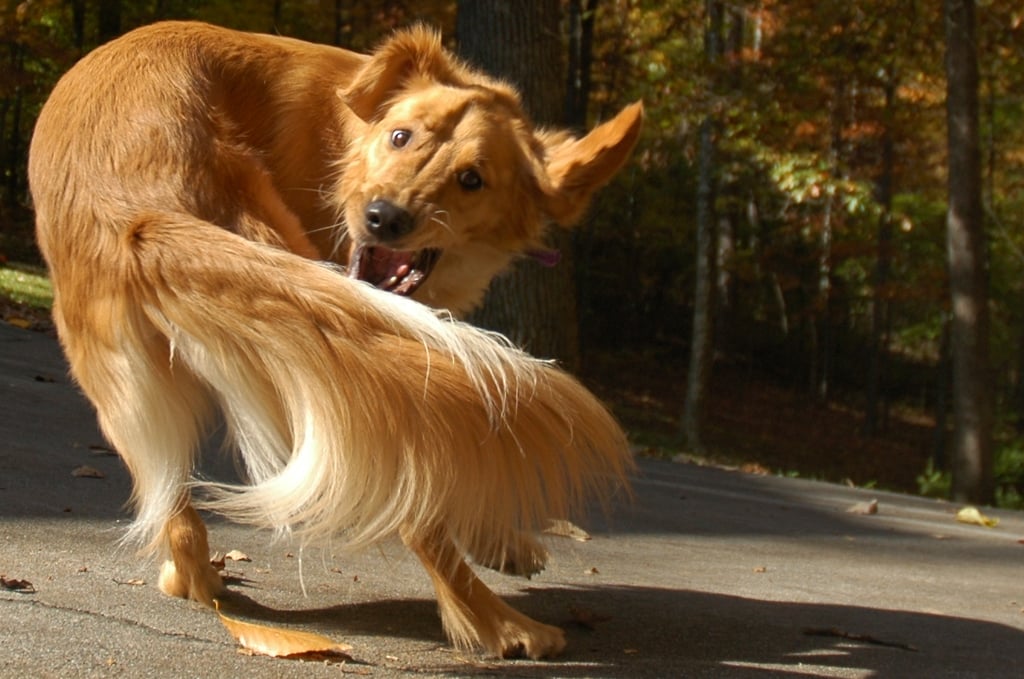
Source: Flickr user timekin [4]
What Causes Obsessive Behavior
Obsessive dog behaviors generally arise out of anxiety or discomfort, and, as noted by PetMD [5], smart, high-energy dogs tend to develop compulsive behaviors most often.
Compulsions are typically related to one of the following causes:
- As a result of physical injury or discomfort. I once had a foster dog who obsessively spun in circles after her tail was amputated following an injury. What started as a physical urge—to lick and scratch at her healing tail stump—turned into a compulsion that continued after the wound healed.
- Environmental stressors. Dogs who are under-stimulated, poorly socialized, under-exercised, or mistreated can develop compulsions.
- Imbalances in the brain, or by cognitive dysfunction brought on by age. It can be harder to solve obsessions caused by a chemical or medical reason, which is why it's vital to consult your veterinarian if your dog displays compulsive behavior.
One thing most obsessive dogs have in common? Stress. Repetitive, unwanted behavior results from a dog in distress, so the best way to treat them, or stop them before they start, is to ensure your dog has a calm environment with limited stressors.
How to Help
If left untreated, compulsive behavior in dogs can lead to lasting physical, emotional, and behavioral issues. Thankfully, once you identify your dog's obsession, there are many things you can do to help.
In my experience, the most frustrating obsessive behaviors can be treated with time, training, and attention. Radar still likes to carry my things around in his mouth sometimes, but these days he'll "drop it" when asked, and shift his attention elsewhere. He'll always be a high-energy, high-strung little guy, but with his obsessive behavior under control, we're both a lot happier and more relaxed (and I can finally leave my shoes out unattended)!
The information provided in this article is not a substitute for professional veterinary help.