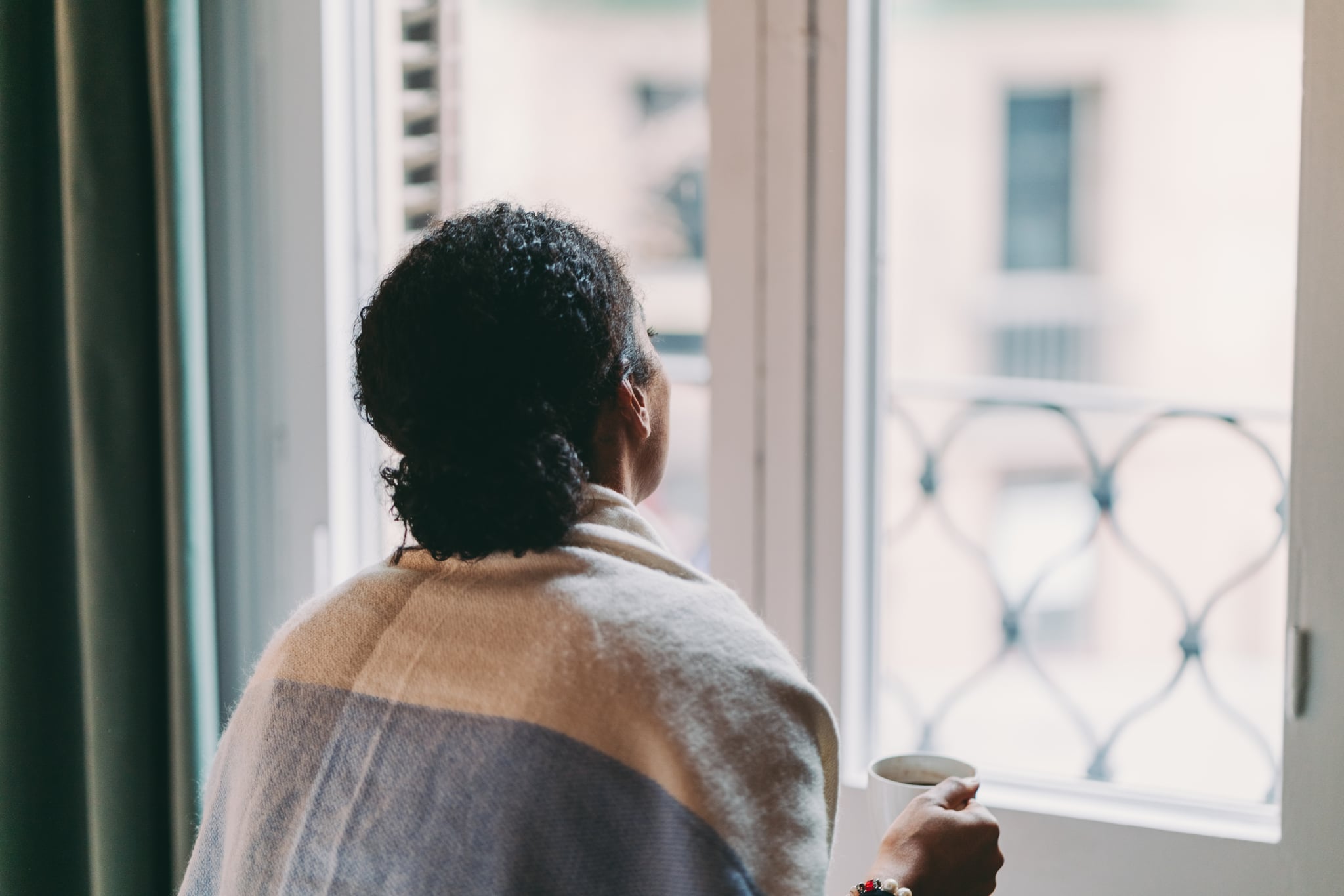
I was 25 years old when I decided to get sober [1]. After a tough breakup, I had started to drink as much as possible. What began as occasional trips to bars with friends turned into daily visits by myself. I had been sober seven months when Los Angeles County went under a shelter-in-place order in March. Then, two weeks into social distancing, I caved and had a drink. I felt I had an excuse. Every time I heard the word coronavirus, I thought about drinking [2].
Drinking gave me a sense of relief that no Zoom meeting or Netflix series could provide. I would start with one mixed drink, I told myself, and then stop. But as time went on, and the news only seemed to get worse, I found myself finding comfort in "just one more drink." Every time I poured myself a drink, it gave me a reason to wake up the next morning.
Shortly after George Floyd [3]'s death in May, I finished an entire handle of vodka in less than 24 hours. I couldn't open my computer without being subjected to footage of police throwing tear gas, beating protesters, and running over crowds. I told myself I was drinking again in order to gain a deeper sense of control. There was so much in that moment that was unknowable — and so much that still is — and telling myself I possessed the self-control to drink like a "normal" person gave me some sense of autonomy over a situation no one really had a handle on.
But I didn't continue drinking because of the uncertainty surrounding the pandemic — I continued drinking mainly because I didn't know how to cope with the complexities of being a Black woman today. I finally decided to stop drinking again after I came across footage of a 27-year-old Black man getting shot in a Wendy's parking lot. He had been asked by police to take a breathalyzer test before he attempted to flee [4], presumably out of fear of being arrested or killed. Watching Rayshard Brooks [5] die at the hands of the police scared me back into sobriety.

I know the only reason I'm alive today is because I'm sober. So, when I opened Instagram and saw body cam footage of the police shooting of Breonna Taylor — and read that the officers involved were allowed to remain on the scene [7], in violation of protocol — I chose to sit with my feelings rather than numb them with alcohol. When none of the officers were charged for her murder [8], I allowed myself to experience anger, frustration, and sadness all at once. But I refused to pick up the bottle, because my sobriety has meaning beyond myself.
I maintain my sobriety as an act of resistance. Resistance against deeply rooted hatred and bigotry.
To be Black and sober in an era tainted by a global pandemic and civil unrest speaks volumes. I'm sober to serve as an example to young Black people across the country. I maintain my sobriety as an act of resistance [9]. Resistance against deeply rooted hatred and bigotry. Resistance against stereotypes that I'm expected to fulfill as a Black woman living in the US. Resistance against a system that was set up for me to fail. One day, I will raise Black children [10], and they will learn what it means to be sober. I will teach them to embrace what it's like to fully experience emotion, as painful as it may be.
Yes, I will continue watching the news and checking Instagram daily. Yes, I will want to drink. But what matters most is that I accept and deal with my feelings as they are. There is a deep sense of collective strength in being Black and sober — and there is a large Black and sober community across the world. You can find us in the Sober Black Girls Club [11], Stoners of Color, Served Up Sober [12], and so many other places. Like the slaves and domestics who came before us, we refuse to be broken by the pain that comes with being a Black American. Being Black and sober is beyond difficult, but with the support of family and friends, I continue to move forward one day at a time.
If you or someone you know is struggling with addiction, please go to aa.org [13], na.org [14], or call the Substance Abuse and Mental Health Services Administration [15] at 1-800-662-HELP (4357).