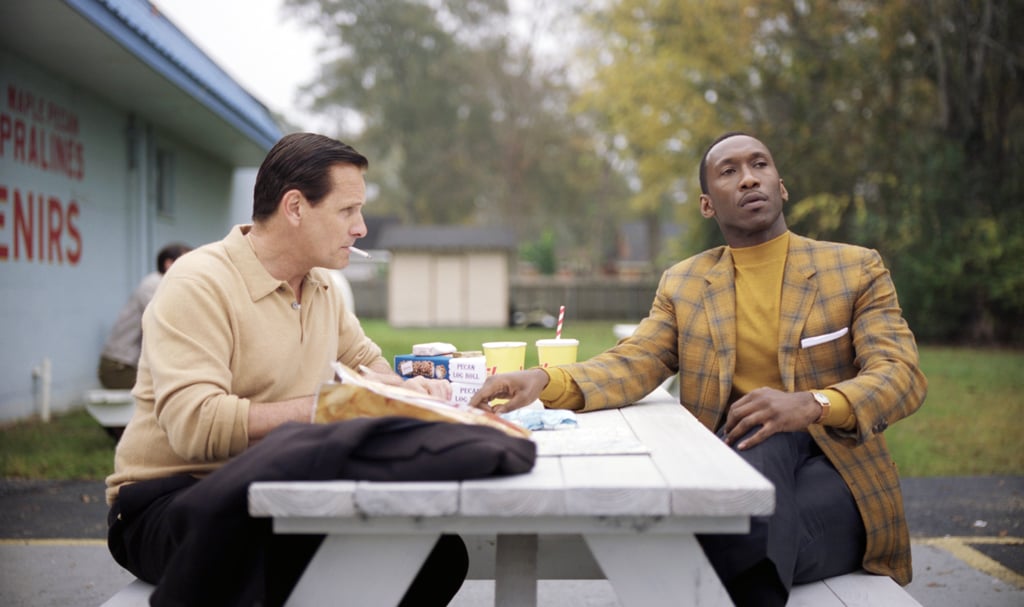
For starters, Lip and Shirley's 1963 journey lasted much longer in real life, with the pair not returning back to New York City until more than a year later. In the film, they're gone for a few months in 1962, arriving just in time to celebrate Christmas with Lip's family.
After the pair make their way out of the city, the film tells the story of the unlikely friendship that forms between the two on their journey, which happens just a year after the Freedom Riders. Likely because the movie was written in part by Lip's son, most of the events are seen through Lip's eyes, which is one of many reasons why Green Book has earned criticism for being a "poorly titled white savior film" and "Driving Miss Daisy in reverse," says Shadow and Act's Brooke Obie.
Much of Shirley's extraordinary life is left untouched by the film, while Lip's life is fully fleshed out, especially concerning his family since the letters he wrote to his wife, Dolores, along the road (with the help of Shirley's command of the English language) are read throughout. Other than passing mentions of Shirley's rise as a virtuoso, an ex-wife, a conflict with his brother, and his explanation for why he decided to play jazz music — 20th-century impresario Sol Hurok reportedly told Shirley that black performers had to stay away from the classical genre — Shirley's personality is shaded in only by scenes in which Lip "teaches" the uptight Shirley about his own blackness (ex: eating fried chicken, listening to Little Richard, etc.).
The missed opportunity to really dig into Shirley's incredible life and career aside, both Mortensen and Ali give strong performances (though it's worth mentioning they could've done even more with a more true-to-life script). Vallelonga maintains that a lot of their dialogue was taken directly from recordings of the real-life men. On top of Vallelonga's interviews with the lifelong friends, the film also pulled directly from Shirley's interviews with the press, including a 1982 discussion with The New York Times where he critiqued jazz performers: "[They] smoke while they're playing, and they'll put the glass of whisky on the piano, and then they'll get mad when they're not respected like Arthur Rubinstein."