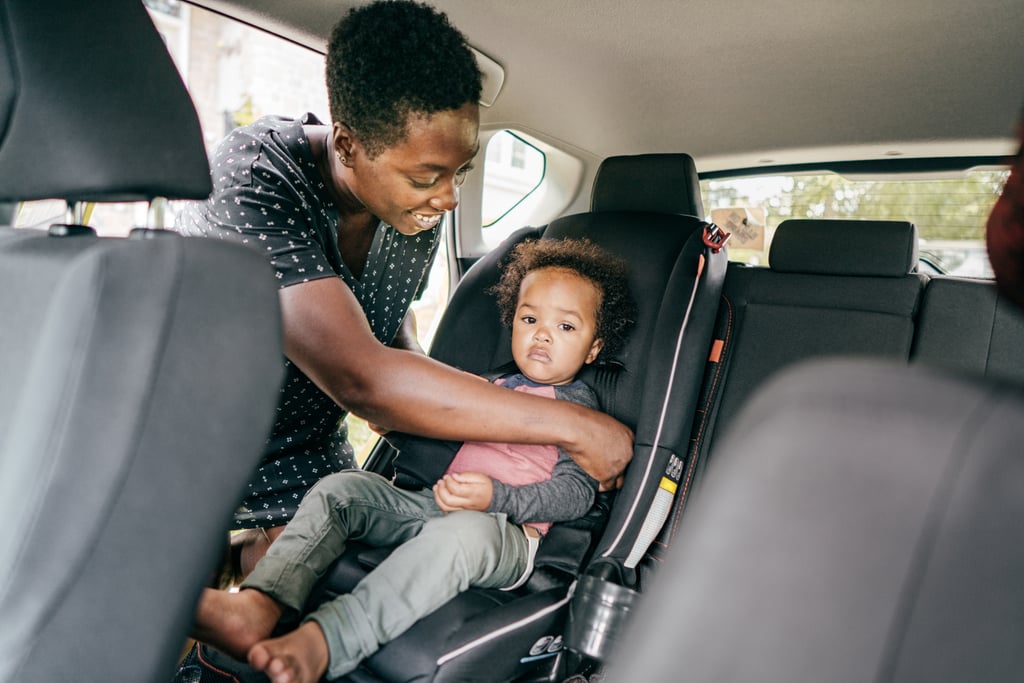
Once children reach the highest weight or height allowed by a forward-facing car safety seat, you can transition to a belt-positioning booster seat. Using a boost seat reduces the risk for serious injury in a car accident by 45 percent for children ages 4-8, compared with seat-belt use alone, per the CDC.
A booster seat should be used until the vehicle lap-and-shoulder seat belt fits properly without the assistance of a booster seat, according to the National Highway Traffic Safety Administration. The CDC describes a proper fit as having the lap belt sit across the upper thighs and the shoulder belt across the center of the shoulder and chest. This typically happens when children reach 4'9" in height and are between 9 and 12 years old. However, seat belts vary from car to car, so always double check if the child needs the use of a booster seat for certain vehicles.
The two standard types of booster seats available are the high-back and the backless. High-back boosters should be used in vehicles without headrests or with low seat backs, and backless boosters can be used safely in vehicles with headrests and high seat backs. While high-back booster seats are the more secure of the two, backless booster seats tend to be smaller and lighter, making them easier to travel with.
Best Booster Seat: Graco Tranzitions 3 in 1 Harness Booster Seat ($140)
- Use the forward-facing harness until your toddler is 65 pounds, then easily transition to high-back then backless booster as your child grows
- Eight-position adjustable headrest
- Has undergone rigorous crash safety tests to protect from frontal, side, rear, and rollover crashes