7 Queer Fashion Designers on LGBTQ+ Industry Representation
7 Queer Brands Doing the Work to Make Fashion Visibly More Inclusive
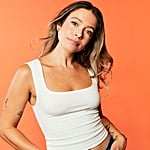
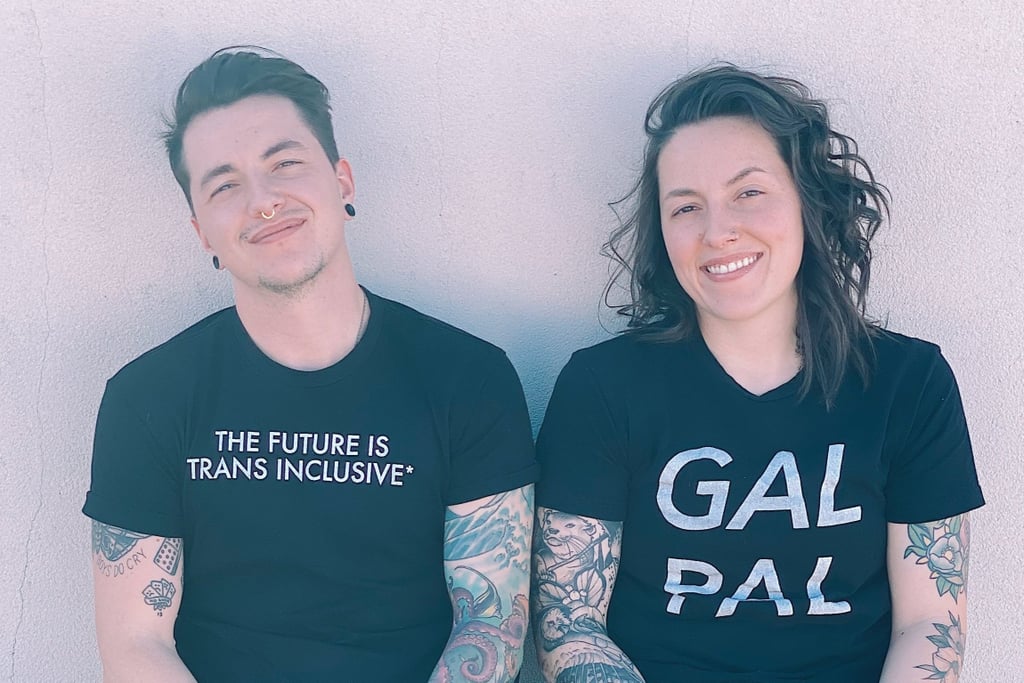
Chris and Courtney Rhodes, FLAVNT Streetwear
"We saw a binder market that was exclusionary of BIPOC and sought to change that."
FLAVNT (pronounced "flaunt") is an Austin, TX-based independent clothing brand for the LGBTQ+ community and allies. Founders and twins Chris and Courtney have always made it a priority to give back to queer people from the get go. They're known for their "Pretty Boy" tee — gender nonconforming model Elliott Sailors famously wore it for a photo shoot in 2015 (below) — and Bareskin Binders, which are manufactured by a woman of color-led, all-women team in Texas. The collection of casual wear, which includes fun socks and hats, isn't traditionally pride themed, but rather subtle in keeping with the streetwear scene. Size inclusivity has always been a priority, and knowing that "unisex" cuts of clothing can often mean more "masculine," Chris and Courtney have a goal of one day developing their own basics that feel more inclusive. FLAVNT has always been offered up to size 3X, but has expanded up to 5X and will also accommodate any custom requests received.
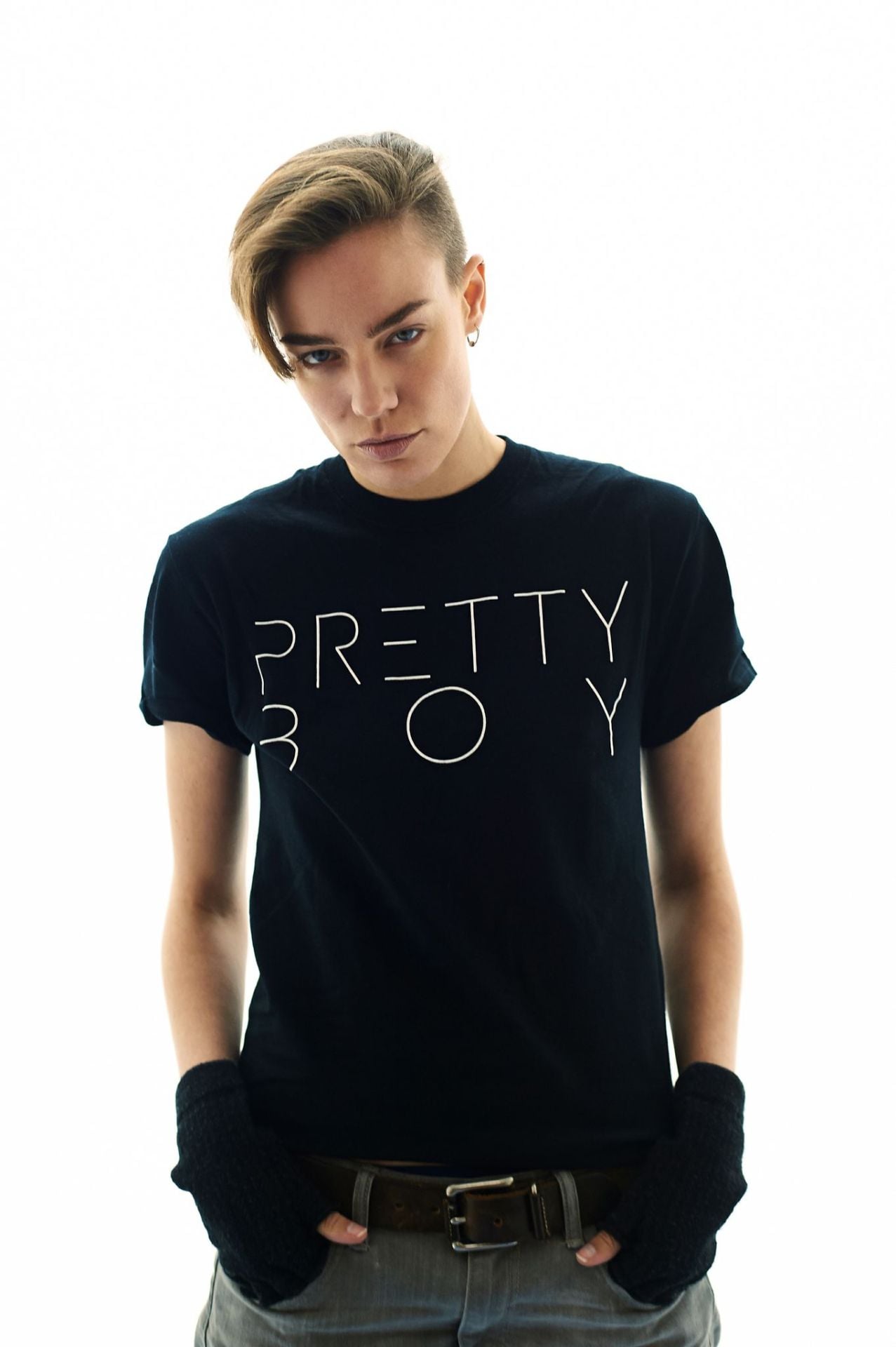 Image Source: FLAVNT Streetwear
Our most inclusive collection is . . . "the Bareskin Binder. We saw a binder market that was exclusionary of BIPOC and sought to change that. When we launched our Kickstarter in 2015, there were only light-nude options in a couple of the binders on the market with no range of shades to include anyone who fell outside of a generic tan color. Our binders hit the market with four color shades and five size options (XS-XL) and we have since expanded to seven colors and seven sizes (XXS-XXL) with 3XL on the way. After we introduced our Bareskin Binder to the market in 2015, along with the idea of a range of skin tone binders, the rest of the binder industry followed suit and became more inclusive as a whole.
As a small business, we always prioritize . . ."being able to pay our queer employees a competitive wage, supporting domestic manufacturing that uses ethical practices, and creating products that will last over the bottom line. We've dealt with a fair amount of push back from people who don't want to pay small business prices for queer made products. It's very challenging to compete with the larger conglomerates who exploit workers and the environment to create cheap products and offer two-day shipping and have convinced consumers that that's the standard for everything. As a small business, we don't have the means, nor do we want to sacrifice our principles, to make cheap products.
Recently, visibility in media for queer folks has been . . ."incredible. Think: the gender non-conforming outfits on the red carpet (so many women in suits, Billy Porter in everything he wears). Fashion spaces have always had a fair amount of cis gay male designers, but seeing female, trans, and gender nonconforming designers shaking up the suiting industry (Kirrin Finch and SharpeHaus) and the swimsuit game (Beefcake, OUTPLAY, and HUMANKIND) really made it known to us that this was a space for all of us. New York Fashion Week has done a good handful of shows recently with all trans masculine models on the runway in underwear, and we have seen trans women signed to modeling agencies."
The most vital role we play as queer creators is . . ."through our visibility. 2021 feels like a year where queer topics are going to be front-and-center. We've seen a rise of horrible legislature being aimed at transgender and gender nonconforming folks, and with that will come even more visibility around transgender and queer identities. Being able to be privileged enough to be visible and have a voice in a time like this means having the ability to create real change and make an impact, and we fully intend to keep putting ourselves out there."