While there are many styles, Thompson explained three of the most common ones: journalistic, cinematic, and traditional.
"A journalistic approach to filming is all about documenting the wedding as it happens," she explained. "It is much more straightforward in its filming style, it has less to do with the artistic interruption and more about recording the actual real-life events — even if it means capturing moments without a steady hand, allowing the shots to be shaky or blurry to achieve a simulation of real-life action." Basically, this is The Office of video styles, in that it's the most raw.
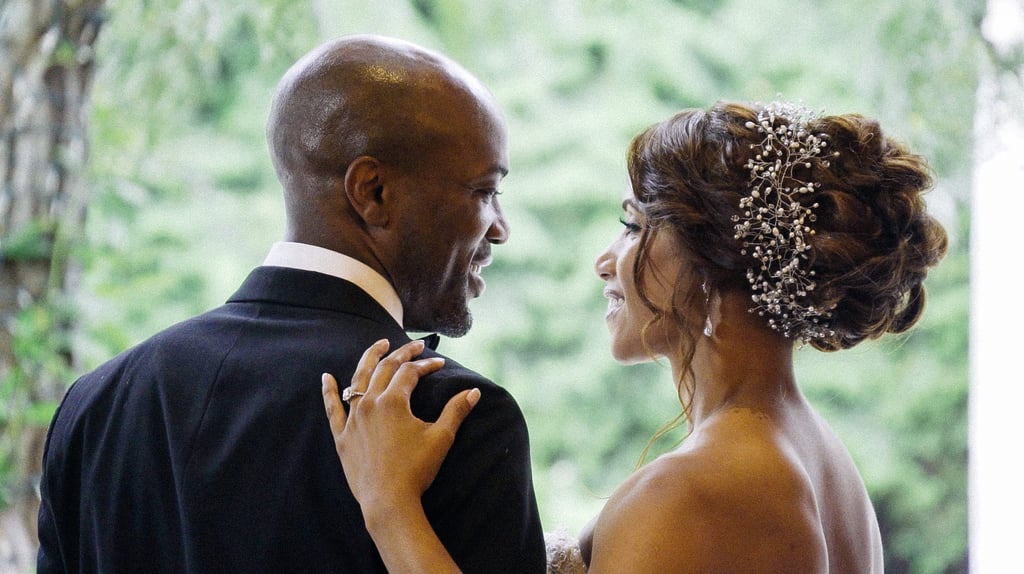
Cinematic is exactly like what it sound — movie-esque. "Filming in a cinematic approach is about capturing the event at multiple angles, setting up movie-like shots and compiling a variety of details to evoke an emotional outcome," she said. "Steady camera angles and sweeping pans are what sets a cinematic style apart from others." This form also typically includes a mix of music and narrative, much like a trailer for a Hollywood film.
Traditional video is the most standard, yet least creative mode. And it usually involves shooting with a camcorder versus a DSLR camera. "This style involves documenting an event usually is from a stationary position with minimal movement other than zooming," she explained. "It could almost be considered surveillance footage in its process. Editors typically add in many kinds of filters and special graphics to enhance the final film."
Regardless of what style you choose, you want to be able to talk intelligently about it with your potential vendor.