Barack Obama Drug Policy 2016
President Obama Declared a New War on Drugs — and It's Probably Not What You'd Expect

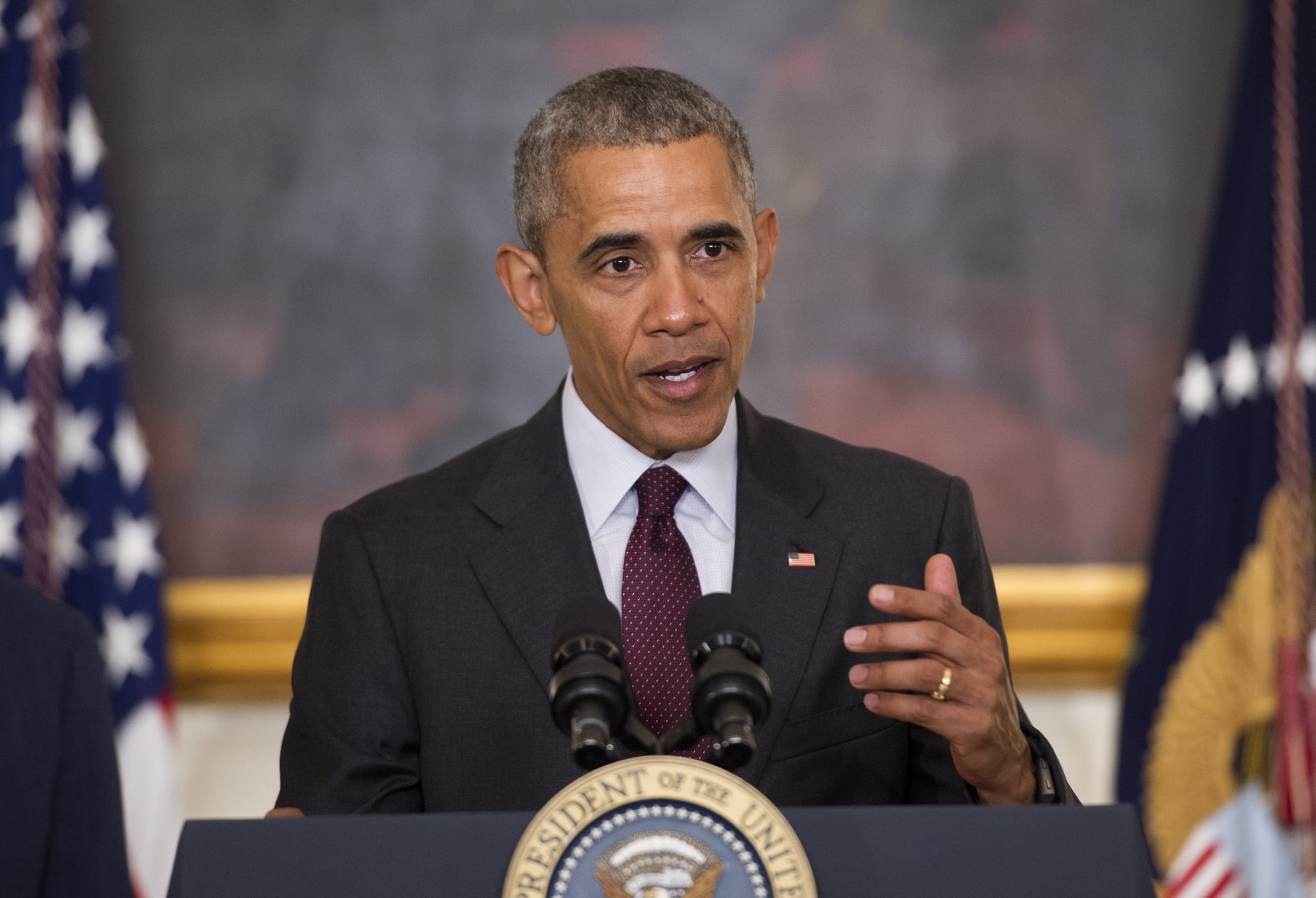
Ever since President Nixon declared a "war on drugs" in 1971, the term has been commonly associated with incarceration and sending military aid to countries notorious for their drug trades. A focus on prevention and rehabilitation has been part of this war before, but it's being pushed into the spotlight thanks to President Obama's recent efforts.
On Tuesday, the Obama administration announced that it will pledge $116 million toward fighting heroin and prescription opioid abuse. Someone dies from an opioid overdose every 19 minutes, according CNN. Much of the money will go to treatment heath centers across the country, prevention such as antiaddiction drugs, and coverage for mental health and substance abuse services. Some $7 million will also go toward community policing and investigating heroin distribution. This all comes after the Obama administration pledged $1.1 billion toward efforts to combat drugs in February.
President Obama also commuted the sentences of 61 inmates on Wednesday, according to The Washington Post, keeping with his pledge to relieve prisoners who were given harsh sentences for drug offenses. More than one-third of those inmates were serving life sentences — this brings the total number of prisoners he's advocated for to 248. More than 9,000 more have applied for clemency, and officials said Obama will continue to grant it to deserving inmates throughout his last year in office.
"For too long we've viewed drug addiction through the lens of criminal justice," said President Obama at the National Prescription Drug Abuse Heroin Summit this week in Atlanta, according to The Guardian. "The most important thing to do is reduce demand. And the only way to do that is to provide treatment, to see it as a public health problem and not a criminal problem."
Besides under the Obama administration, the only other time in the history of the war on drugs that most of the funding has gone toward treatment rather than law enforcement was under Nixon in the 1970s. Looks like offering people help when they need it most isn't a new way to fight the country's drug epidemic, but it might be the best option — previous research done by the Justice Policy Institute shows drug treatment can be more effective and less costly than putting people in prison.