How to Save Money on Prescription Medication With GoodRx
Here's How I Saved a Ton of Money on Prescription Birth Control

With affordable birth control access under constant attack by the current administration, many women are seeking out new ways to secure the prescriptions and medications they need — and I'm one of them.
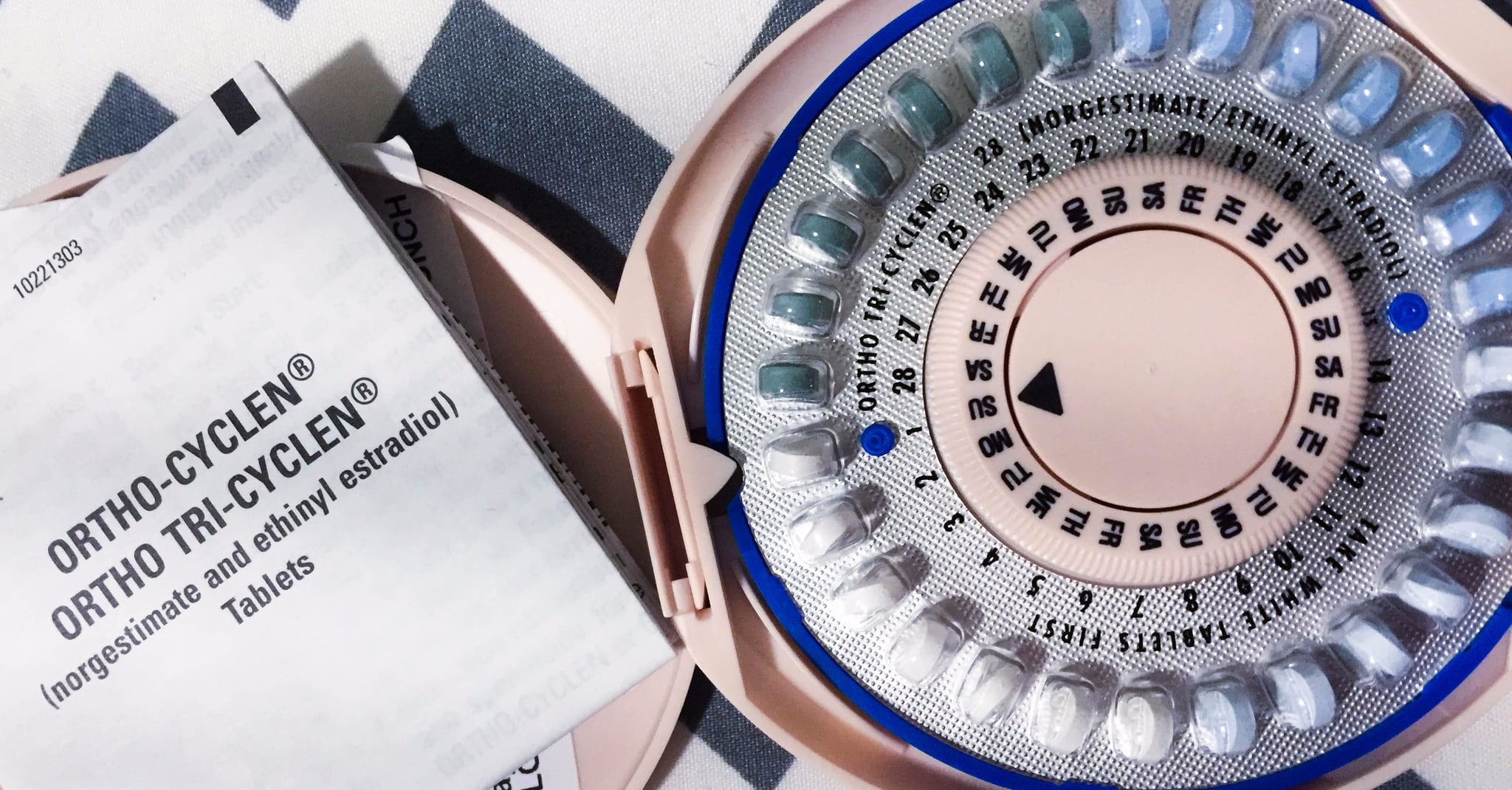
As a freelance writer, I don't have an employer providing me with health insurance, and I don't have insurance through the Affordable Care Act (aka Obamacare) because the options available didn't make sense for me. That left me paying completely out of pocket for my birth control, at a price that I thought was unfair. I was paying $55 each month for one pack of Ortho Tri-Cyclen until my pharmacist told me about GoodRx. Then, like magic, I was able to get the exact same pills for $4. Four dollars! So, naturally, I had to share this gospel with the nearly 17 million other women in the US between the ages of 15 and 44 who currently use prescription birth control.
GoodRx, a site that tracks and provides discounts on prescription drug prices, was cofounded in 2011 by Doug Hirsch, Scott Marlette, and Trevor Bezdek. Together, these three share extensive experience in the tech world as former employees of Facebook and Yahoo!. Along with the help of their medical advisor, Dr. Sharon Orrange, M.D. MPH, they have shifted their focus to wrangling data in the healthcare industry. And let me tell you: their price tracking system and "coupons" have personally saved me a ton of money on my birth control.
By the way, this article focuses on birth control pills because that's what I — and the majority of women who choose prescription birth control — use, according to the Centers for Disease Control and Prevention. But this information also applies to any prescription drug needs you might have, including other prescription contraceptive methods you can get at a pharmacy, like vaginal rings and the patch.
Even if I did have insurance, free access to prescription birth control is no longer officially required to be included in coverage, thanks to President Donald Trump. That's the situation Olivia, a 23-year-old sales representative from St. Louis, MO, found herself in when she started using GoodRx.
"My company doesn't cover birth control in our insurance plan, which was told to us on day one," she tells POPSUGAR. So, without any help from her insurance, she was paying $75 for a one-month supply of the generic version of Yaz, or $208 for a three-month supply. Then a coworker of Olivia's told her she was working around the shortcomings of their insurance plan by using GoodRx. Now, Olivia pays about $34 for the same one-month supply from her pharmacy by using GoodRx, and $75 if she gets three packs at a time.
"I'm incredibly thankful that GoodRx was brought to my attention because the concept of paying that much for basic health care was absurd," Olivia Says.
Here's how it works: GoodRx collects all of the information on the cash prices in the market for individual prescription drugs, as well as the various discounts that are being offered on those drugs to insurance companies. It aggregates that information and lets us, the consumers, search it on their website to find out where we can get a specific drug at the lowest possible price.
GoodRx also gives us access to what they call "coupons," Hirsch explains. "Think of our 'coupons' on GoodRx as sort of a byproduct of the relationship between the insurance company and the pharmacy, where they also make available a discount that any consumer can use."
In October, Trump rolled back what was known as the Obamacare Birth Control mandate, which was intended to virtually guarantee that a woman's birth control needs be met without having to pay anything out of pocket. He did so by implementing a set of interim rule changes to the way Obamacare is applied, not only allowing employers a religious exemption to requiring birth control coverage, but also a moral exemption.
The American Civil Liberties Union (ACLU) immediately filed a lawsuit against the Trump administration and the rule change. While that case (hopefully) works itself out in the legal system, GoodRx is a great option to help women, both with and without insurance, maintain access to necessary reproductive health care at a lower cost in the meantime.
Dr. Sharon Orrange, GoodRx's medical advisor, and a practicing physician and associate professor of medicine at the University of Southern California, tells POPSUGAR the current state of access to birth control for women is simply not good enough. There are many barriers to getting us where we need to be on contraceptive access, but another perk of using GoodRx is that you can avoid at least some of those barriers put in place by insurance companies, which can limit how you refill your prescriptions.
Dr. Orrange explains that patients often think they aren't able to get more than one month of their birth control at a time — but that doesn't have to be the case.
"Many insurance companies will only pay for one month of a prescription at a time instead of three months, which leads to medications not being refilled and women missing doses, along with mis-timed and unwanted pregnancies. I see this quite a bit," Dr. Orrange says. "Many women don't know you can pay cash for a 90-day prescription [even if you do have insurance that covers your birth control], which your doctor should approve even if your insurance doesn't, and even more — six to 12 months at a time, and it's often cheaper!"
In my case, my birth control method of choice showed up on GoodRx as $4 for one pack, but only $10 total when I got three packs at a time. And this is the brand name version I'm talking about here (the generic makes me break out).
All of this is excellent news for our bank accounts, of course, but it also assumes that women have access to getting a prescription for their birth control in the first place.
In most states, a prescription is still required to obtain contraceptives like birth control pills, vaginal rings, and contraceptive patches from a pharmacy. And even in the three states — California, Oregon, and Colorado — where a doctor's prescription is no longer officially necessary, many pharmacies still require it.
But Hirsch says lack of access to a doctor doesn't have to be a barrier to getting a prescription for the contraceptive care you need, whether that's because you're away from home and your physician, or because you can't afford a doctor's office visit. He named Lemonaid Health and Nurx as two online services he recommends, which provide residents of some states the option of paying for an online assessment by a medical professional in order to get an appropriate prescription for their needs.
While these services are a good start, there is still much more work to be done to ensure women have access to the basic health care we need. But there is something you can do right now to let your voice be heard on the subject: even though Trump's rule changes took effect immediately on Oct. 6, they aren't final yet. Anyone can submit a public comment on these interim rules through Dec. 5. You can submit yours on the religious exemption here on the moral exemption here.