Milwaukee Protests Over Police Shooting 2016
4 Things You Need to Know About the Tense Situation in Milwaukee

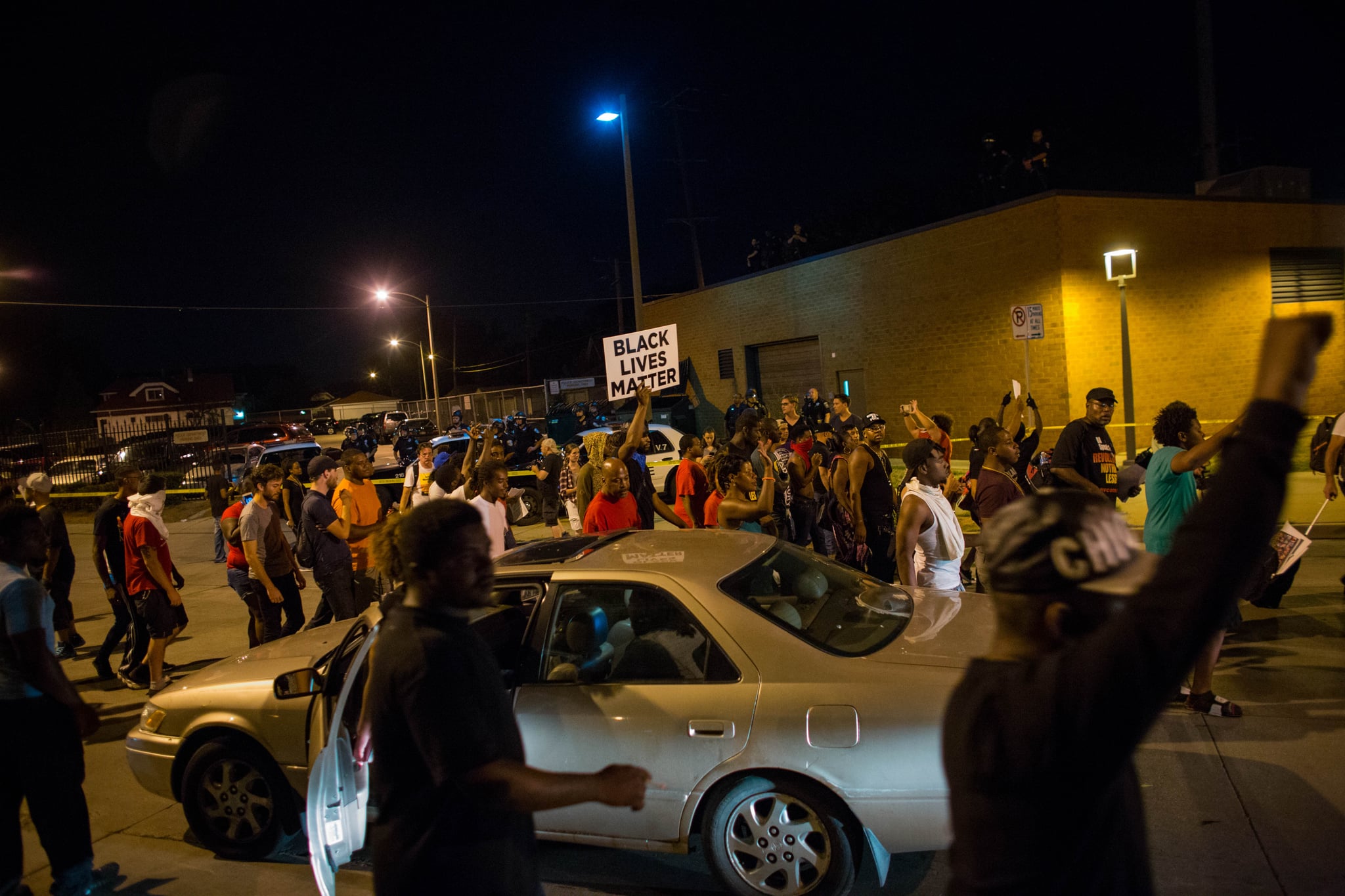
Demonstrators are taking over the streets of Milwaukee, WI, after a black man named Slyville Smith was shot and killed by police on Saturday. The weekend protests resulted in violence and property damage. Here's everything else you need to know about the situation.
1. Police killed a fleeing suspect, which prompted the protests.
It all began when two Milwaukee police officers pulled over a car on Saturday afternoon; according to The New York Times, the two men inside the vehicle ran from the car and at least one of them was armed. When the two fleeing men refused to stop, one officer fatally shot Slyville Smith, who was visibly carrying a handgun, say police. The officer who shot Smith is also black and has six years of experience on the job.
Protesters are blocking Fond du Lac and Burleigh St. #MilwaukeeUprising pic.twitter.com/RduFfN7PtA
— James E. Causey (@jecausey) August 15, 2016
2. The demonstrations grew violent toward police as the weekend unfolded.
Protests began Saturday night and the unrest continued into early Monday morning. Demonstrators threw bricks and rocks at police and four officers were injured but not critically. An 18-year-old man was shot, though it is unclear by whom. Protesters also set fires resulting in a BP gas station, an auto parts store, a BMO Harris Bank, and two liquor stores being badly burned, although the damage was not widespread. According to the Milwaukee Police Department, there was no "use of force" during the incidents against any of the protesters.
The gas station and cars that were burned last night in Milwaukee. pic.twitter.com/NfwD9wuGC6
— Jim Dalrymple II (@JimDalrympleII) August 15, 2016
Crowd breaks widows of unoccupied squad near Sherman and Auer. Other squad set afire and broken windows on another. pic.twitter.com/Jux2mJZYyQ
— Milwaukee Police (@MilwaukeePolice) August 14, 2016
Overnight totals:
4 injured MPD officers
14 arrests
3 squads damaged
30 ShotSpotter activations
1 store with broken windows
— Milwaukee Police (@MilwaukeePolice) August 15, 2016
3. Police and other protesters are condemning the violence.
As a precaution, Scott Walker, the governor of Wisconsin, declared a state of emergency and placed the National Guard on call. For now, the mayor of Milwaukee, Tom Barrett, and the police chief, Ed Flynn, have instituted a 10 p.m. curfew for teenagers in the city. Peaceful demonstrators have also returned to the looted businesses to help clean up the damage and community leaders have called for peace.
Blacks and whites. Men and women were praying for peace in Milwaukee Sunday. #MilwaukeeUprising pic.twitter.com/XahNh3JAAM
— James E. Causey (@jecausey) August 15, 2016
4. Milwaukee is one of the most segregated cities in America.
To put the protests in context, it's helpful to understand that Milwaukee is struggling with a tense racial divide. The city has one of the highest rates of black male incarceration in the country and the difference between white and black impoverished incomes is one and a half times the national average; black people are also geographically isolated in the city. Whether Smith was innocent or guilty of a crime, his tragic death is the catalyst for already rising tensions.
Poverty, insufficient housing, and segregation needs to be added to #Milwaukee conversation, read "Evicted" by @just_shelter
— Yaasiyn Muhammad (@MuhammadTeach) August 14, 2016