Trump Opioid Epidemic Plan For Death Penalty to Drug Dealers
Seeking Solutions For the Opioid Epidemic, Trump Turns to the Death Penalty

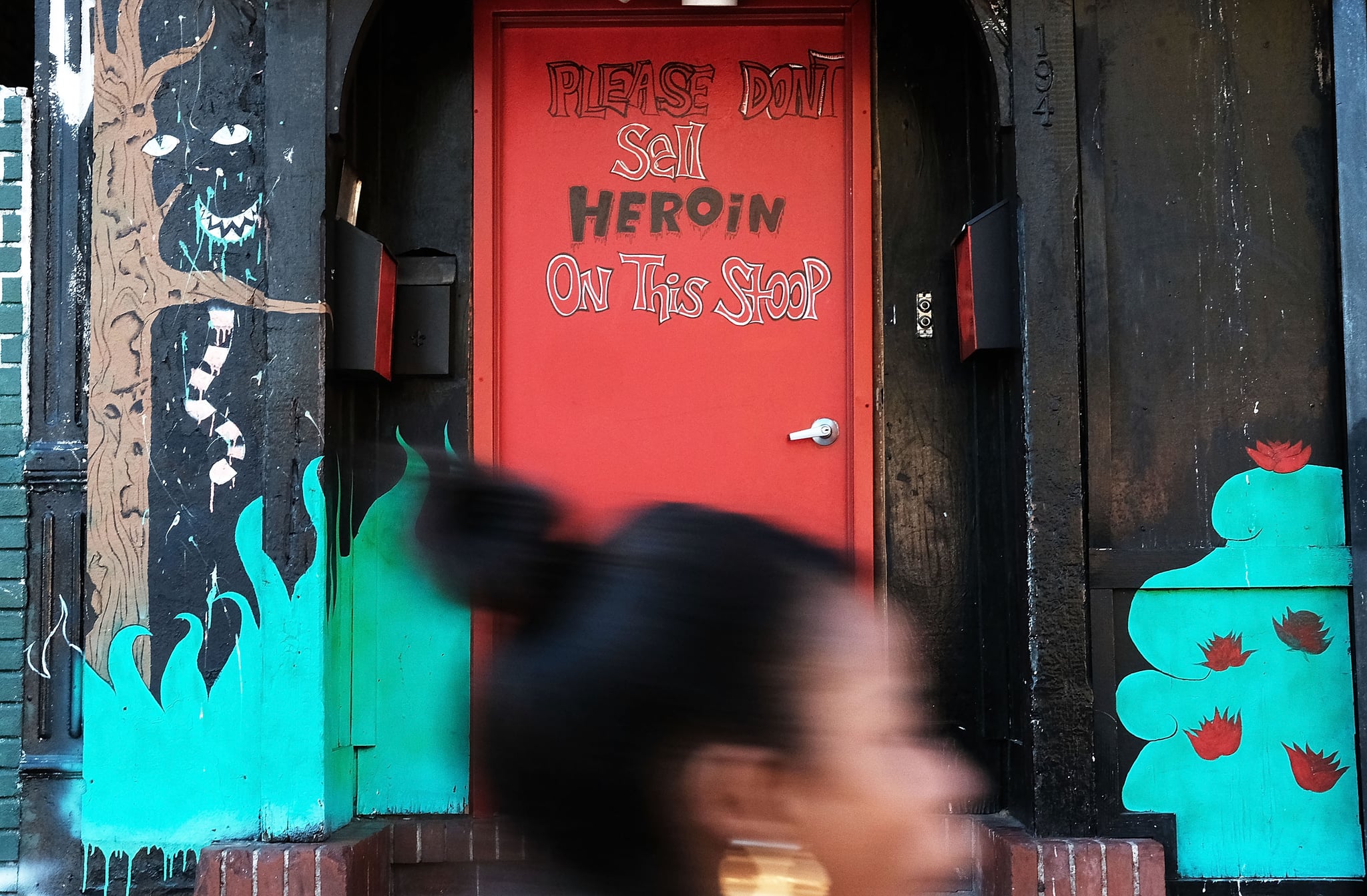
As drugs like fentanyl continue to claim the lives of tens of thousands of Americans each year as a result of addiction and overdose, very few solutions have been put forward to curb the epidemic. Accordingly, the White House has been in a scramble to find a fix for the growing issue. After declaring a public health emergency in October, President Donald Trump set off 90 days of redirected resources to find a solution to what he termed the "scourge of drug addiction" — but the declared health emergency bore few solutions by its January expiration. Outside of a bipartisan bill to increase treatment spending to $1 billion while imposing limits on prescriptions, little progress has been made by Trump and his team.
But in advance of Trump's March 19 visit to New Hampshire — a state with high rates of overdose deaths — the White House revealed a three-tiered approach to solving the problem: advertising campaigns to raise awareness of prevention and law enforcement, enabling government-funded treatment, and supporting the employment of those affected by abuse. Also within this plan is a highly controversial solution for those who are selling and trafficking these drugs: to give them the death penalty.
The plan is for the Justice Department to "seek the death penalty against drug traffickers, where appropriate under current law," a drastic measure that is reportedly (somehow) softer than previously drafted. It's an idea that has been hinted at by Trump for weeks — and one that has mostly been met with shock and incredulity. "These people can kill 2,000, 3,000 people and nothing happens to them," Trump said of drug dealers at the White House's opioid summit. "And we need strength with respect to the pushers and to the drug dealers. And if we don't do that, you will never solve the problem." Trump also floated the idea at a March 11 rally in Pennsylvania, where he stated simply, "If we catch a drug dealer, death penalty."
The idea of sending drug dealers to their death is inspired by China and Singapore's zero-tolerance approach to the issue, a concept that Trump has privately supported for some time. The application of this practice would be tricky as it appears to be unconstitutional: as Politifact reports, the death penalty isn't administered easily, mostly as the result of a 2008 Supreme Court case regarding child rape. However, the ruling was in regards to individual offenders as opposed to so-called "drug kingpins," which Congress outlined with a 1994 law regarding violent crime and law enforcement.
While Trump's plan to send drug dealers to their death is extreme, it also ignores a huge factor contributing to the nationwide problem: the pharmaceutical industry's enabling the distribution of these drugs. Big pharma's ties to the opioid epidemic are so close that many states and cities are suing drug companies to stop their distribution practices. Unsurprisingly, drug lobbyists have paid politicians, largely Republicans, millions to influence legislation — just like the NRA does with gun legislation.
The problem of opioids in America is huge and, while many of the solutions seem sound, the death penalty for dealers will understandably stick out as a point of contention. As with most everything that Trump's administration puts forth, expect this plan to be received with major scrutiny and resistance — and be the next issue to dominate headlines and cable news chyrons for weeks (if not months) to come.