Women Only Parks in Iran
Women-Only Parks in Iran Have Sparked a Debate

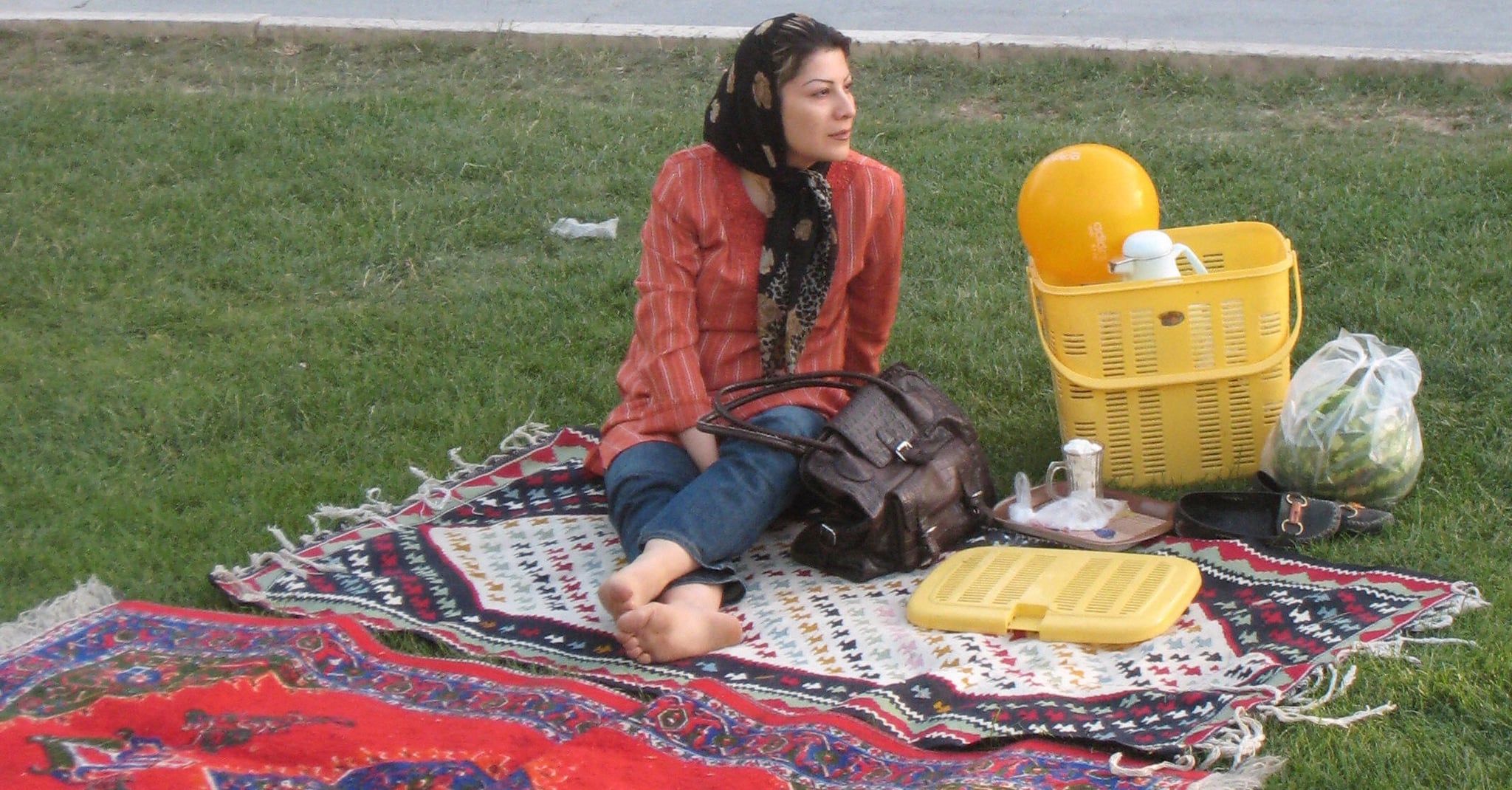 An Iranian woman picnics at Tehran's 'Mothers' Paradise' park, the city's sole women-only public recreation area
For women in Iran, gender is a constant point of political tension. So where can women go to seek freedom in a safe, open space? The park. In fact, women-only parks are one of the few places where Iranian women are empowered to go hijab-free, safe from penalty and male gaze. The parks were established in 2008 and are akin to similar gender-divided spaces in the country, like sporting facilities and public transportation. There are also establishments that offer women-only times, like water parks. These venues allow for freedom within the country's gendered laws, but people are torn on whether they're a positive or negative.
Since the Iranian revolution in 1979, women have been required by law to wear hijab in the theocratic country. The society values conservative Islamic beliefs and likens women's rights to criminal activity. Women are forced to comply with the hijab law or face harsh penalties like imprisonment and lashing for being seen as amoral and un-Islamic. Despite strict circumstances, women in Iran rebel in many ways: wearing white on Wednesdays to express dissent, encouraging tourists to forgo local norms in protest, and even going out sans head wrapping in defiance of the restrictive laws.
This is why the women-only parks are complicated: they have come to represent the crisis of female freedom in Iran. On the positive side, the parks enable a sense of independence. Sociologist Reza Arjmand has studied these parks and, despite their separating people, finds they are a good thing. "It's true that these parks isolate women," Arjmand told The Guardian. "But it also offers a group of them a freedom they formerly did not possess." Moreover, Arjmand finds these parks to be important as they boast sun exposure for covered women, thus preventing Vitamin D deficiencies that can cause maladies like Multiple Sclerosis. These literal safe spaces also prevent sexual harassment that, somewhat counterintuitively, has often come with wearing the hijab.
Still, there are people who see this trend as another continuation of "institutionalized segregation of sexes." One 2013 study of park attendees published by Armanshahr Architecture & Urban Development found these parks are a temporary solution for bigger problems and "have not offered any different features rather to what the public city parks offer." These spaces also recall similar debates about public and private spaces in the country — for example, female drivers daring not to wear the hijab in cars.
Activists like Roya – whose name has been withheld for safety – are critical of the parks for this reason. "These parks are an insult and I will never go there," Roya explained to The Guardian. "If you put women in separate parks, men and women will never learn how to interact in a normal way."
Regardless of how they are viewed, the parks compound nearly 40 years of growing pains that come with restricting women: people are tired of the division while some believe the hijab should be optional. The parks exist as a metaphor for a problem between religion and personal freedom in a society where women can be arrested for riding bicycles and are barred from activities like Zumba and marathon running.
In America, as in many parts of the world, gender comes with heavy cultural baggage that is reinforced by laws. In countries like Iran, this baggage is reaching a breaking point — and untangling the country's gender inequality certainly won't be a walk in a women-only park.