What is Pulsed Dye Laser?
Laser Treatment: PDL
Best For: broken capillaries, rosacea, and spider veins
Downtime: little to none, with potential light bruising
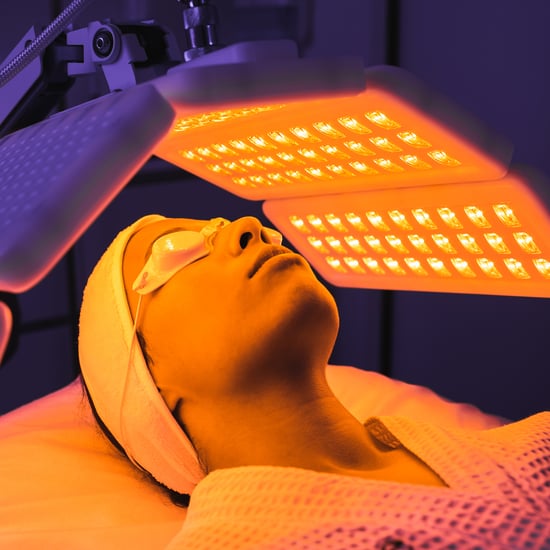
The Pulsed Dye Laser (PDL) is very similar to the Nd:YAG laser — it is used to zap away broken capillaries and spider veins, and is most beneficial for people with rosacea. "The non-ablative PDL laser specifically targets blood vessels, so it is excellent for removing broken capillaries, vessels around the nose, very small veins on the legs, and small red dots called cherry angiomas," says Dr. Herrmann. "The laser light targets hemoglobin, a protein which is in red blood cells. It heats it up, and this heat collaterally damages the blood vessel walls surrounding it, which causes them to collapse and disappear. Because we have so many extra vessels in the skin, removing a few doesn't have any negative health consequence."
She also notes that because these lasers target blood vessels specifically, they do not affect other skin structures and do not cause crusting, scabbing or peeling, so there is little to no downtime. You'll usually be able to return to your normal activities right away, but it is essential to use sunscreen on the treated areas.
The PDL laser feels like a small snap of a rubber band with each zap, but it's over pretty quickly — you likely won't need any numbing cream. In terms of downtime, it really depends on the amount of energy used by the laser (a setting your doctor will determine). You may just have a couple red marks that fade in a day or two, or you may see some small bruises. "Vessels may also turn darker purple and fade over a couple of weeks," Dr. Herrmann says. "If redness is stubborn, sometimes we purposefully use higher energy to create small bruises, which usually is more effective at reducing redness."
Sometimes these capillaries can be stubborn and may take a few rounds to diffuse the redness. This is especially true for people with rosacea. Dr. Herrmann also notes that redness may also return slowly over time, so future treatments may be recommended.