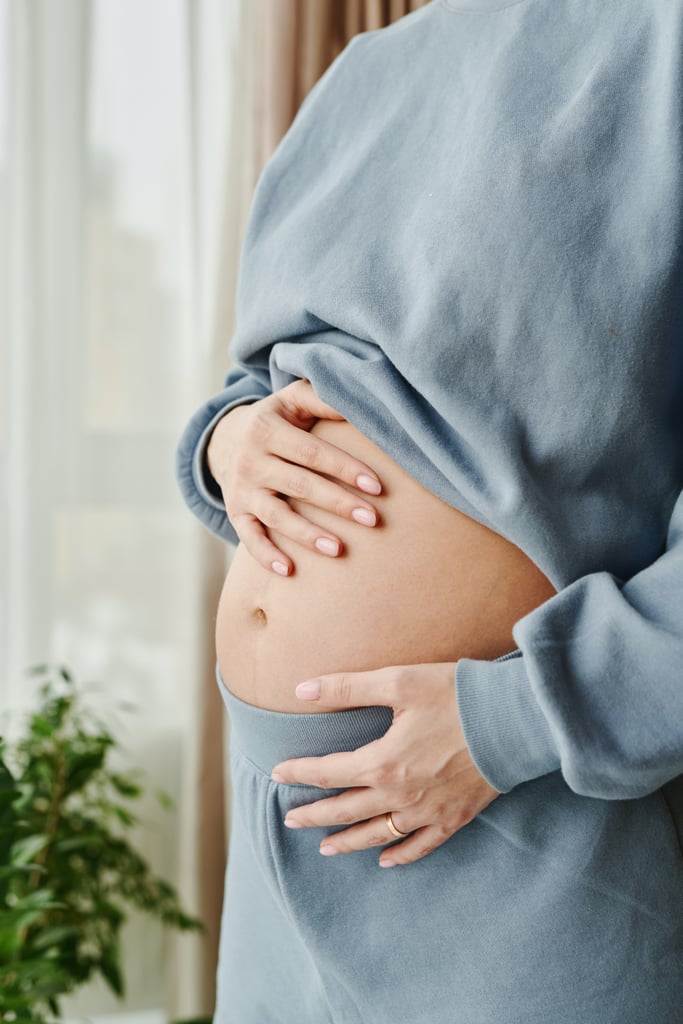
Although medical opinions differ about how effective perineal massage is in preventing tears during vaginal childbirth, there is evidence that first-time moms who receive perineal massage are less likely to tear and less likely to require an episiotomy, reports the International Urogynecology Journal. They healed faster, as well. "Perineal massages may also decrease the burning and perineal pain during labor," Dr. Pero adds.
Another study in the Journal of Maternal-Fetal & Neonatal Medicine found that perineal massage during labor also helped reduce the risk of severe tearing.
As for how it works: "Perineal massage — [performed] before labor, called antenatal, or during the second stage of labor — is intended to decrease perineal muscular resistance and reduce the likelihood of laceration at delivery," Dr. Pero says. "The physiological explanation is that a perineal massage increases the elasticity of the tissue that would naturally be stretched and at risk of tearing during labor."
But perineal massage isn't the only effective method to prevent tearing. "Putting warm compresses on the vulva and perineum during pushing has been shown to reduce the incidence of third-degree and fourth-degree tears during labor, which both involve the tissue extending from the vagina to the anus and the tissue involving the anus," Dr. Pero says.
Birthing position may also make a difference, she says. In one 2012 study, "lateral birthing position with delayed pushing (meaning laying on your side instead of your back and waiting to push until you feel pressure, not just when you are fully dilated) was compared with lithotomy (back) positions and pushing at complete dilatation (being 10 cm dilated)," Dr. Pero says. The result? People in the lateral position with delayed pushing were more likely to deliver with no tears. Again, this doesn't mean this will work for everyone — but it could be something to discuss with your care team prior to giving birth.