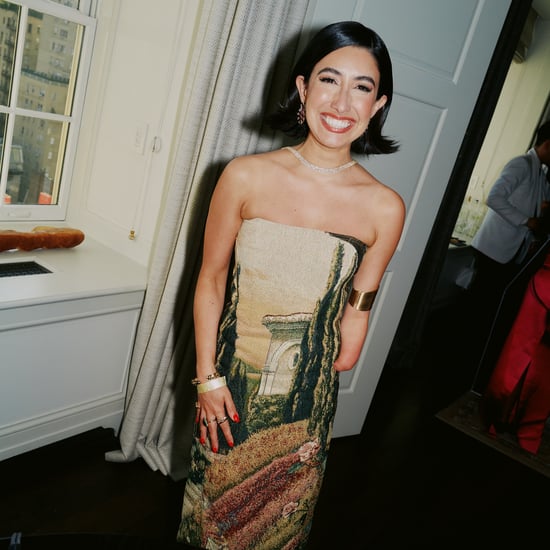
"Racial stereotypes do affect the way I dress and consume fashion. The way I see my history as a south Asian is contextualized by the pain my parents and grandparents experienced while trying to assimilate. My mom often recalls being asked as a child if she was black and desperately trying to seem white. Her favorite outfit was a khaki vest and Osh Kosh B' Gosh overalls, until she went to India as a teenager, and came back sporting the now-accepted khurtas.
Fashion is one way in which we have always been connected to our history and homeland, but we've also occasionally experienced micro aggressions when sporting our traditional wear. I don't often wear the prints or clothes of India because I'm not always ready to engage in a conversation where I have to explain my appearance (i.e. why I'm wearing a sari on a given day, why I wear a bindhi daily, why my hair is always braided etc.) For me, those are all style choices with cultural origins. Paisley prints, cashmere, bindhis, madras shorts, tunic styles and henna [come in and out] of fashion, but to me those objects are so reminiscent of colonial histories and my family's own immigration story, that it's hard to wear them outside of social functions with similarly identified people.
In the same way that black culture is now marketed as "cool," and readily consumed without the need for the consumer to engage with dialogues of racism, south Asian culture is constantly commoditized and consumed in a way that makes me uncomfortable. There are a few elements of south Asian culture/fashion that have been deemed cool now (outside of yoga) like bindhis worn during festival season and Hindu deities plastered across t-shirts, but it's [still] hard for me to look Indian and feel like I belong. American culture is defined by conspicuous consumption, and for many south Asian immigrants and their descendants, that means consuming things that will demonstrate our assimilation and 'American-ness.' I think all people — regardless of their specific background — are negotiating their multiple identities and desire to assimilate when they get dressed." — Lakshmi, Indian

!["Racial stereotypes do affect the way I dress and consume fashion. The way I see my history as a south Asian is contextualized by the pain my parents and grandparents experienced while trying to assimilate. My mom often recalls being asked as a child if she was black and desperately trying to seem white. Her favorite outfit was a khaki vest and Osh Kosh B' Gosh overalls, until she went to India as a teenager, and came back sporting the now-accepted khurtas.
Fashion is one way in which we have always been connected to our history and homeland, but we've also occasionally experienced micro aggressions when sporting our traditional wear. I don't often wear the prints or clothes of India because I'm not always ready to engage in a conversation where I have to explain my appearance (i.e. why I'm wearing a sari on a given day, why I wear a bindhi daily, why my hair is always braided etc.) For me, those are all style choices with cultural origins. Paisley prints, cashmere, bindhis, madras shorts, tunic styles and henna [come in and out] of fashion, but to me those objects are so reminiscent of colonial histories and my family's own immigration story, that it's hard to wear them outside of social functions with similarly identified people.
In the same way that black culture is now marketed as "cool," and readily consumed without the need for the consumer to engage with dialogues of racism, south Asian culture is constantly commoditized and consumed in a way that makes me uncomfortable. There are a few elements of south Asian culture/fashion that have been deemed cool now (outside of yoga) like bindhis worn during festival season and Hindu deities plastered across t-shirts, but it's [still] hard for me to look Indian and feel like I belong. American culture is defined by conspicuous consumption, and for many south Asian immigrants and their descendants, that means consuming things that will demonstrate our assimilation and 'American-ness.' I think all people — regardless of their specific background — are negotiating their multiple identities and desire to assimilate when they get dressed." — Lakshmi, Indian](https://media1.popsugar-assets.com/files/ps-image-unavailable.png "\"Racial stereotypes do affect the way I dress and consume fashion. The way I see my history as a south Asian is contextualized by the pain my parents and grandparents experienced while trying to assimilate. My mom often recalls being asked as a child if she was black and desperately trying to seem white. Her favorite outfit was a khaki vest and Osh Kosh B' Gosh overalls, until she went to India as a teenager, and came back sporting the now-accepted khurtas.
Fashion is one way in which we have always been connected to our history and homeland, but we've also occasionally experienced micro aggressions when sporting our traditional wear. I don't often wear the prints or clothes of India because I'm not always ready to engage in a conversation where I have to explain my appearance (i.e. why I'm wearing a sari on a given day, why I wear a bindhi daily, why my hair is always braided etc.) For me, those are all style choices with cultural origins. Paisley prints, cashmere, bindhis, madras shorts, tunic styles and henna [come in and out] of fashion, but to me those objects are so reminiscent of colonial histories and my family's own immigration story, that it's hard to wear them outside of social functions with similarly identified people.
In the same way that black culture is now marketed as \"cool,\" and readily consumed without the need for the consumer to engage with dialogues of racism, south Asian culture is constantly commoditized and consumed in a way that makes me uncomfortable. There are a few elements of south Asian culture/fashion that have been deemed cool now (outside of yoga) like bindhis worn during festival season and Hindu deities plastered across t-shirts, but it's [still] hard for me to look Indian and feel like I belong. American culture is defined by conspicuous consumption, and for many south Asian immigrants and their descendants, that means consuming things that will demonstrate our assimilation and 'American-ness.' I think all people — regardless of their specific background — are negotiating their multiple identities and desire to assimilate when they get dressed.\" — Lakshmi, Indian")