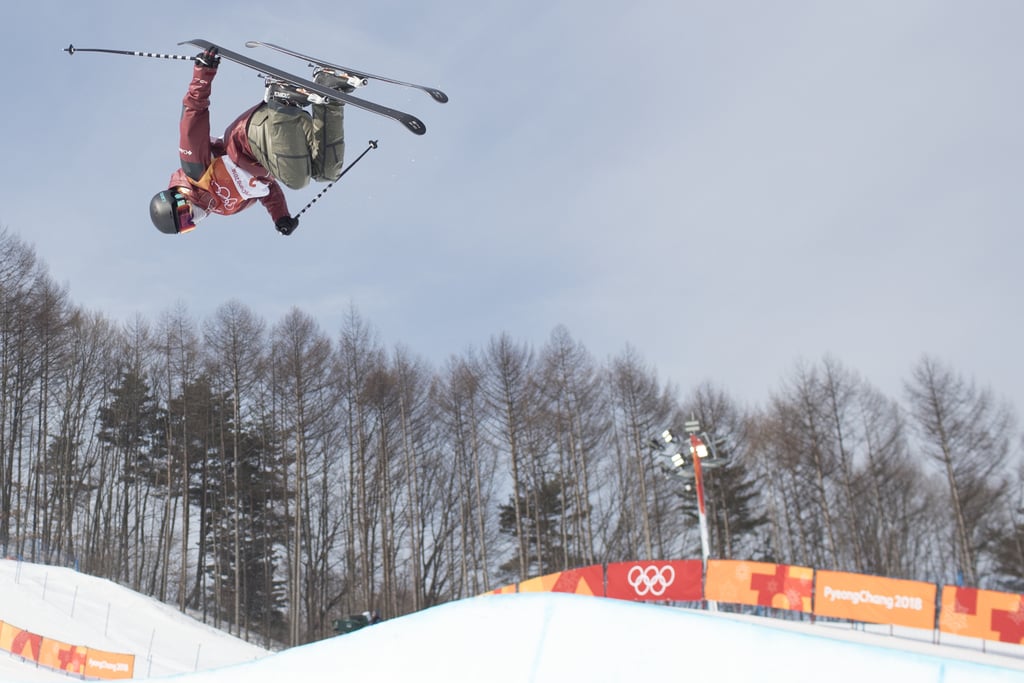
Freestyle skiing's halfpipe competition is very similar to the snowboarding discipline, although it's somewhat newer — it was only introduced at the 2014 Olympics. Unlike some of the other freestyle skiing events, halfpipe doesn't break down scores by specific percentages. Instead, a panel of five judges award scores from one to 100 based on overall "impression," keeping the factors below in mind. These scores are then averaged to get a run score. However, there aren't hard and fast rules for how each run in halfpipe should be scored, which means skiers are typically judged relative to how other athletes perform that day.
- Amplitude: This is a measure of the sheer size and height of the tricks performed, and while going big is typically a good thing, athletes can actually be penalized for overdoing it.
- Difficulty: Skiers can up the difficulty of their tricks by spinning in different directions, planning unique entrances, grabbing their skis in mid-air, etc.
- Variety: It's exactly how it sounds — the more variety in the tricks a skier performs, the higher the score.
- Execution: When assessing the overall quality of a skier's tricks, judges will consider how long a skill is held, how their body is positioned upon landing, whether the athlete's hand touches the ground, and so on.
- Progression: This term is used in both snowboarding and freestyle skiing to talk about how innovative an athlete is in introducing new, creative tricks.