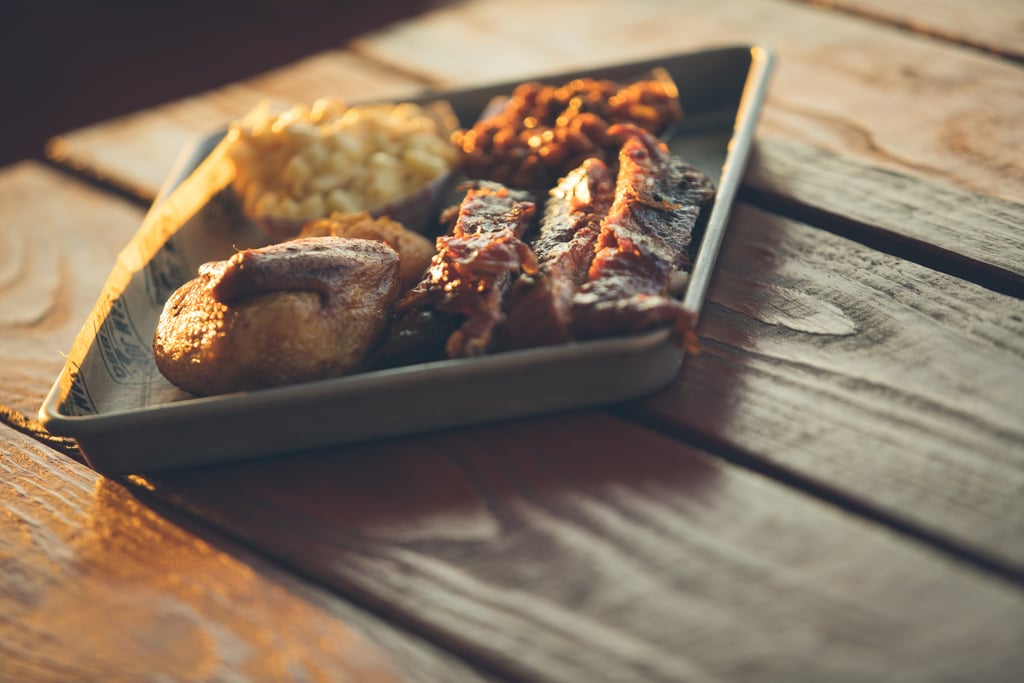
The essence of North Carolina's contribution to barbecue is pork that's smoked over hardwood coals. Yet this state sports two types: a Lexington style and an Eastern style. How do they differ? Well, for starters, it involves the cuts of meat. In the Eastern part of the state, the process of slow-cooking whole hogs has been recorded since the 1700s and still showcases the entire hog today. Later on, Lexington-style barbecue would come into existence due to German settlers within a region known as the Piedmont opting to smoke just the pork shoulder. As for the end tasting result: the whole hog can come out lighter, with a melt-in-your-mouth finish, while the Lexington shoulder version is fattier and chewier. Now, here comes in another alternation — with sauce.
Often called "dip," Lexington-style sauce is a tart vinegar sauce that gets a red tint from containing tomato sauce or ketchup. The Eastern style doesn't have any tomato at all. Then there are sides. With coleslaw, Lexington uses the same tangy sauce on the cabbage and the meat, while Eastern goes with mayonnaise and a bit of sugar. One more thing: Lexington usually serves up hush puppies but Eastern goes more with cornbread or corn sticks.
Where to eat: Lexington Barbecue, where its pork shoulders get roasted for nearly half a day over oak or hickory coals; Skylight Inn BBQ in Ayden, which follows Eastern style and prepares whole-hog barbecue with crispy bits of skin chopped into the mix; Buxton Hall Barbecue in Asheville, with a whole hog smoked over wood and served with a classic vinegar sauce as well as a mustard sauce. Run by a third-generation barbecue restaurateur, Sam Jones BBQ in Winterville features smoked meats including turkey, chicken, and spareribs and an irresistible mac and cheese.