Shereen Marisol Meraji on the Impact of NPR's "Code Switch"
Shereen Marisol Meraji on Why She Was Able to Be Authentically Herself on NPR's "Code Switch"
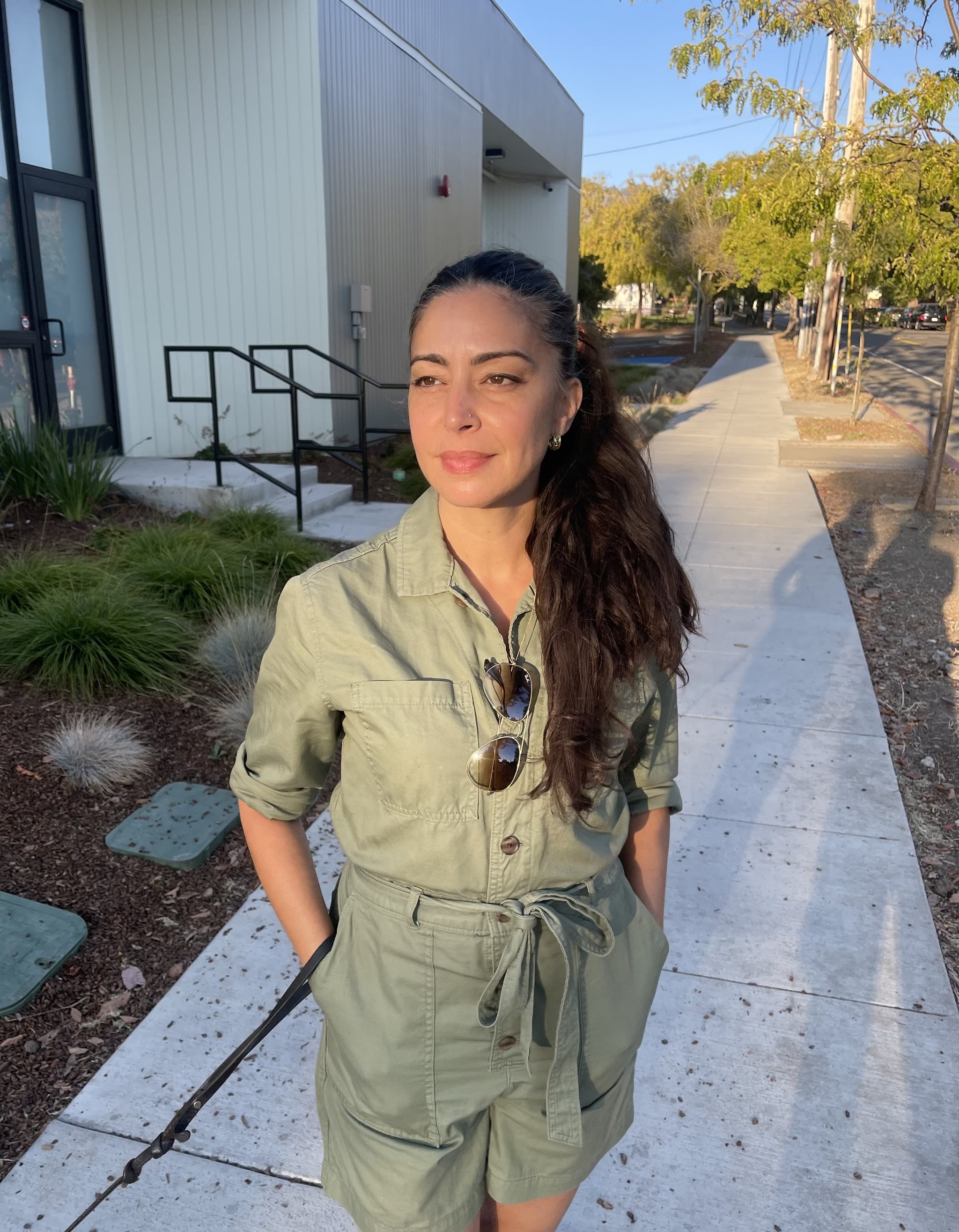
For many people of color living in the United States, code-switching has become an automated survival tool, something so ingrained in daily life that it often goes unnoticed. While the term code-switching technically refers to the linguistic practice of switching between languages, dialects, or colloquial speech, it also extends beyond language. It often involves adjusting one's expression, behavior, and identity to fit into societal norms, aiming to gain fair treatment, respect, quality service, and opportunities. Yet this constant adaptation can come at a personal cost. Shereen Marisol Meraji, a journalist, professor, and former cohost and senior producer of NPR's acclaimed podcast "Code Switch," understands this concept all too well.
"Code Switch" began in 2013 as a blog that explored race and culture. It launched as a podcast in 2016, cohosted by Meraji and Gene Demby. The program quickly rose in popularity, becoming one of NPR's highest-charting podcasts, and was named Apple's podcast of the year in 2020. Meraji stepped down from the podcast in 2023 to focus on teaching at the UC Berkeley Graduate School of Journalism and recently reflected on how the show helped normalize the term outside academic circles and what code-switching means to her today.
Meraji, who grew up in a multiethnic family in Northern California, has long understood the necessity of code-switching to navigate the world.
"My dad is from Iran, from Tehran, and my mom is from Puerto Rico, from Vieques," she says. "They met in California, got married, had me, and I grew up in the suburbs of Sacramento, which was really hard."
She recalls how her first neighborhood was quite diverse. However, when her family moved to the suburbs, the environment drastically changed, and they found themselves having to navigate life as people of color in a predominantly white neighborhood.
"It was incredibly tough coming of age in a place where no one looked like me. I often felt like we weren't liked," she remembers. "It was an isolating experience to come back to your own neighborhood and still not feel welcome. I definitely felt like an outsider, and that sense of being different shaped a lot of how I approach storytelling."
Her experience navigating a multicultural identity in a space where she felt isolated and misunderstood fueled her curiosity about race, identity, and belonging. This ultimately inspired her to pursue a career in journalism, where she could explore these themes further.
Meraji's interest in storytelling and the Latine diaspora led her to become a raza studies major at San Francisco State University, where she was exposed to history she'd never learned growing up. She then took on an administrative assistant role at the National Radio Project, which kick-started her career in public radio journalism and eventually led to her becoming the cofounder and cohost of NPR's "Code Switch." The show's aim was to cover racial issues while drawing in new audiences. But it did a lot more than that — including normalizing the term code-switch.
"We brought it down to earth. We grounded so much of what academics were talking about for a listening audience that didn't have to be super academic," she says. "I knew what code-switching was . . . my notion of what it was very simplistic. It was that you act a certain way with your friends and family, and you act very differently in a professional setting."
Meraji admits that working on "Code Switch" even changed her relationship with code-switching. Working on the show was the first time in her professional career that she had worked with a team that was majority POC. It was the first time she didn't feel the pressure to code-switch.
"It was so awesome. I had always thought of being able to code-switch as an asset, but it's like you're putting on this armor and it was so nice to take the weight of that armor off," she says. "This was the first time where I worked at a place that was majority non-white, and there was a feeling of freedom that I had never felt before."
On the show, the two cohosts dove into topics ranging from the origins of the "one-drop rule" to an episode on Vice President Kamala Harris's multicultural identity. They were never afraid to go there, even before 2020, when conversations like these finally began to become more mainstream. Not only did every episode start off with a fully researched history lesson before diving into the topic, but Meraji and Demby's casual conversation style made it easy to feel like you were eavesdropping on a convo between two homies of color.
"I forgot how relaxed that sounded, and I think that has something to do with the fact that we didn't have to code-switch," she says. "I really do think that there was a freedom to being ourselves and that changed how the product sounded. It changed what we were doing. I think we were doing something good. I miss it."
Looking back, Meraji describes everyone working on the show as "these misfit nerdy POCs who all came together for this brief period of time to create this thing where we would just truly be ourselves." And there was inherent power in that, she adds: "The creative product was a result of that freedom and of taking off that armor of code-switching. I do feel that code-switching is really important and can be an asset but the reality is you are changing who you are. You are."
These days, Meraji has managed to get some of her students on episodes of "Code Switch." She recently landed an opportunity hosting the Audible original series "How I Get It Done," based on the long-running column from The Cut and New York Magazine. On the show, Meraji interviews successful women from all walks of life about how they've managed their careers. Guests include style icon and Real Housewife Jenna Lyons, Broadway actress Jesmille Darbouze, actress Ana de la Reguera, and "Insecure" star Yvonne Orji.
It's been 11 years since Meraji launched the NPR blog that'd become "Code Switch." She's proud of how the show normalized the term and dialogue around race, belonging, and authenticity, and of how it's allowed her to navigate her career as her true self.
"All of the time and energy it takes to hide your true self could be used in so many other creative ways," she says. "Reclaim that time and use it to leave this world a better place than you found it."
Johanna Ferreira is the content director for PS Juntos. With more than 10 years of experience, Johanna focuses on how intersectional identities are a central part of Latine culture. Previously, she spent close to three years as the deputy editor at HipLatina, and she has freelanced for numerous outlets including Refinery29, Oprah magazine, Allure, InStyle, and Well+Good. She has also moderated and spoken on numerous panels on Latine identity.