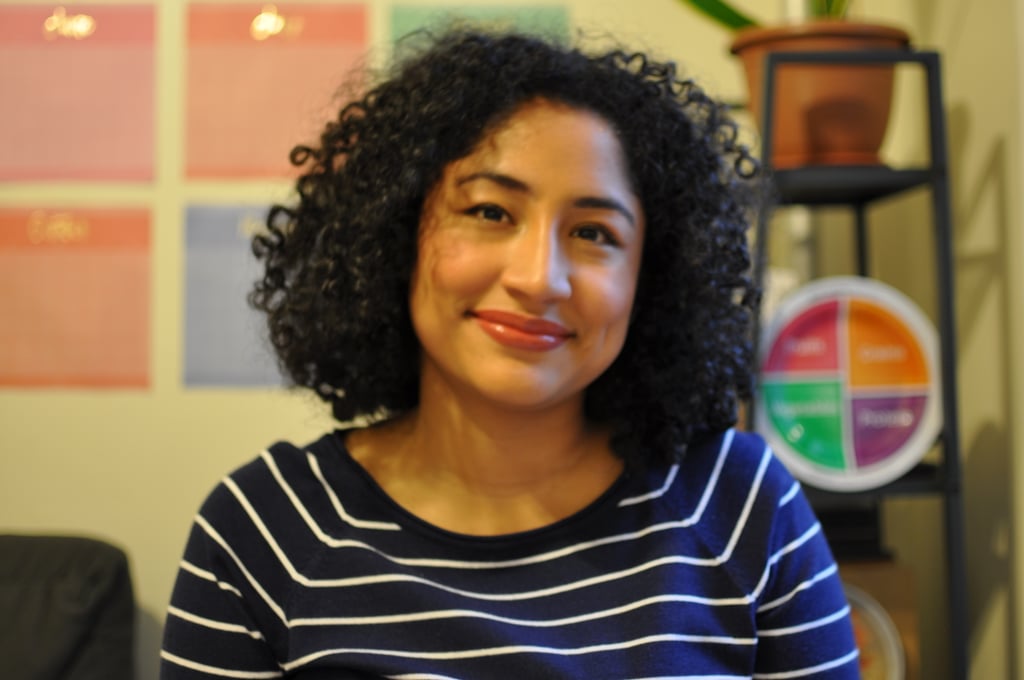
Meet the expert: Saballos discovered nutrition through an elective course while in college. "The more I learned about nutrition, the more fascinated I was with how it could impact people's health for better or worse," she says. This encouraged her to become a dietitian who could provide support without judgment of Latinx cultural foods.
Her anti-diet philosophy: Saballos says in order to fight diet culture one has to first be aware of what diet culture is and how it presents itself in everyday life. "One of the key elements of my counseling is helping clients let go of these myths that they have learned over the years," she explains. This is because it can manifest in parents projecting their fears, misconceptions, and trauma around food onto their children.
"The worst dieting myth I try to help my clients overcome is that children need to be on a diet for weight loss or weight gain," she says. Saballos elaborates how our obsession with being "a certain size" is a disservice to those that listen to their hunger and satiety cues and eat until they're comfortably full. "When we teach children to eat more than they want — as in finishing everything on their plate, rewarding them with a certain food, and/or restricting their eating, we teach them to ignore their hunger or fullness cues and create an unpleasant experience around food," she says. This can have serious long-term effects, such as feeling shame, hiding foods, and disordered eating.
Fighting food shaming: Saballos, who is of Nicaraguan descent, makes it a point to highlight that many traditional Latinx foods are nutritious. "I use a lot of examples with my clients to remind them of foods that they might have grown up eating and are now considered "superfoods," such as quinoa, chia, flaxseeds," she says. Saballos also highlights the complexity and nourishment our traditional foods have provided and tries to put it in the context of colonization and exploitation our communities have survived. "We live in a society that expects us to work nonstop, which can make us skip meals, sleep less, and feel like we don't have time for ourselves," she says adding that she encourages clients to understand the need to take care of themselves by teaching them to see self-care with a lens of abundance instead of restriction. This includes more meals, more fruits, more vegetables, more movement, and more sleep.
Where to follow her: @Latinxrd