How did her journey begin?
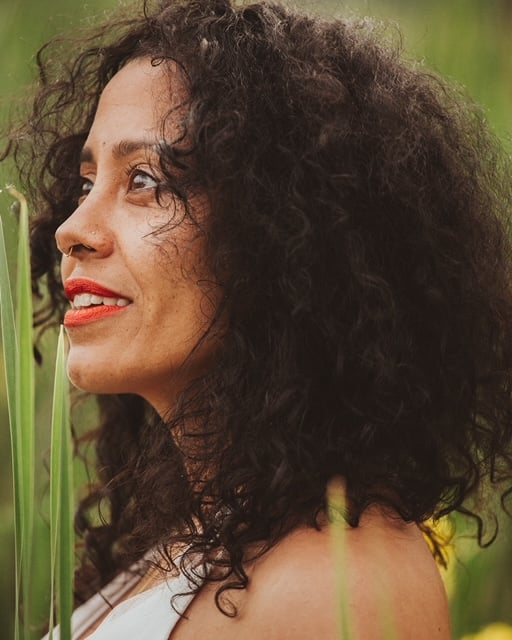
Giselda Rodriguez-Solomon, PhD, is a Dominican professor at the City College of New York. She identifies as Afro-Latina and is one half of the Brujas of Brooklyn, along with her twin sister, Miguelina Rodriguez, PhD. Dr. Rodriguez-Solomon's spirituality came from her family. She learned from them about the 21 Divisions, but it was not until she got to college that she began exploring what it all meant. "I learned about the practices that my family followed, which, in particular, are the 21 Divisions. I learned just by seeing my family practice. Nobody ever sat me down and said, This is what this is,'" she said. "We would go to misas (seances) or gatherings where people would be mounted (ritually possessed), and my mother never explained to me as a child what we were doing and where we were going. [I didn't] even process what it was that I saw after like people being mounted. It wasn't until I came of age, especially going to college, and I became curious and spirit led me to read about the history of these practices and I was able to collect formal names."
What has her spiritual journey been like?
Like many of us, Dr. Rodriguez-Solomon's journey has been a lifelong one. Spiritual journeys are never linear; in fact, it's an ebb and flow that can have many progressions and regressions. With her work at Brujas of Brooklyn, she and her sister have been able to reach and educate others on their journeys as well. As they've been stepping more into their roles as healers and spiritual guides, they've faced discrimination not only from outsiders but also from their family members who don't understand their desire to tap into the "old ways" associated with Africa. Today, Dr. Rodriguez-Solomon is under the guidance of an oungan (Vodun priest) with the hopes of one day becoming an ordained priestess, or mambo. "My journey has taken a lot of patience, a lot of compassion, it's also been beautiful because it's led me to live a life that's rooted in faith, not fear," she said. "I feel like I rely heavily on the traditions of my ancestors, and I can see that my ancestors are rooted enough and these practices are rooted in history of connotation and displacement and always mental, physical, emotional, so I feel like I connect that to my ancestors with these practices. And I am reminded that the same way they endured and were able to survive atrocious acts of dehumanization, that I too can survive."
What advice does she have for others who are hoping to explore their African ancestral practices?
One of the most important things Dr. Rodriguez-Solomon suggested is tapping into your birthright. Finding what resonates with you is key, and being true to yourself and your roots has to be top of mind because everyone's path is going to be different. The main thing she emphasized is faith in your own intuition as well as the timing of those messages, because that is ancestral guidance. "Trust that the divine will attract the very things that you need when you need them. Not a moment more and not a moment less," she said. "I think that that has helped me to stand firm in my beliefs to not be hasty when I think things are not happening at the time that I want them to, and for the most part that advice has worked out very well for me."
Where to find her:
@brujasofbrooklyn
@doctorgri
brujasofbrooklyn.com