Bernie Sanders Rally in Prospect Park, Brooklyn
Bernie Sanders Made a Crucial Point at His Record-Breaking Brooklyn Rally


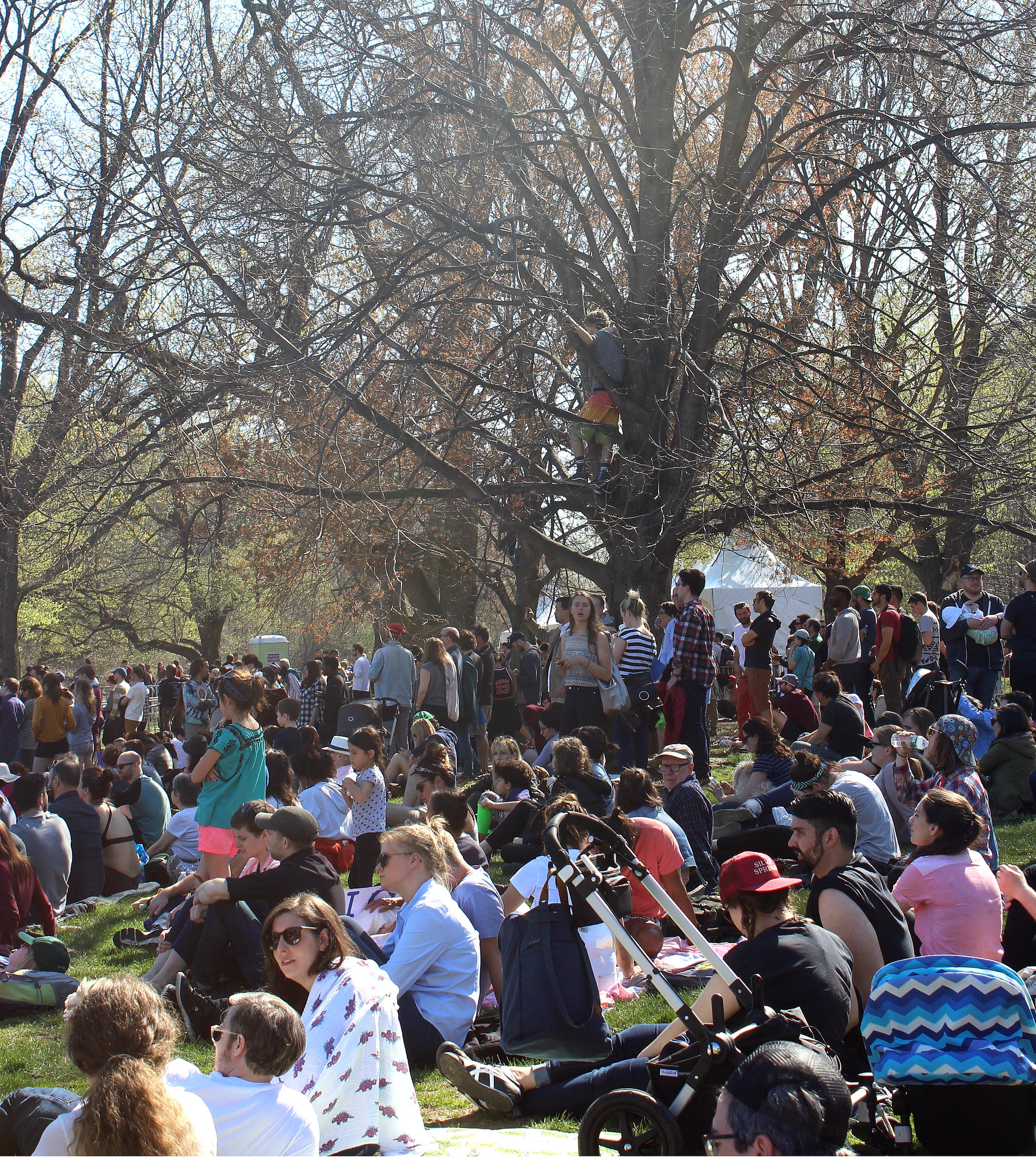
On Sunday, over 28,000 people turned out for a Bernie Sanders rally in Prospect Park, Brooklyn. The scene was similar to that of a Summer festival: 20-somethings sprawled out on blankets on the lawns, parents sat children on top of their shoulders, and one man even climbed up a nearby tree to get a better view.
The crowd was markedly calmer than that of Sanders's Washington Square Park rally last week, despite outnumbering that rally by more than a thousand people. According to his campaign, this was his largest rally to date and marks a successful stretch of vigorous campaigning by Sanders ahead of the April 19 New York primary.
There's no doubt Sanders is drawing more interest than ever, but the most striking aspect of his rally on Sunday wasn't necessarily the turnout, but rather the rhetoric. After a scathing rundown of all the things wrong with the current state of American politics, including attacks on Hillary Clinton and Donald Trump, Sanders shifted tactics for a moment and addressed the crowd with a hopeful call to action:
"No president, not Bernie Sanders or anyone else, can do it alone. The only way we make real change is when we stand together."
"The American people understand, maybe most profoundly . . . love trumps hatred."
It was strange to hear a presidential candidate focus on love as a mobilizing force, especially given the disparaging tone between the Democratic candidates as of late and the proven efficacy of Trump's hate-filled campaign. But what has always set Sanders apart is his awareness of the need to involve the American people in the process and his awareness of the limitations of a single presidential nominee. And that is what really shone through on Sunday.
The Sanders campaign may have started as a symbolic one, but his ever-strengthening candidacy has forced the Democratic party to face some sobering questions about the party's future. Sanders has been running on a very progressive platform, including single-payer health care, free public college tuition, and raising the minimum wage to $15 per hour. These have been met with a surprising level of enthusiasm by Democratic voters and have led to a split between the popular progressive policies that voters are rallying around in large numbers and the centrist actions of their elected officials.
"Being too moderate" has long been a criticism of Democratic politicians, including Barack Obama, Bill Clinton, and Hillary Clinton during her current campaign. The main thought has been that moderate centrism is perhaps the most pragmatic way to lead, but the popularity of Sanders's platform has helped bring progressive values into the mainstream and has pushed Hillary's campaign further left.
Sanders finished off his speech on Sunday by asking the crowd to remember our political past:
"If we were here 10 years ago and somebody jumped up and said, 'Bernie, I think that gay marriage will be legal in 50 states of this country by 2015,' the person next to her would have said, 'You are nuts.' That is exactly what happened. It happened not because of the decision of a conservative Supreme Court. It happened because millions of people stood up with the gay community. The gay community and their straight allies said, 'In America, people will have the right to love whoever they want, regardless of your gender.' That is how change comes about."
In invoking the memory of the legalization of gay marriage, Sanders sought to reinforce the movement his campaign represents: that progressivism can not only be popular — it can be effective.
These may still sound like the idealistic musings of a campaign that has been criticized for the same kind of disorganized revolutionary fervor that undermined the Occupy Wall Street movement, but really they point to a much more profound issue. Whether or not Sanders wins the nomination, passionate progressivism is still alive and well in the US, and this is something we as a people and the Democratic party as a whole need to rally around in order to change the climate — and trump the hatred.