What "Sterling Point" Gets Right About Girlhood
What "Sterling Point" Gets Right About Girlhood

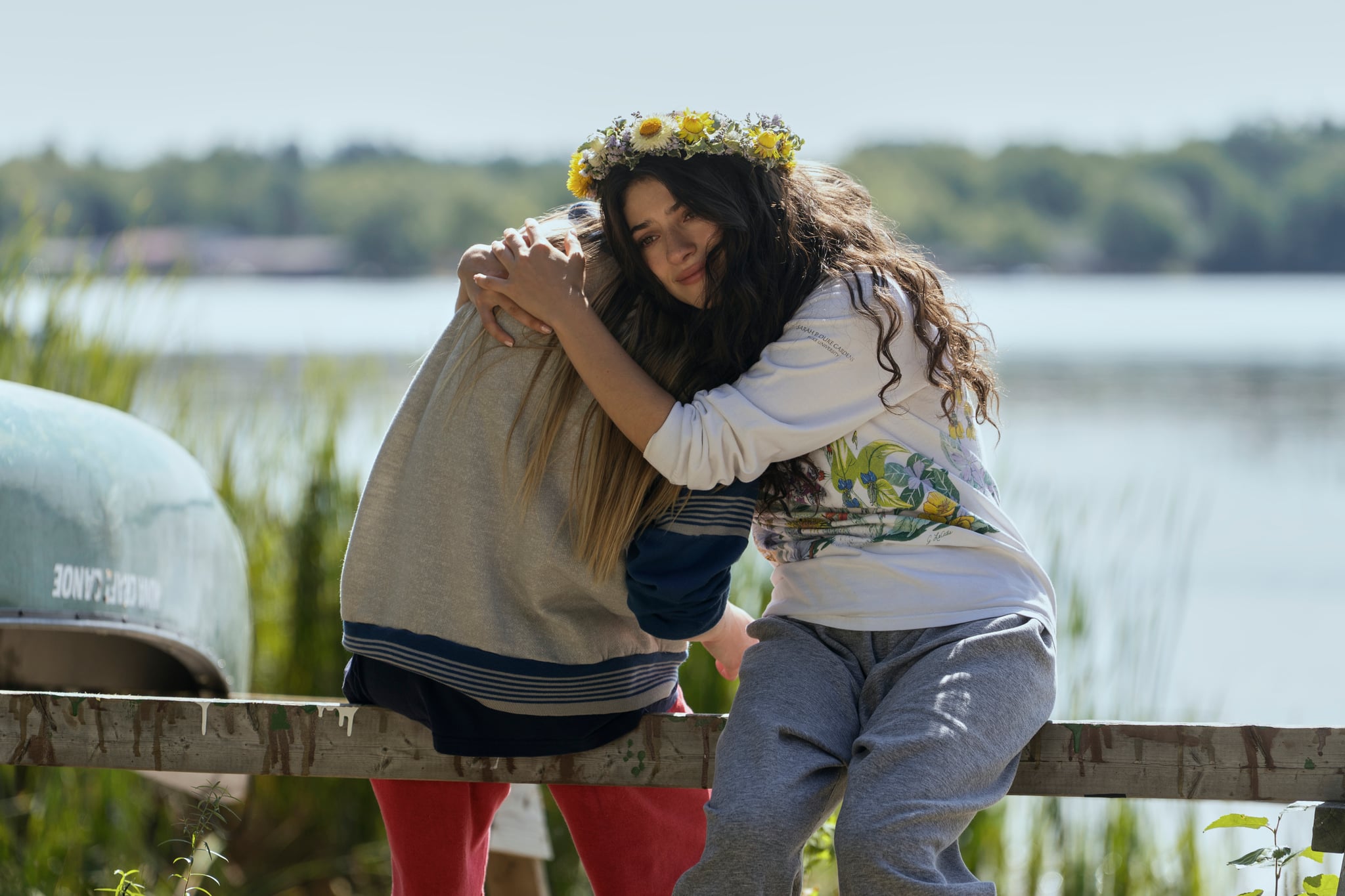
While the rest of the world is debating whether they're Team Rory or Team Ellis, it's a completely different love story in "Sterling Point" that I can't stop thinking about: the one between Annie and Ramona.
I'm obsessed with TV shows where female friendship is a central theme and the ones depicted in "Sterling Point" speak to my millennial heart in a way that no others have — maybe ever? Even though "Sterling Point" is set in the present day, there's something about it taking place in the summer, on an island that doesn't have cell service, with a soundtrack rivaling the one in "The O.C.," that transports me back to my own teen years in the aughts when girlhood was my entire personality.
When our deepest, darkest secrets were shared by the glow of a flashlight.
When we interrupted each other. Finished each other's sentences. Told an entire story with one look across the room.
When YouTube wasn't invented yet so we had to go to each other with all of our burning questions. Periods. Sex. Crushes. Kissing. Falling in love.
When falling in love was so foreign and scary that we asked each other: But how do you know? And once it was actually happening: How do you do it??? Because the only person who could understand how ridiculously terrifying it is to trust someone with your heart was that one friend who was learning the same thing at the same time and felt the exact same way.
The aughts were a smartphone-free era and that was a good thing. Most conversations happened over a bowl of cereal, a cup of coffee, or, let's be real, a flask.
For millennials, girlhood was defined by how many hours we could yap in one sitting. There were sleepovers and pillow talk and end-of-day debriefs were a must: How did things go with her? What's the latest with him? Are your 'rents still being the worst?
And even when we lied about our virginity to practically everyone, our girlfriends knew the truth. Because with our girlfriends, we didn't have to pretend. With our girlfriends, we could be our messy, awkward, imperfect selves.
"Sterling Point" touched on so many of these oddly specific yet deeply relatable girlhood moments and each one made me smile: like, for example, brushing your teeth together and pausing mid-story to spit in the sink. Like braiding each other's hair while recapping the most magical first kiss. Like curling up together on the couch, nursing the worst hangover of your life, spiraling about all the mortifying decisions you made.
It was the period scene, though, that really got me, how the girls all celebrated Maple "becoming a woman" at summer camp, making her a beautiful flower crown and howling at the moon, together, loudly, as if to declare to the world, we matter.
"Sterling Point" captures girlhood in its very essence — that special, unshakable bond we have with our female friends. For Annie and Ramona, there's the added layer of being sisters, but at the core, these are two teenage girls on the cusp of adulthood who are figuring out what it means to be a person together. Neither has a mother with whom they can go to, so they turn to each other instead.
This is a reality many young women face either because they grow up with a mother who is emotionally absent (like Oona) or without a mother at all (like Annie and Ramona). Either way, female friendships become a lifeline when you're trying to fill that void.
As someone whose mother fell under the "emotionally absent" category, I spent virtually all of my free time as a teenager with my female friends. They were everything to me. They taught me how to use a tampon. They showed me how to shave my legs. They told me when I bled through my skirt in math class. They were the first people I called when I had my first kiss, my first boyfriend, my first heartbreak, my first everything. They introduced me to masturbation and vibrators and birth control. They came with me to the health clinic on campus when I was convinced I needed the morning-after pill even though I hadn't had sex (and they didn't even laugh at the impossibility of it all). And oh, did they love to dress me up. They'd do my hair, my makeup, my nails. They'd let me borrow outfits that made me look ~hot~. I never felt as cool or confident or loved as when I was with my girls.
That's the thing with female friends: They're part sister, part mother, part "I'll take a bullet for you but not before 9:00 a.m." And there's no other relationship quite like it.
Platonic love is my favorite kind of love, and damn, does "Sterling Point" deliver. Thank you, Megan Park, for creating a TV show where the writing is so sharp, the characters so refreshing — for treating female friendships as the sacred relationship they are. And mostly, for reminding us all that girlhood isn't just a phase of life, it's an essential part of who we are.

Elizabeth Su, MA (she/her) is an author and millennial culture expert whose work sits at the intersection of pop culture and mental health. She holds a master's degree in Clinical Psychology from Columbia University where she studied burnout and perfectionism. Her work has been featured in The Los Angeles Times, Popsugar, Bustle, and more.