What Temperature to Curl and Flat-Iron Hair
How Hot Your Heat Tools Should Be Based on Your Hair Type

As POPSUGAR editors, we independently select and write about stuff we love and think you'll like too. If you buy a product we have recommended, we may receive affiliate commission, which in turn supports our work.
There's a very good reason a lot of your hairstyling tools have specific temperature settings meant for you to switch around and control. (Hell, even the best hair dryers have a "cool" shot to give you a break from the heat.) Still, when it comes to straightening or curling your hair, chances are you've sometimes just coated your head in a heat-protecting spray, clicked the "on" button, and styled as usual with hopes for the best. The problem is, if you're not actually considering the temperature that's best for your individual hair type and needs, you could be causing some unnecessary damage.
Of course, knowing where to start is always the hardest part, but that's why we've enlisted the help of a celebrity hairstylist. To get the full scoop and finally learn the best curling-iron temperature and flat-iron temperature for you, keep reading.
The Best Curling-Iron and Flat-Iron Temperature
The specific heat setting you should use is very dependent on your specific hair, and there are a few things to consider beforehand. Is it curly or straight? Is it coarse, or is your hair fine? Do you chemically treat or color it regularly? Generally speaking, and according to celebrity hairstylist and T3 stylist ambassador Laura Polko, 350 degrees Fahrenheit is a good baseline, but there are certain hair types that may need a higher (or lower) heat setting for their hair to curl or straighten properly.
"It's all about finding out what is right for your specific hair," she tells POPSUGAR. "Always start low, and you can increase if you need to. Especially if you are not skilled at using a flat iron or curling iron, you're going to want to start with a really low heat and keep your passes slow, and repeat them if you need to."
When determining how much heat your hair can handle, you should not only consider your hair or curl type but also its health. Consider the last time you got it colored or chemically treated: "Ignoring these factors can mean you are overexposing your hair to heat," Polko says. "This can result in breakage, damaged hair, and styles that don't last."
To help you better determine the best heat setting for your specific hair type, read on.
Best Curling-Iron and Flat-Iron Temperature For Fine Hair
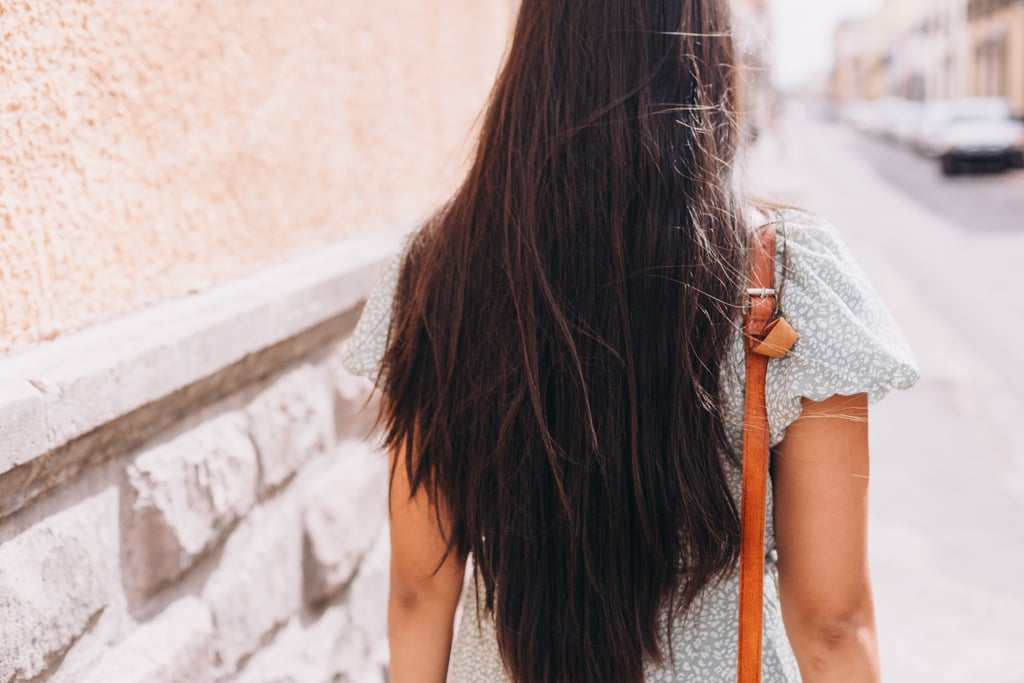
Fine hair is defined as hair with strands that are very small in diameter. It typically can't handle as much stress as thicker or coarse hair, so for that reason, you should consider using very low temperatures when you heat style it.
"For finer hair types, you should definitely keep your hot tool under 300 degrees," Polko says. "If you need an extra pass at a slower pace, that's OK. Some things to keep in mind when using a flat iron or curling iron with fine hair is make sure you brush your hair out and always use a heat protectant."
Best Curling-Iron and Flat-Iron Temperature For Wavy Hair
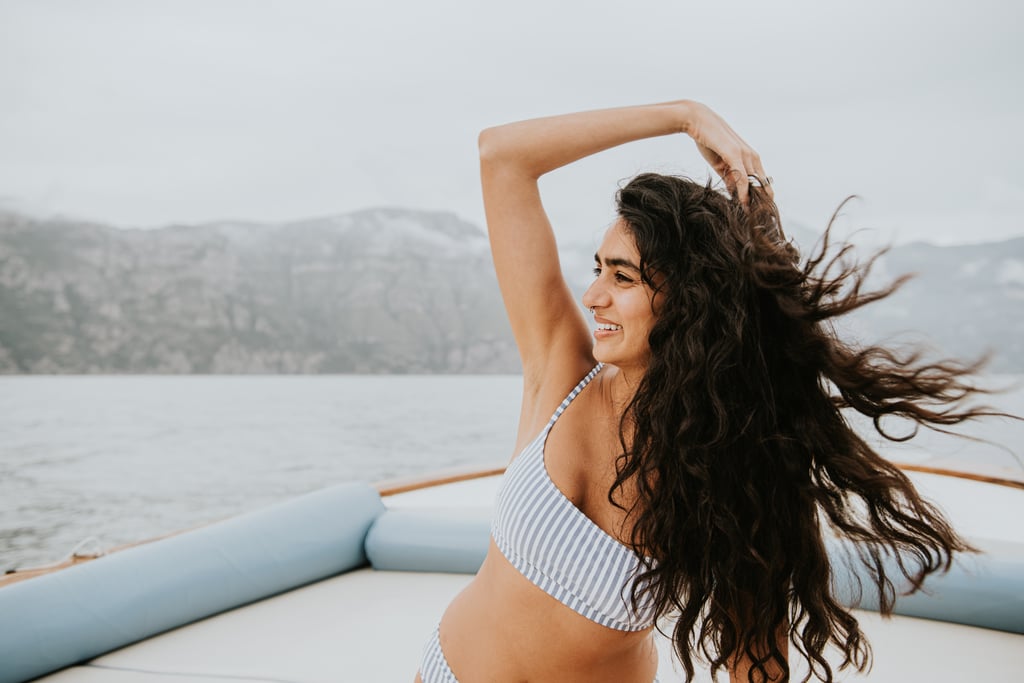
If you have wavy hair, you can typically stay in the medium temperature range — think 300 to 350 degrees — although this can also depend on your hair texture. If it's thicker in diameter, you can usually go on the higher end of that range.
"People tend to have a misconception that curly or wavy hair has to be thick in texture, and if it's straight, it has to be fine," Polko says. "In reality, everyone has different hair densities regardless of if hair is curly, straight, or wavy."
Best Curling-Iron and Flat-Iron Temperature For Curly Hair and Coily Hair

The heat setting for curly hair types really comes down to whether the strands of hair are thick or fine.
"Surprisingly, a lot of curly hair can actually be really fine," Polko says. "If that's the case, then you'll want to use a low heat setting. If the hair is very fine, you could also blow it out beforehand with a paddle brush to cut down on heat styling."
If you have curly hair that's a little thicker, you'll want to use a higher heat setting. Most straighteners go up to 450 degrees, but since curly hair is more susceptible to being damaged by heat — heat styling it too much can ruin your natural curl pattern — it's not entirely necessary to use a setting that high. If ever you're attempting to straighten or blow out your curly hair, try to use a very minimal temperature that doesn't go above 350 degrees.
The Best Hot Tools No Matter Your Hair Type
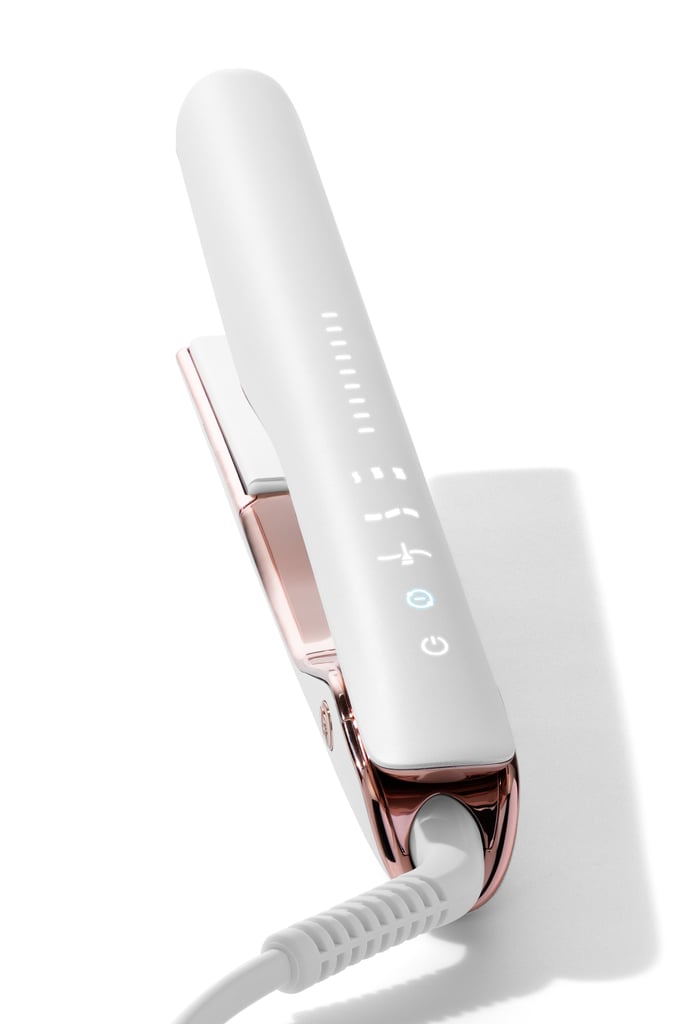
While there are plenty of hot tools that offer a range of heat settings that you can control based on your individual hair type (and we highly recommend you use them when you can), there are also emerging technologies on the market that do the hard part for you. Take the T3 Lucea ID Straightening and Styling Iron ($250), for example. Its smart-touch design lets you enter in your texture, length, and color treatment in the settings in order to calculate your perfect heat setting (of nine total) to minimize damage. Brilliant.