Karlie walked the 2012 Victoria's Secret runway wearing a headdress, leather underwear, and moccasin heels.
The Backlash: Headdresses or war bonnets have spiritual meaning, making the look insensitive. It also kicked off a larger conversation about appropriation. Native American groups said the look perpetuated stereotypes and ignored longstanding sexualization of Native women.
The Response: Victoria's Secret apologized and cut the look from TV. Karlie also apologized.
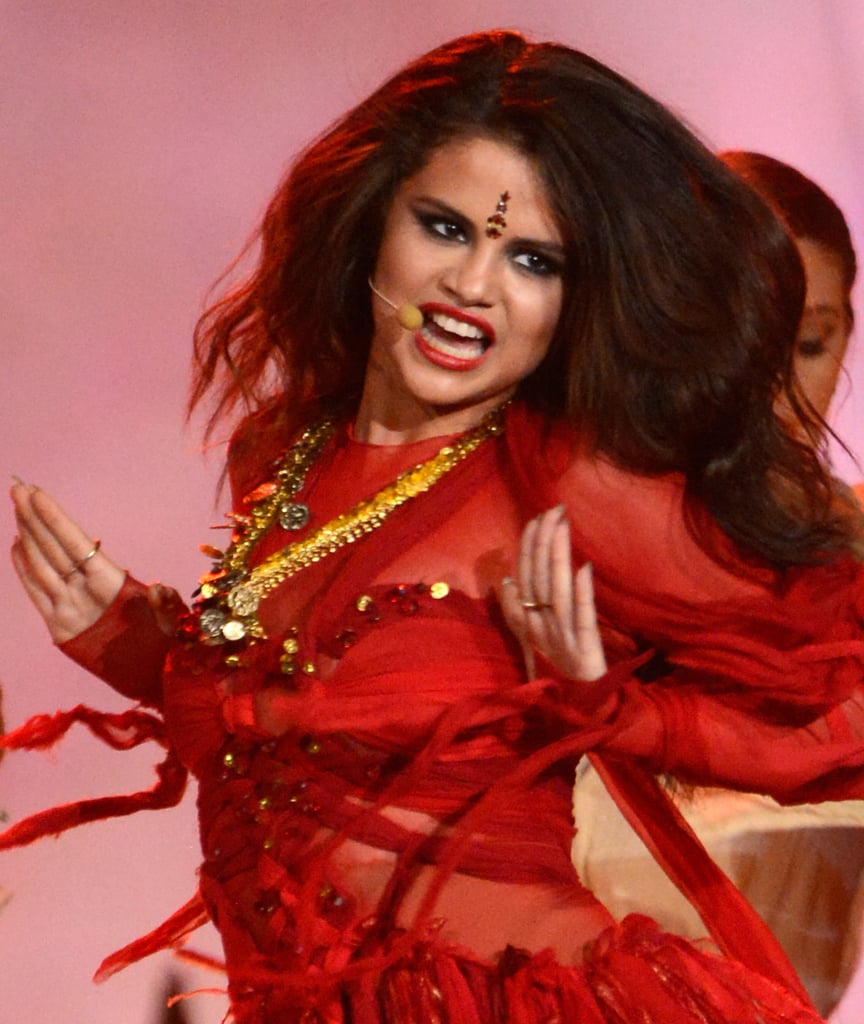
Selena performed a Bollywood-inspired song at the 2013 MTV Movie Awards wearing a bindi.
The Backlash: The Universal Society of Hinduism asked for an apology, explaining that "the bindi on the forehead is an ancient tradition in Hinduism and has religious significance." They said "it is not meant to be thrown around loosely for seductive effects or as a fashion accessory aiming at mercantile greed."
The Response: The controversy didn't change Selena's actions. She said "the song kind of has that almost Hindu feel, that tribal feel. I kind of wanted to translate that." She wore a bindi to later appearances.

In 2013, Michelle played dress up for AnOther Magazine. One costume featured braids, feathers, and makeup imitating "Native American" features.
The Backlash: A Native American journalist group explained that when a non-Native person does this it "perpetuates the stereotype that all Native people look like this."
The Response: Williams kept quiet and the magazine issued a statement short of an apology.
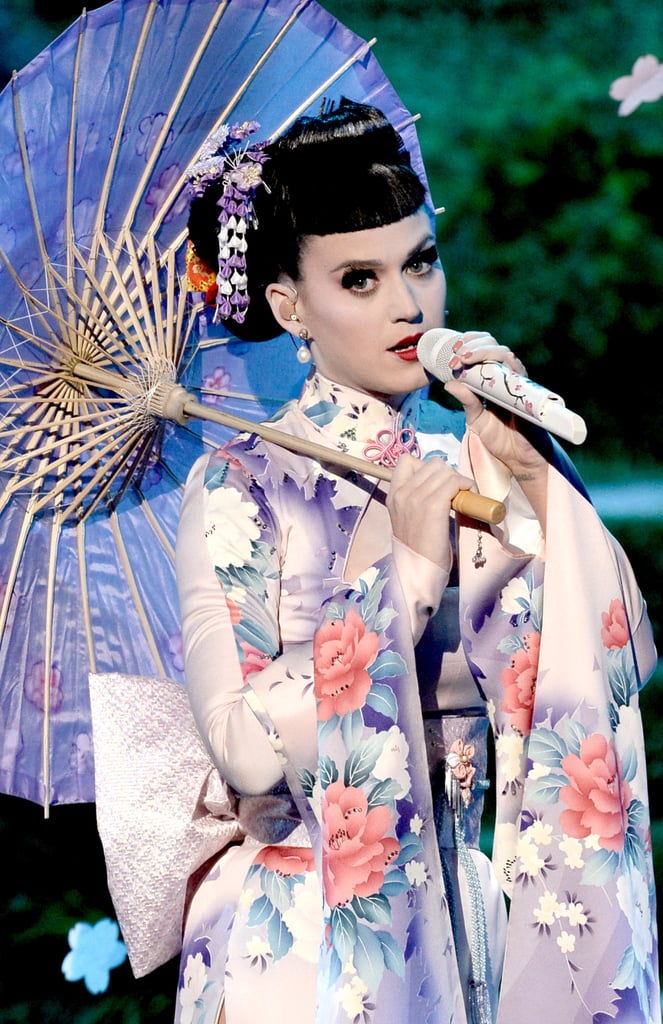
At the 2013 AMAs, Katy wore a powdered face and geisha costume to perform "Unconditional."
The Backlash: Social media and press critics took issue. One WSJ columnist wrote that the performance perpetuated the stereotype of Asian women "as servile, passive, and as Perry would have it, 'unconditional' worshippers of their men."
The Response: Katy told GQ that "all I was trying to do is just give a very beautiful performance about a place that I have so much love for and find so much beauty in.”
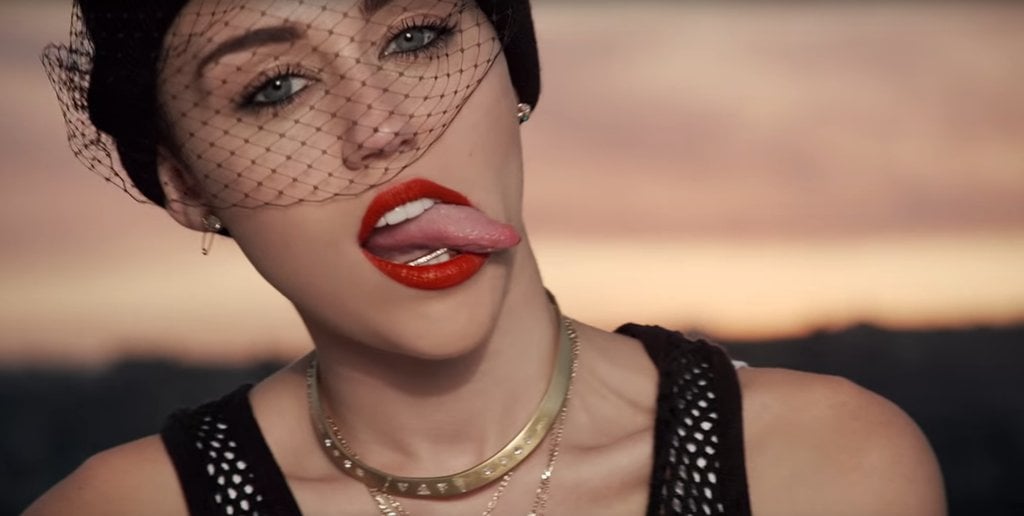
Miley's 2013 video for "We Can't Stop" previewed more coopting of black culture to come. In it, she sported a grill and twerked.
The Backlash: The video got Vice to declare that Miley Cyrus Needs to Take an African American Studies Class, writing: "It's hard not to come to the conclusion that Miley has a problematic view of what 'black' is."
The Response: As controversy continued, Miley said: "Look at any 20-year-old white girl right now — that's what they're listening to at the club. It's 2013. The gays are getting married, we're all collaborating."
In July 2015, Kylie posted a selfie with cornrows.
The Backlash: On Instagram, the response turned critical. The Hunger Games actress Amandla Stenberg even posted a comment explaining the issue: "When u appropriate black features and culture but fail to use ur position of power to help black Americans by directing attention towards ur wigs instead of police brutality or racism #whitegirlsdoitbetter."
The Response: Kylie commented back "@amandlastenberg Mad if I don’t, Mad if I do…Go hang w Jaden [Smith] or something." Since then, Kylie has continued to appropriate beauty looks traditionally popular with black women.
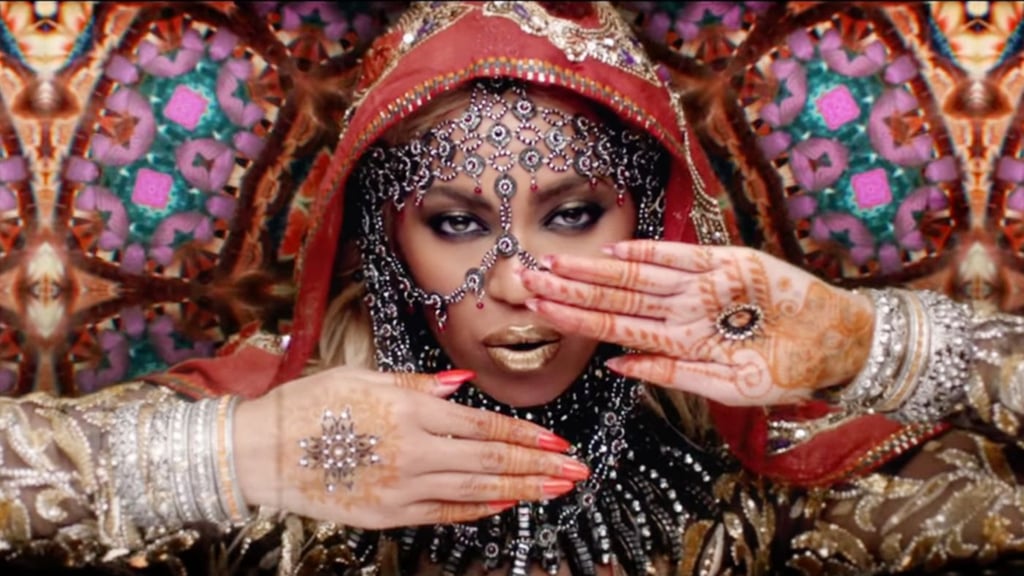
For their 2016 video "Hymn for the Weekend," Beyoncé and Coldplay's portrayed what some considered a simplified version of India. Beyoncé's costume included traditional Indian dress and henna.
The Backlash: Some people with Indian backgrounds called out Beyoncé for a look that perpetuated stereotypes. Others defended her as celebrating Indian culture. Coldplay, who shot their portion in Mumbai with an Indian cast and crew, also drew criticism in part due to similar critiques of their "Princess of China" video.
The Response: Beyoncé and Coldplay didn't respond to the controversy.
Khloé shared a photo wearing bantu knots and referred to herself as a "bantu babe" on Instagram in August 2016. Bantu knots originated among South African Zulu tribes and is a traditionally protective hairstyle popular with black women with natural hair.
The Backlash: People saw the post as yet another example of a Kardashian co-opting black culture without giving any credit.
The Response: After the critical response, Khloé deleted the photo and uploaded a new one with the caption "I like this better."
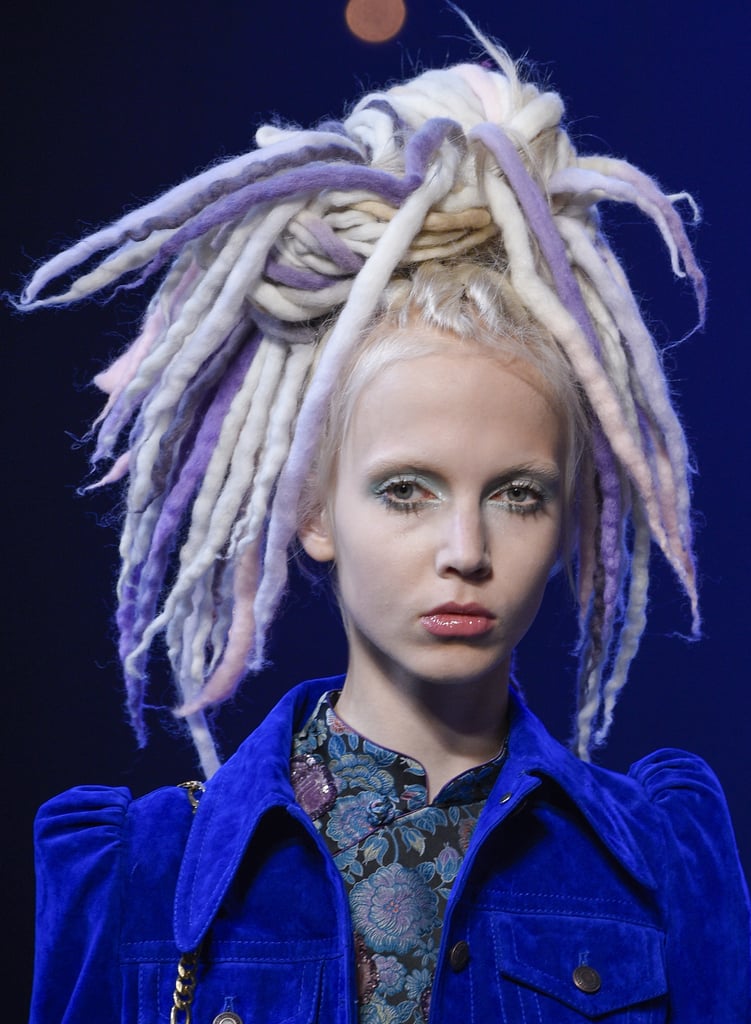
For his Spring 2017 show, Marc's models wore wool dreadlocks.
The Backlash: Many were upset the designer used a hairstyle associated with people of color on his predominately white cast.
The Response: On Instagram, he wrote: "All who cry 'cultural appropriation' or whatever nonsense about any race or skin color wearing their hair in any particular style or manner — funny how you don't criticize women of color for straightening their hair." Soon after that, he apologized for those comments and "the lack of sensitivity unintentionally expressed by my brevity."
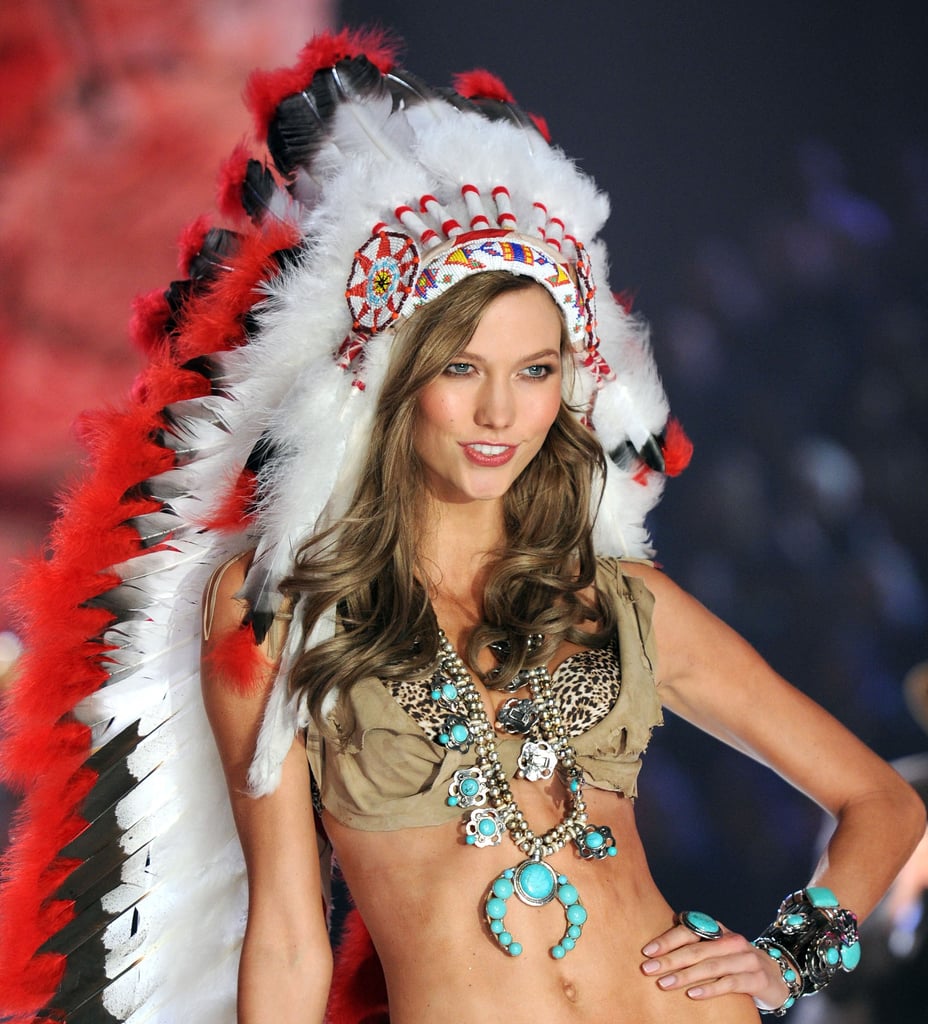
Karlie walked the 2012 Victoria's Secret runway wearing a headdress, leather underwear, and moccasin heels.
The Backlash: Headdresses or war bonnets have spiritual meaning, making the look insensitive. It also kicked off a larger conversation about appropriation. Native American groups said the look perpetuated stereotypes and ignored longstanding sexualization of Native women.
The Response: Victoria's Secret apologized and cut the look from TV. Karlie also apologized.
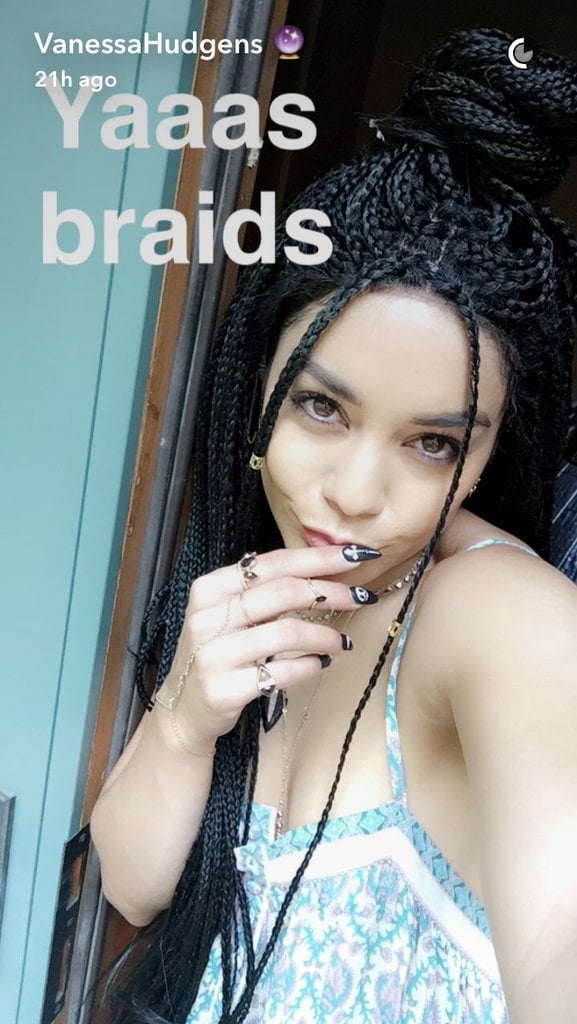
In a October 2016 Snapchat, Vanessa sported a lace-front wig styled with micro box braids, a plait popular among black women.
The Backlash: Fans immediately took to Twitter to call her out. Critics pointed out that when white celebrities wear traditionally black hairstyles without acknowledging it, it feels disrespectful. Especially since black women often field judgement for wearing the same hairstyles.
The Response: As with previous accusations of cultural appropriation, Vanessa kept quiet.
In January 2017, Pretty Little Liars actress shared a photo showing off her "baby hairs," a term deeply associated with African American and Latina beauty practices.
The Backlash: On social media people pointed out that baby hairs aren't simply bangs, but wisps of hair found at the edge of the hairline that many women of color slick down with gel as a stylistic or practical choice. Not only did she appropriate the style, but she got it wrong.
The Response: Lucy deleted the tweet and apologized on Twitter, writing: "Sorry guys — I would never mean to offend anyone. Honestly, my bad. I wasn't thinking."
While in Houston for the 2017 Super Bowl, Alyssa shared a photo of herself wearing cornrows.
The Backlash: The appropriately unimpressed reactions of the bystanders behind helped the image go viral. Many on social media disapproved of Alyssa co-opting a predominately black hairstyle.
The Response: Replying to one follower who told her to take out the disrespectful braids, Alyssa wrote: "I'm so sorry you feel this way. I celebrate and embrace differences with crazy amounts of respect and love."
In April 2017, the pop star shared a photo wearing cornrows and called herself "Katy Kardashian" while tagging the entire Kardashian/Jenner family.
The Backlash: Katy's history of unapologetically appropriating other cultures had the Internet fed up once again. If Katy wanted to give someone credit, it shouldn't be to the Kardashians.
The Response: Katy didn't reply to critics.
Kim sported a bobby pin look similar to a doobie wrap, which is used by women of color to keep their hair bouncy and neat following a wash and set.
The Backlash: After a member of her glam squad shared the pic in March 2017, women in the black and Latino communities pointed out the double standard: If they wore a doobie wrap in public they'd be categorized as "ghetto" or "unladylike." Meanwhile Kim gets credited for starting a trend.
The Response: Kim didn't comment.
In May 2017, Demi released a video for her single "No Promises." Demi's hair was styled in twists, similar to dreadlocks. It came a months after she shared a DNA test that stated she was 1 percent African, which upset many on social media.
The Backlash: Some accusing Demi of appropriating the traditionally black style. Others came to her defense, explaining that her hair was simply twisted.
The Response: Demi reacted by tweeting, "They were twists not dreads. #relax" and called her critics "hyper-sensitive haters." She also tweeted that the twists "looked f***ing rad anyway."