What's the Best Way to Treat Scalp Acne?
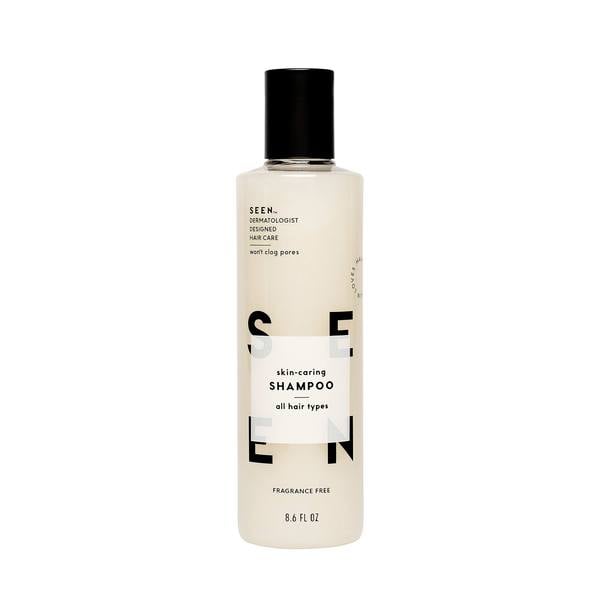
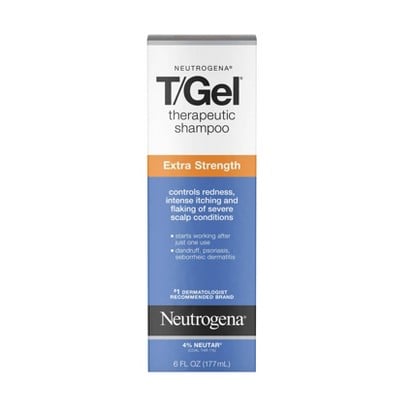
You can treat scalp acne with products that contain similar ingredients as traditional acne products. Dr. Rubin recommends using medicated shampoo with salicylic acid if possible, although you can also treat it with dandruff or skin-friendly shampoos like the SEEN Fragrance Free Shampoo ($29) and the Neutrogena T/Gel Extra Strength Therapeutic Shampoo ($11).
"Avoid applying products with excess oil, and make sure to wash your scalp regularly," Dr. Rubin advises. "Also, make sure your hair products are noncomedogenic (won't clog pores). It turns out hair-care products can leave a residue or an invisible film on your scalp, which has the potential to clog pores and cause acne or breakouts."
How Does Scalp-Acne Shampoo Work?
While scalp-acne cases may differ from person to person, there is once ingredient hailed for its effectiveness in treating acne: salicylic acid.
"Salicylic acid is an active ingredient that can be naturally derived from willowbark tree," Anita Sun, a medical aesthetician and founder of Dermovia, tells POPSUGAR. "It is a beta hydroxy acid (BHA) and is a gentle exfoliating ingredient that is also anti-inflammatory and antibacterial."
Because of these properties, shampoos with salicylic acid are great for combating scalp acne. "Salicylic acid is very beneficial for turning over dull skin to reveal brighter skin. It's effective in exfoliating away surface dead skin cells, and its sloughing benefit helps to reduce acne and prevent bacteria from spreading," Sun says. "BHAs are oil-soluble, so they can penetrate deeper into the skin to loosen and unclog oil sebum from pores."
How Often Should You Exfoliate Your Scalp?
There is a fine line to walk when it comes to exfoliating your scalp — you don't want to over-exfoliate and cause your scalp to produce more oils, resulting in more scalp acne. According to healthline.com, you shouldn't exfoliate your scalp more than one or two times per week. If you follow your normal scalp-exfoliating routine and find that your scalp acne persists, it's better to see a dermatologist than to ramp up your at-home exfoliation efforts.
How Can I Prevent Scalp Acne?
If you have breakout-prone skin, you can get ahead of scalp acne by washing your hair regularly and ensuring that you're keeping your hair and scalp free of any buildup of excess product and oil.
"Consider using a salicylic-acid shampoo periodically for prevention, if you are prone to scalp acne," Dr. Rubin says. "Use noncomedogenic hair products that won't clog pores and promote a healthy scalp."