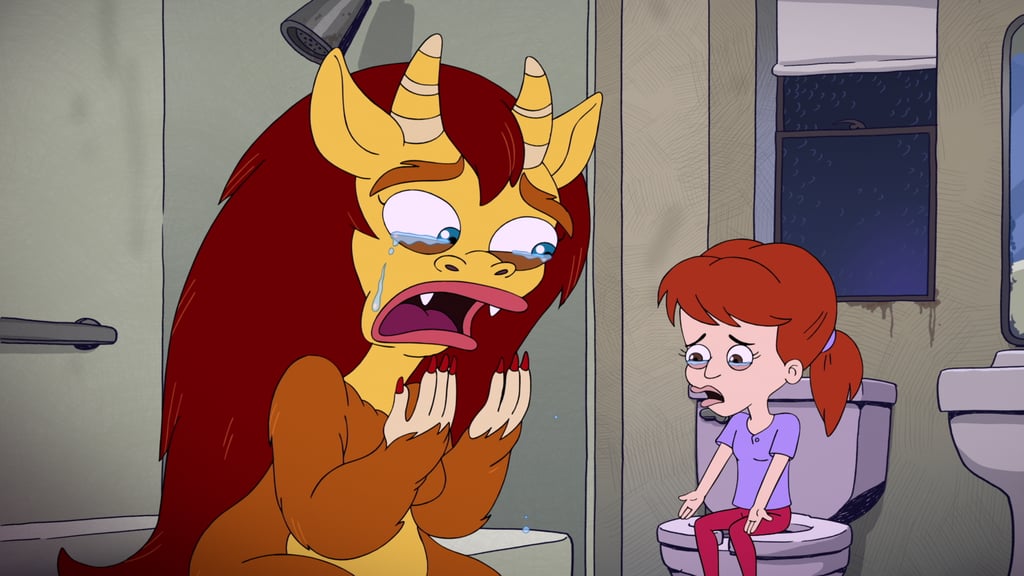
It's always maddening when people associate animated comedies with being "kid shows," because like BoJack Horseman and Tuca & Bertie, Big Mouth deftly examines serious issues in ways its live-action counterparts couldn't dream of (or have yet to attempt). Season two in particular spends a lot of time on the subjects of blossoming sexuality, self-esteem issues, and depression in young women.
In the case of the latter, Jessi comes face to face with the Depression Kitty, a fluffy purple character who serves as an anthropomorphized embodiment of depression. From being trapped in bed in the middle of the day to lashing out at loved ones, Jessi goes through a number of familiar stages of depression that were almost uncomfortably relatable for me. Luckily, in the end, she's able to recognize what she's going through with some help and voices her desire to see a therapist.
Since, according to the Anxiety and Depression Association of America, "girls are twice as likely to develop mood disorders as boys" and typically experience "persistent sad, anxious or 'empty' moods," Jessi is another bold step toward destigmatizing mental health for everyone, sure, but especially Big Mouth's young female viewers.
— QK