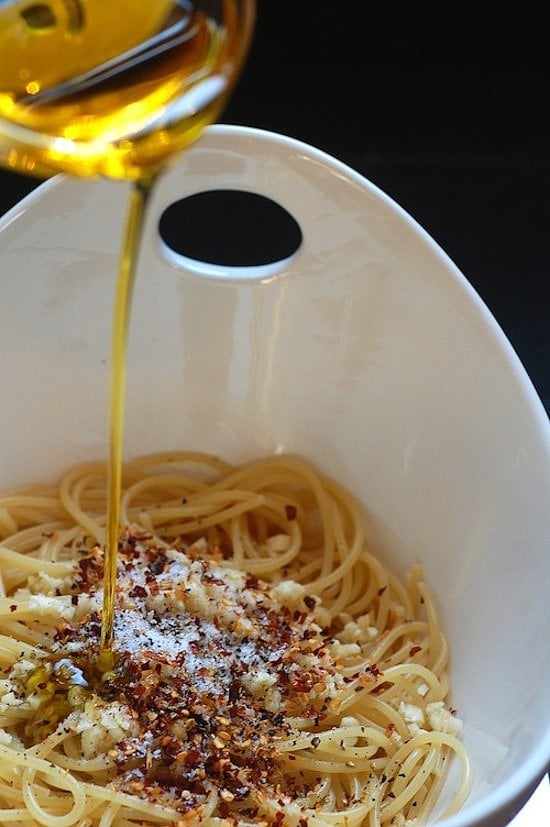
Buying whole-wheat or other alternative versions. I often buy organic brown-rice-and-quinoa pasta from Trader Joe's, and while the texture is not quite the same as regular pasta (it's a little chewier and nuttier), it's still tasty and gets the job done. Besides all the benefits associated with heart-healthy whole grains, a serving of whole-wheat pasta typically has 174 calories and seven grams of protein. Plus, per cup, it can provide up to 25 percent of daily fiber requirements.
Keeping portions in check. I know how tempting it is to make a big pot of pasta and load up your entire plate, but paying attention to portion size ensures you're sticking to your healthy lifestyle while still satisfying your pasta cravings. Since a serving is one cup cooked, that's plenty when you're adding enough healthy ingredients to it. Fill half your plate with pasta and half with a side dish like roasted veggies, and you'll save yourself from the carb coma and belly bloat later on.
Loading it up with fresh veggies. Pasta can basically be a salad, right? Not exactly, but making wise choices in what you put in your pasta dishes can make all the difference in their nutritional benefits. Instead of going heavy on the cheese sauces or Italian sausage, go for lightened-up recipes loaded with veggies and protein. You can even make delicious dairy-free alfredo sauce, pictured below.