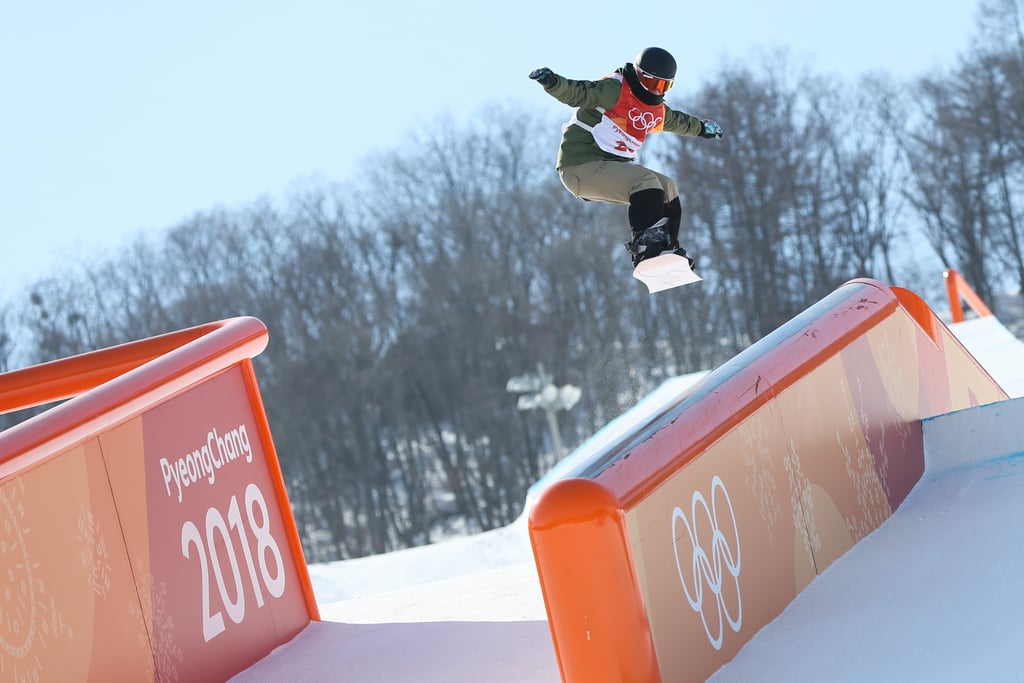
Slopestyle is one of the more complicated snowboarding events, from a judging perspective. According to NBC Olympics, a panel of nine judges is divided into four groups for this event: three pairs, each of whom judge tricks on an assigned portion of the course, and one group of three who evaluate the overall run. Sixty percent of the final scores — which are out of 100 — are based on trick scores, and the other 40 percent is based on "overall impression." Judges evaluate the following:
- Amplitude: This is a measure of the height or distance traveled, and having both too little or too much amplitude for a skill can be penalized.
- Difficulty: There are several different ways to make a trick more "difficult." Rotations and inverts help boost a skill's difficulty level, as do variations like spin directions or unique grabs.
- Variety: Athletes should mix it up, both in terms of the tricks they choose to do and how they choose to perform them.
- Execution: Control, stability, and fluidity are all key components here — it's about the quality of the performance.
- Progression: Under this category, athletes are rewarded for trying tricks no one else has done before, as well as for connecting skills in a way that's unique to them.