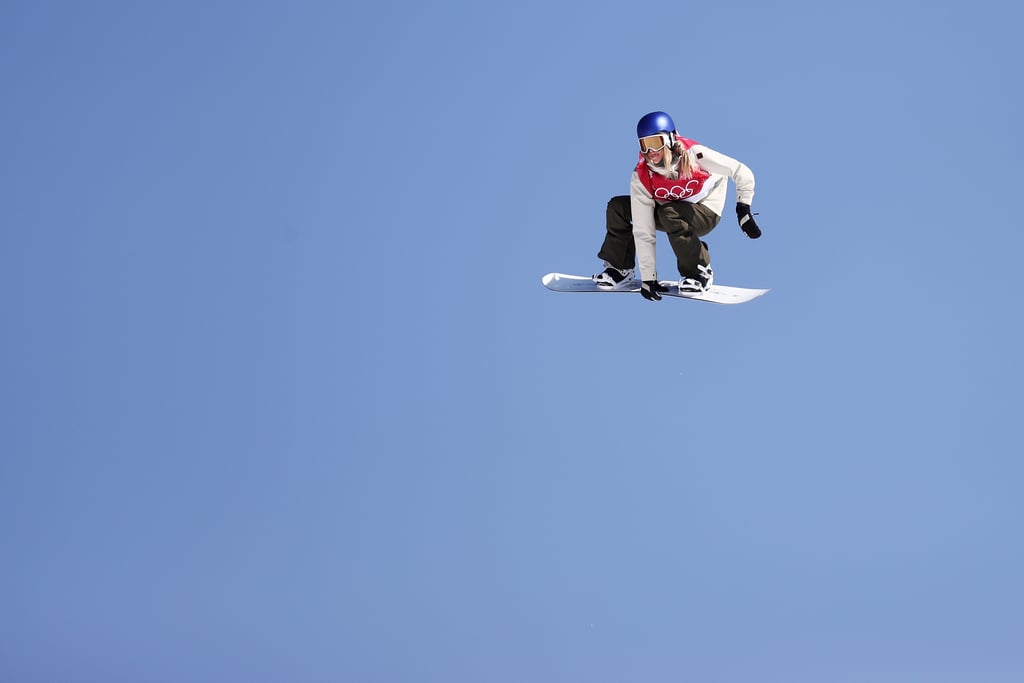
Big air, as the name suggests, focuses on airborne tricks and jumps. According to NBC Olympics, a panel of six judges evaluates each run, with each judge scoring the run between 1 and 100. The highest and lowest scores are discarded, and the remaining four are averaged for the run score. Unlike other snowboard disciplines, big air consists of one enormous jump, instead of several tricks strung together. Judges evaluate jumps based on the following criteria:
- Difficulty: As in other disciplines, there are several ways to make big air tricks more "difficult," including more rotations and unique grabs. Doing tricks other riders aren't doing will be also be rewarded.
- Execution: This category rewards great control throughout the run, including long, steady holds during tricks.
- Amplitude: These massive jumps can be risky, which means that athletes should get the right amount of height and distance (never too little or too much) to land a skill properly and safely.
- Landing: The landing is important for big air athletes. Judges will look for how well-controlled the landing is, as well as whether or not the trick is fully completed before landing.