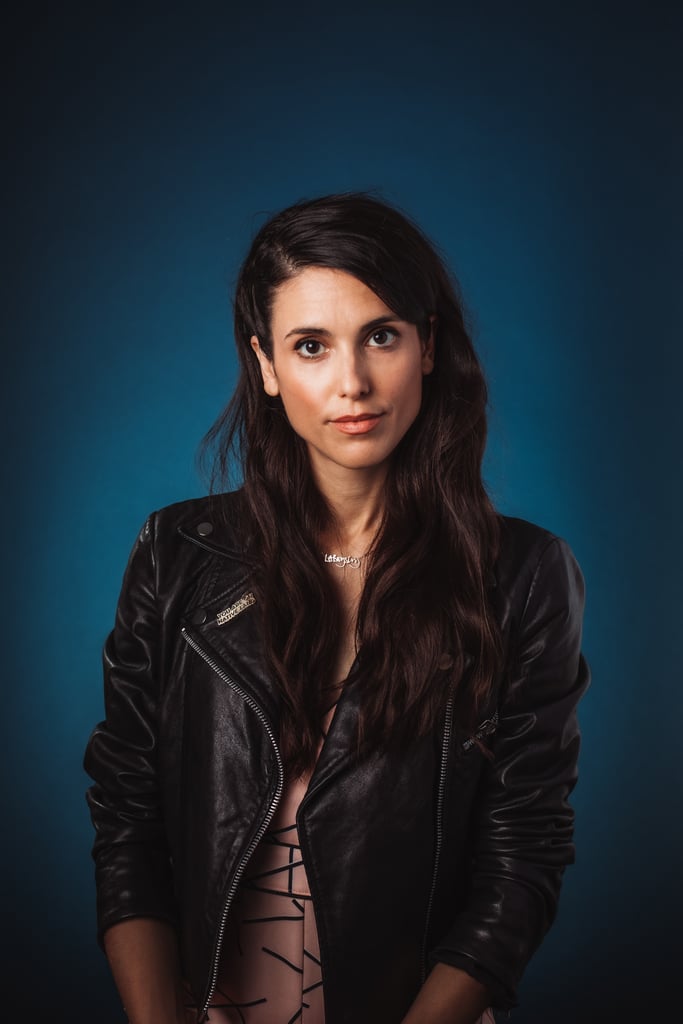
POPSUGAR: What has it been like reporting on abortion, an issue that so intimately impacts women?
Liz Plank: It's incredibly difficult. It's incredibly taxing. And at the same time, I'm very aware that it's also a privilege to be able to communicate my thoughts on this and to have access to the platforms that I have in part built, but also that I've been able to get access to.
I think the hardest part for me is that I feel so sad and hopeless, but I cannot show it because I know that if I show it, then it will impact how other people feel. In a way, I kind of feel like the flight attendants when there's turbulence who are just actually there to pretend everything's OK, to keep everyone from throwing up. The flight attendant that has to smile, and has to focus on making sure that people feel at ease and hopeful about the future. Because if we're not, it's the best gift that we can give conservatives and people who are anti-abortion and who are making these laws. . . . and it's very hard to focus on [other] work that I need to do when I constantly feel like there's so much that needs to be done in terms of delivering information to people on this.
"My agenda from the very beginning has just been to tell the truth. As long as that's what you're doing, you're being a great journalist."
PS: What's your take on journalistic bias in situations like these? Do you think it's possible to remain unbiased while reporting on abortion access as a woman?
LP: I think we don't understand what bias means and what objectivity means. I think the whole idea of objectivity in journalism is actually a myth. We all have subjectivity; we're all subjects living our lives, seeing the world through our own experience, and that's the most valuable thing that a journalist can do. Objectivity is not listening to both sides and giving them equal airtime — it's getting to the truth about all of the sides of an argument and all of the people who are affected by it and how they're going to be affected in their own unique way. So I resist this binary approach to any issue, but particularly to objectivity in journalism.
If you are a female journalist, you've been called biased. If you are a Black journalist, you've been called biased. If you are a trans journalist, a disabled journalist . . . all of the marginalized identities, they've all been told they have an agenda. But my agenda from the very beginning has just been to tell the truth. As long as that's what you're doing, you're being a great journalist.
At the same time, I think it's important to listen to people who are happy about Roe being overturned and understand why they're happy. There are some journalists who are actually listening to what people who are anti-abortion want, and they're providing really useful information for how progressives or women's rights activists can approach the conversations they're having with people who are anti-abortion. I'm seeing a lot of people share posts or talk about abortion in a way that would probably make sense to a person who has identified as pro-life their entire life, and maybe in that moment will be reached because of the way that the message is framed, because they're not being shamed. They're not being discounted. They're not being talked down to. They're actually being listened to.
I think it's important to frame those conversations in a way that is, again, truthful and in a way that doesn't give credence to people saying things that aren't true. But I also think there's actually a lot of use in listening to the other side.
PS: Have you been doing anything to protect your mental health the past few weeks?
One thing that I find really helpful is talking to older generations of women who have been through this. My parents were very politically engaged in their youth, so I often will call them and they'll remind me that progress is a squiggly line and that there are many moments that feel like we're going not one step forward, two steps back, but one step forward, 10 steps back. And that's actually a normal part of organizing. They'll remind me also that we all will probably not see the fruits of our labor in the way that generations of activists never really got to see how much their work impacted society. That helps me not focus on the outcome, but just focus on the process.
What else do I do? I mean, wine has been helpful, and being kind to myself in every possible way: exercising, anything that can prevent me from being on my phone. My nervous system is affected by all of this and already on edge all the time, so I'll do a lot of different body relaxation, body work, breath-work techniques. Stretching sometimes.
"It's really important we remember that we're in community: When you are resting, someone else is working, and while they're resting, you're working." — Liz Plank
PS: Do you find that it's possible to disconnect from the news cycle as a reporter who's so plugged in?
LP: I find it really difficult to disconnect, but I also feel like it's important that I do. If I run myself to the ground, I won't be available and be my most productive and come up with my best ideas. Activist burnout is a real thing. I think anti-abortion politicians are a really big problem, but the burnout of the progressive movement is an equally urgent problem for us to address and for us to think about. It's really important we remember that we're in community: when you are resting, someone else is working, and while they're resting, you're working.
PS: Is there anything else you'd like people to know about what it's like to be a woman journalist right now?
LP: Please be nice to a female journalist today and just be nice to another person today. There's not one job that's more important than another. We forget in a society that creates hierarchies, but everyone's job is valuable and important. It's just a good time to be nice to the people around you because you don't know what battle they're fighting. We all need everyone to be happy and healthy in order to have a good society that can support people in this really difficult time.