POPSUGAR: Can you describe your initial reaction to learning the news of Roe v. Wade's reversal on June 24?
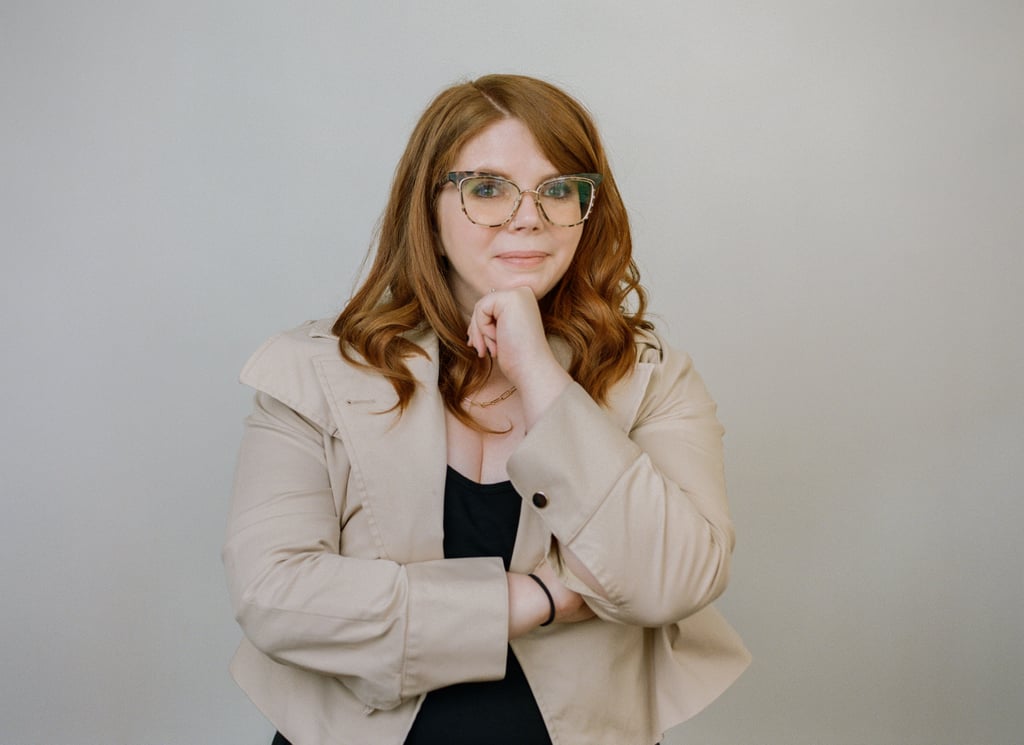
Becca Andrews: As a reporter who covers this stuff, I've been preparing for Roe to be overturned for several years now, but there's sort of no preparing for the loss of bodily autonomy like that. I went straight into reporter mode. My editor and I got up the prewrite that I'd been writing and rewriting for months, and then I remember just sort of staring at my computer and being like, "I don't know what else to do."
"This has been a uniquely emotionally taxing beat to be on." — Becca Andrews
For the next week, I was on the ground here in Tennessee and in Alabama. I think it took a minute to hit me, all that was happening, as a person. . . . I will also say as a reporter, almost every interview that I've had since the decision, the person who's been on the phone with me has cried. I'm used to doing pretty emotional interviews, but this has been a uniquely emotionally taxing beat to be on.
PS: What has it been like reporting on abortion, an issue that so intimately impacts women?
BA: Particularly as a woman living in the South, it's been hard. Before this, I was in California, but I'm from [the South], and the pandemic was really clarifying to me that it was time to come home and really invest in my community here and do reporting in the region that I care the most about . . . It's been weird coming to terms with how in Tennessee right now you can't get an abortion past six weeks. We have a 30-day period before a trigger law goes into effect banning abortion outright.
I'm seeing all this out in real-time, but now I'm also having these really serious conversations with my husband about: What do we want to do? Do we want to have children? Do we want to take steps to make sure that we can't have children? And I have to say, I really resent being put in this position where I'm having to have those conversations and try to make those decisions because of the government and not on my own terms, in the midst of covering this and talking to people who are in situations that are far, far, far worse than what I'm dealing with.
It's kind of surreal, going back and forth from trying to be this professional, composed person who's focused on the story, to having to think about this from a personal point of view and being the person that all of my friends come to because they're freaked out, too. They're like, "What the f*ck am I supposed to do?"
PS: Is there an abortion-related story you're proudest of reporting on?
BA: In 2019, I wrote a cover story for Mother Jones about the young woman who was a college student at Mississippi and had to go to Arkansas to get abortion care. The reason I have such feelings about that story is because it's what ultimately got me my book deal. . . . It was this whirlwind where I went from Little Rock to Jackson, MS, and I had been really struggling with identity, partly as a reporter at a national outlet where most of the people come from a very, very different class background and regional background than I do. That was the story that kind of reaffirmed to me that I still am who I am and I'm still Southern, and this is still where my heart is. I think it also helped me make the decision to move back here and do the work from the South.
PS: Is there anything else you'd like people to know about what it's like to be a woman journalist right now?
BA: I think a lot of women and people of color have dealt with this in newsrooms when we're covering the fallout of some loss of our rights or human-rights abuses based on gender or skin color or whatever it is. There's this pressure to seem like it's not getting to you, to seem like you've got it all together and that you can see the issues clearly and that you can handle it. It feels like there's this extra layer of people watching you to make sure you can handle it, to make sure you're not too weak.
I've really struggled with that, not only with repro stuff, but also reporting on sexual assault, that kind of thing. . . . I should also say I'm in a very privileged position in a lot of ways. I'm a white woman. I'm cisgender. There are a lot of things about my identity that protect me more than other people. I just want to recognize that we're having a conversation within that context.