POPSUGAR: In what capacity have you been covering the Supreme Court's decision to overturn Roe v. Wade?
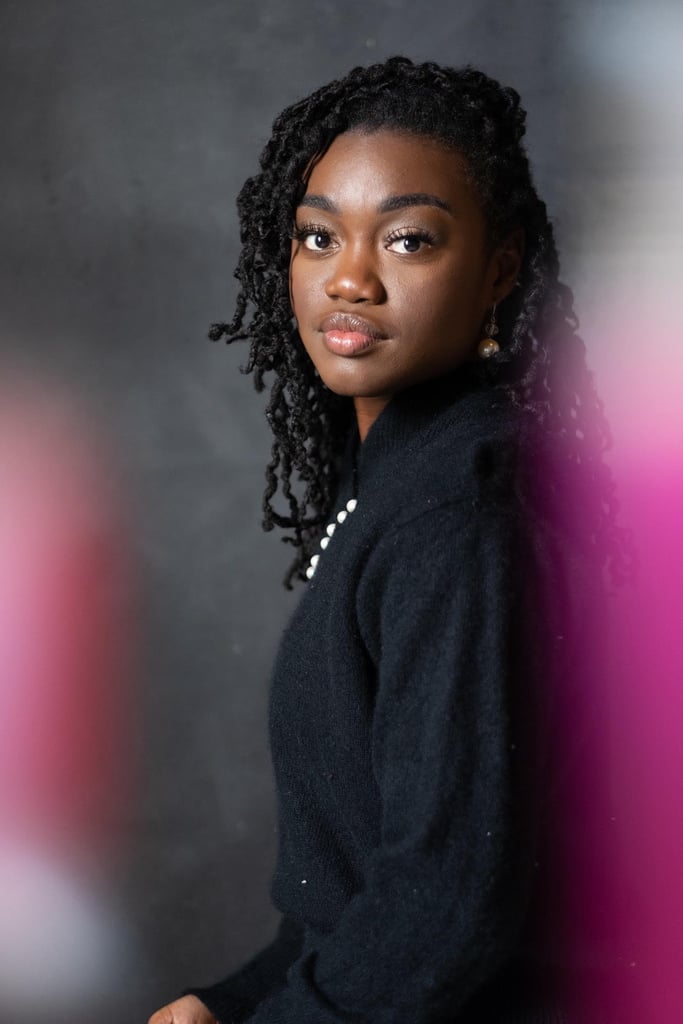
Kenya Hunter: One of the first stories we wrote was when the Politico leak dropped. . . . I've only been on the beat since January because prior to this, I was an education reporter in Richmond. I wrote a story that was centering on how whatever happened with Dobbs was always going to affect Georgia and what it means for Black people. The second story I wrote was about how 65 percent of abortions in 2019 in Georgia were made up of Black women. I was just surprised to learn that, and then thinking of the circumstances that put Black women and Black folks in that position to need an abortion, whether it's finances or high-risk pregnancy.
The last story we wrote pretty recently was about how the Atlanta City Council tried their best to defy the overturn of Roe v. Wade. . . . My colleagues Margo [Snipe] and Sydney [Sims] did a really great job centering how this is going to affect Black people because that's our entire mission: analyzing how certain things have an effect on Black people. Abortion is one of those topics across the country, but especially in Georgia.
PS: Can you describe your initial reaction to learning the news of Roe v. Wade's reversal on June 24?
I was interviewing someone else for a different story, and I had to cut our interview short. We were wrapping up, but I just said, "Hi, I actually have to hop off the phone because I just found out that Roe v. Wade was overturned." We knew that a decision was coming, so we were really prepared. I didn't really have an initial reaction other than, "I need to get to work."
"It's just something to be living in moments that you know will eventually be in history books." — Kenya Hunter
No matter what your position on it is, I think you're going to have a moment where you realize it's really remarkable because abortion is one of the most controversial topics in the nation. I'm 26 years old. When I was born, the decision of Roe was about two and a half decades old. It's just something to be living in moments that you know will eventually be in history books.
PS: What has it been like reporting on abortion, an issue that so intimately impacts women?
KH: They tell you to detach yourself from the reporting as much as you can. While I think to a certain extent, that's a valuable moral, I also think that my own identity as a Black queer woman shapes how I choose to report and who I choose to talk to. I'm from Georgia and I just moved back from Richmond, so coming back into the state during a time when abortion is the front-and-center issue, it's been interesting. But also knowing that Black women, that Black working people, are almost three times more likely to die than white women from pregnancy is really alarming to hear. It's also alarming to center in your reporting, to talk to people who know people who have died from pregnancy.
With abortion, there's been a statistic going around that overall, if abortion is outright banned, there would be a 21 percent increase in maternal death. But for Black women, it's 33 percent. That's also really scary to hear. So of course, as you're reporting, you wonder, "Is it appropriate for me to have kids? Is it something I'm willing to risk my life to do?" It's that feeling of wondering how your life will be altered based on decisions that politicians are making.
PS: Have you been doing anything to protect your mental health the past few weeks?
KH: I've been unplugging as much as possible. Skating has been really helpful too. . . . I've really been immersing myself in Atlanta skate culture. It's a really, really good community to be a part of. I've met some amazing and principled people. I skate every Friday night at my favorite rink, and it's gotten me out of the house.
I have a cat, his name's Derek. He's another thing that helps with my mental health, just having something to take care of. I got him because I was dealing with a lot of anxiety during the George Floyd protests. I think a lot of Black journalists were.
PS: Is there anything else you'd like people to know about what it's like to be a woman journalist right now?
KH: I just hope they give us grace. Journalists are some of the most important people on the planet . . . because without fair journalism, democracy would be dead. Being a woman, but not just any woman — being a Black woman and being a queer woman and being a woman who has disabilities — I'm in a particularly special place, and I can look at things from a really unique point of view that opens even Black people's eyes to different worlds. I do hope that people can just give us grace because it can be tiring out here.
We're not robots. We have emotions. I hope that people really understand that. In a time where things are just going haywire all of the time, whatever emotions you feel, imagine someone who's literally on the front lines asking officials, "How are you going to fix this?" For journalists, I just really hope that we are all doing our best to protect our mental health. All this matters, but your life also matters.