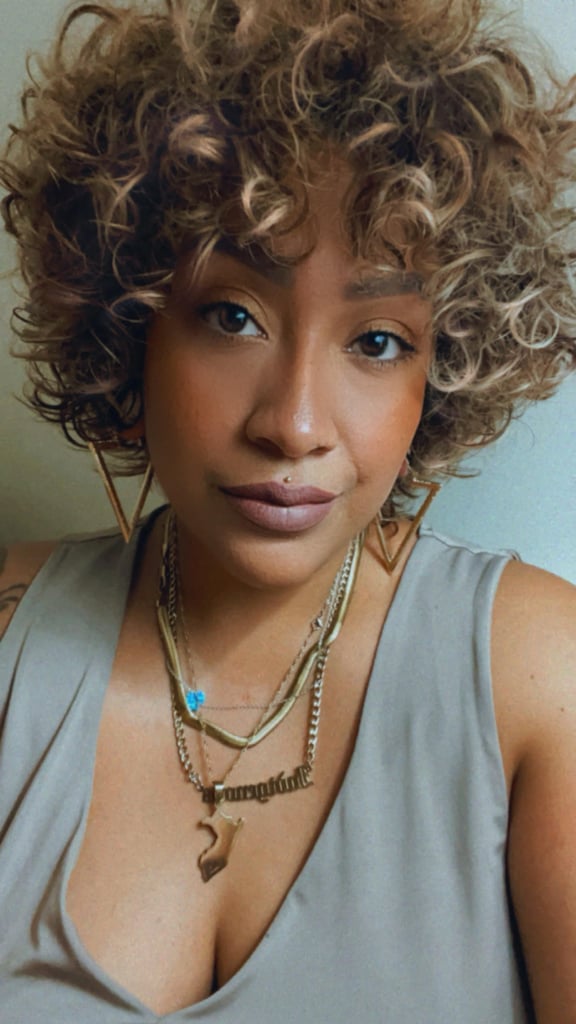
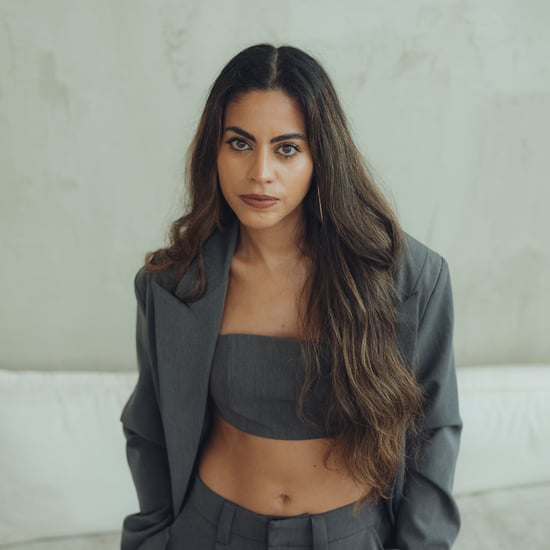
For 35-year-old Vivian Moran, her Afro-Indigenous identity has sharpened her self-awareness. Born in Callao, Peru, Aviles enjoyed hearing Afro-Peruvian music genres like festejo and zamacueca at family gatherings, as well as indulging in traditional foods: ceviche, papa a la huancaina, seco de pollo or seco de pato, and carapulcra. The refreshing, deep purple corn drink chicha morada, an Indigenous contribution to Peru, was also a staple.
But growing up in South Jamaica, Queens, the multimedia artist's proximity to other cultures within the African diaspora blurred the identity lines; the sounds of reggae, dancehall, and Motown, as well as Caribbean dishes like bacalao, found their way into her home. Given her lived experiences within the limits of Latinidad, "other" seemed like an appropriate box to check.
"I was too brown to be Latina, but I was also too brown to be white," she says. "But then I was too light-skinned to be Black."
However, after the loss of her paternal and maternal grandparents, Moran began digging deeper into her lineage and unearthing their stories. A cousin led her to her maternal grandfather's hometown of Cerro de Pasco and the largely Afro-Peruvian community of El Carmen, in the Chincha region of Peru, as well as her paternal grandmother's town, Sihuas.
"Now, when people ask me what I am, I always make sure to say I'm Black and Indigenous first, and Peruvian second," Moran says. "It's something that has to be done because if you don't, somebody else is going to do it for you. And I'll be damned if I'll get put back into that 'other' box."
As the first-generation podcaster archives her family's history, she plans to pass her findings on to her nieces. "This next generation is definitely going to change things," she affirms.