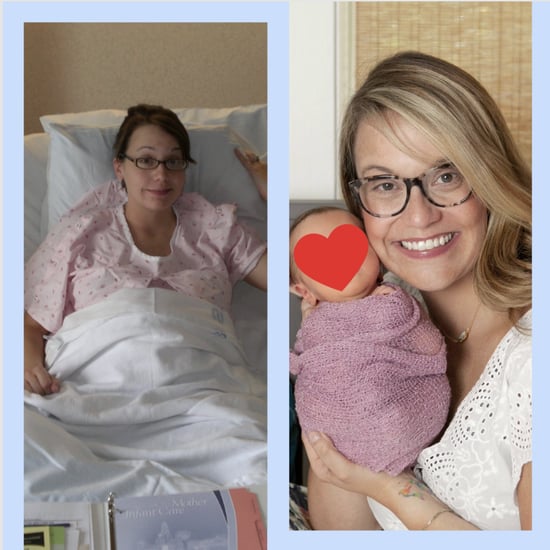
At 20 years old, Brittany Patterson, who is now 28 with a 6-year-old daughter and a 6-week-old son, experienced her third miscarriage. She was working in the small town of Wichita Falls, TX, at the time as a customer service representative at a title loan company, making about $21,000 a year.
Patterson, who had two very early miscarriages as a teen, was nine weeks into her pregnancy when she went in for a checkup and was told the baby only measured at six-and-a-half weeks. "That loss was the worst emotionally and physically. It was the only time I had seen my baby on the ultrasound monitor screen and was told there was no heartbeat," Patterson said.
"It was a work day for me, but I had taken the day off. There was no cramping or bleeding or anything to indicate it had ended. Not until the ultrasound technician came back with a radiologist who confirmed there was no heartbeat."
Knowing that she had carried the baby after it had stopped growing was traumatizing for Patterson. "I had a complete breakdown," she said. "To know I had carried it for so long and there was no life there was devastating."
Patterson was given the option of a dilation and curettage (D&C) procedure or waiting for the tissue to pass from her body on its own, and she opted to try to let things take place naturally because she was worried about missing work.
"I took the next day off work, too, but didn't want to go through surgery to take even more time off," she said. "When I told my supervisor I needed the next day off, she wasn't happy about it, but she agreed, and when I went back to work, it was like nothing had happened. She didn't ask anything, and it never got brought up again. It was very cold, very emotionless."
She found out the pregnancy was not viable five days before Christmas, and on Dec. 27, her body passed the remaining tissue that was left in her uterus. Patterson was thankful she didn't end up having to have a medical procedure, because she was worried about losing her job.
"You lose enough when you have a miscarriage, and if I would've lost my job on top of it, I don't know what I would have done," Patterson said. "I couldn't take the chance. It was not an option."
She added: "The company I worked for was run by a corporate office, and my supervisor didn't come in to the office very often. It was a really small office, with just me and three to four others, max."
Even though her supervisor was a woman, Patterson said she felt like her boss was not sympathetic to what she was going through, and she didn't get the support and time to recover that she needed.
"I had no paid time off at the time. I would have taken more time off if I could," she said. "I did try to put on a brave face, because it could always be worse, but when you go through it in that moment, it feels like the worst possible thing, like it can't get any worse."