Like with any category of skincare products, sheet masks runs the gamut in formulation and price — from $1 bargains to those that top $100. Making sense of such an extreme swing can be pretty off-putting for a single-use product.
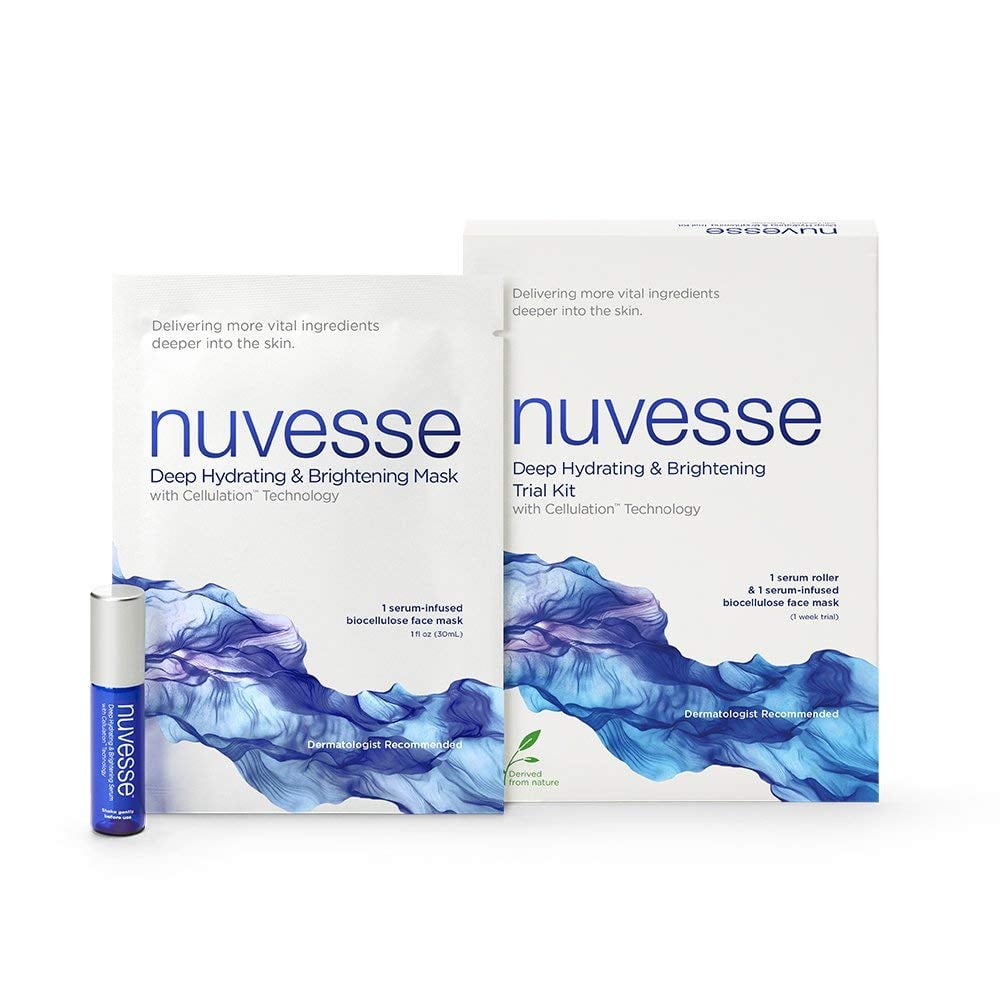
As Dr. Shah points out, the concentration of active ingredients plays a part. Some masks are soaked in little more than water, glycols, glycerin, and preservatives, while others boast more powerful actives, like hydrating hyaluronic acid, brightening niacinamide, or antioxidant-packed resveratrol. Though rare, Dr. Waldorf notes that some sheet masks are identified with the concentration of actives inside, saying, "Nuvesse has the science to show it has the equivalent of 30ml of hyaluronic acid."
The other major variable to consider: what the sheet mask itself — not the serum its soaked in — is made from. Paper-based masks may be easier on the wallet, but harder to mold to the face than gel, coconut fiber, bamboo, or biocellulose options. While Dr. Shah tends to recommend biocellulose and hydrogel options, Dr. Waldorf suggests that any material can make for a good choice, as long as it's comfortable. "The key is trial and error," she says. "Look for options that are easy to apply and stay on well instead of sliding off in a gooey, slippery mess."