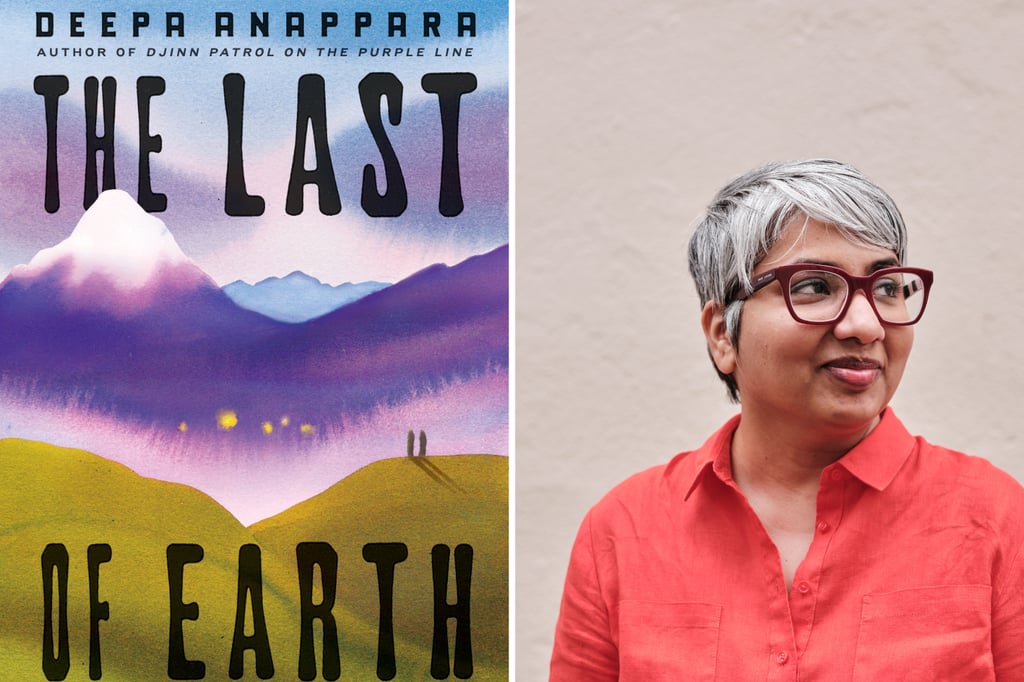
"The Last of Earth," coming January 2026
Popsugar: "The Last of Earth" has been praised for its divergence from the "European fantasy" of Tibet. How does the Tibet of "The Last of Earth" differ from those orientalist portrayals, and why does that matter to you?
Deepa Anappara: As a writer from a colonized country, I am aware of various stereotypes about my part of the world, and have not only resisted those but have actively attempted to challenge them in my writing. I previously co-edited a collection of essays on writing, race, and culture, titled "Letters to a Writer of Color," specifically addressing the expectations and burdens placed on writers of color to be representatives of their communities, or cultures. I believe that my responsibility as a writer is to my character, and I try to show the world as they see it.
PS: Popsugar readers are especially fascinated by complicated friendships. What lessons about friendship and community do you hope readers of "The Last of Earth" take away?
DA: It was interesting through the novel to explore the relationship between the colonizer and colonized, which, despite how it may appear at the surface-level, can never be a friendship because of the differences in power. "The Last of Earth" also examines the relationship between two men working for imperialist British officers, and how their relationship might be affected by the fact that they are beholden to an Empire that sees them as second-class citizens. These questions, I think, are relevant even today, in how many governments hold on to power by underscoring the differences between people who might otherwise have been friends.
PS: What draws you to this specific style of historical fiction as a genre?
DA: The history of India has been mostly written [by] the British, who ruled the country for over two centuries. I was interested in reconstructing the experiences of Indians at that time, because this is something you don't find in historical records and archives. The historical fiction genre allows you to recreate a particular period of history from a point of view that might have been ignored or suppressed; it gives you a new way of understanding not just history but also the contemporary world.
Book blurb: "Set in nineteenth century Tibet, the epic follows two outsiders: Balram, an Indian schoolteacher spying for the British Empire while secretly searching for his missing friend; and Katherine, a fifty-year-old English 'lady' explorer who intends to be the first European woman to reach Lhasa. When their paths collide, they must contend not only with storms and bandits, snow leopards and soldiers, fever and frostbite, but also with their own ambitions, grief, and doubt."