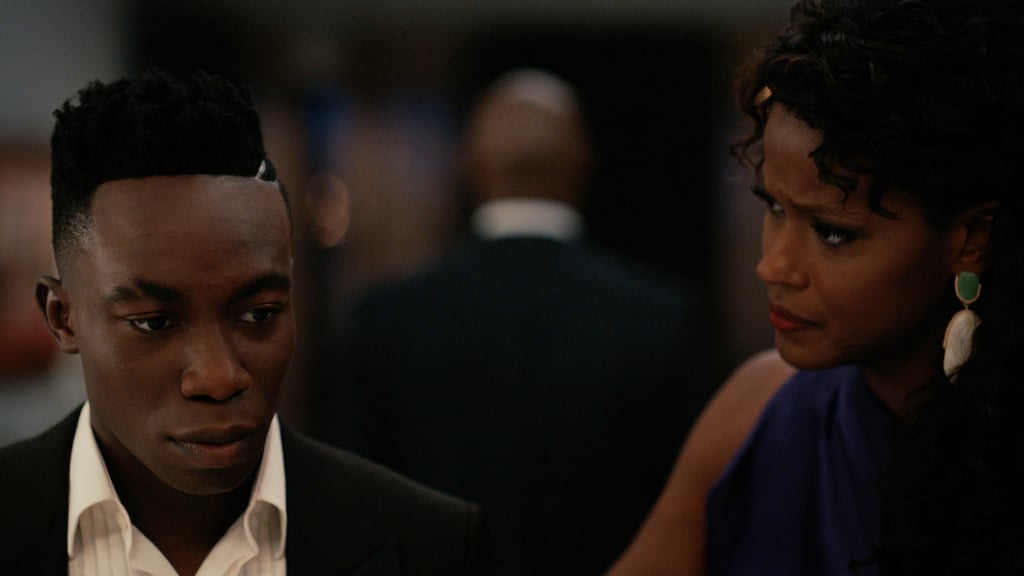
Carlton's story arc around mental health has been a major storyline in season two, and it's something Banks-Waddles says she and the writers didn't want to abandon so soon without fully exploring. "I felt like there was a version of Carlton this season where we could have let it go. We could have ended last season with him in a better place, but that didn't feel authentic to what that journey should be, and that it's not that easy," she explains. "So we really wanted to take this season to show how that journey is really two steps forward, three steps back . . . it's not a straight path to healing."
Rarely do we see characters like Carlton — a young dark-skinned Black boy growing up in America — have a chance to explore their emotions so candidly onscreen. Banks-Waddles said "Bel-Air" didn't intentionally set out to tell such a passionate story this way but shifted gears after "realizing the impact of seeing these young Black men be vulnerable."
As for how Carlton ends season two, she says, "We really just wanted to create space to see more about that journey and not let it go. And then, ultimately, have him end in a place that feels like he's in a better place even though he's at his lowest."
As Sholotan previously told POPSUGAR, Carlton ends season two in "the most vulnerable and most raw place that we've seen him." It's unclear whether the show's third season will pick up with him in rehab, as we saw his mom Viv researching inpatient centers in season two's finale, but Banks-Waddles teases that the show will likely "want him to find some healing" to get him back on "a journey to being a better version of himself."