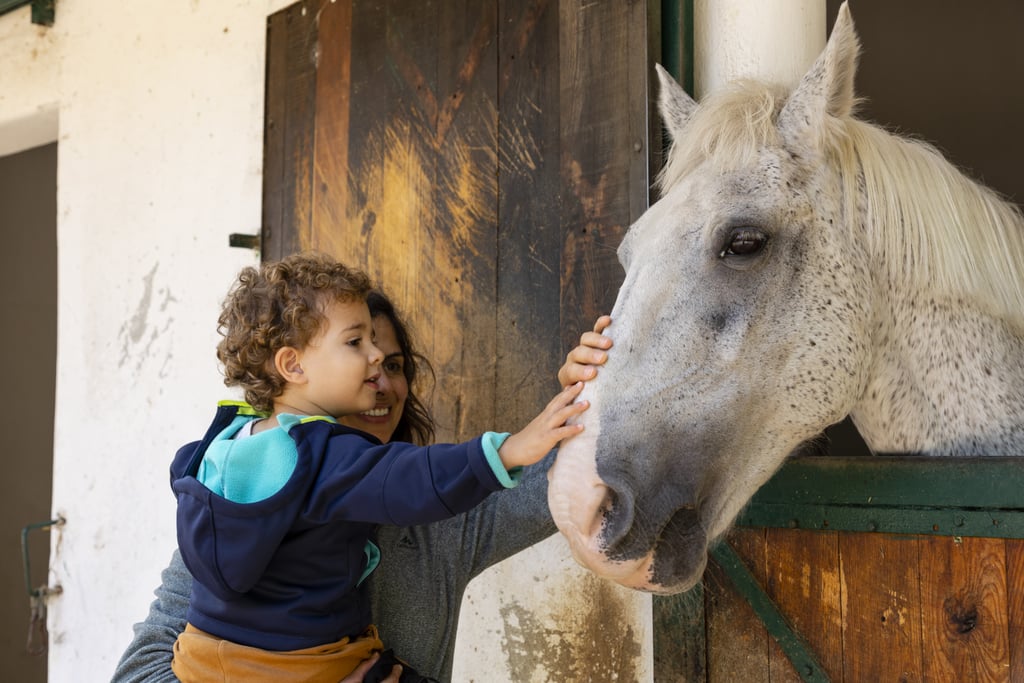
Head to a local farm. Local farms allow toddlers and families to see and learn about animals and pick out local produce for future meals.
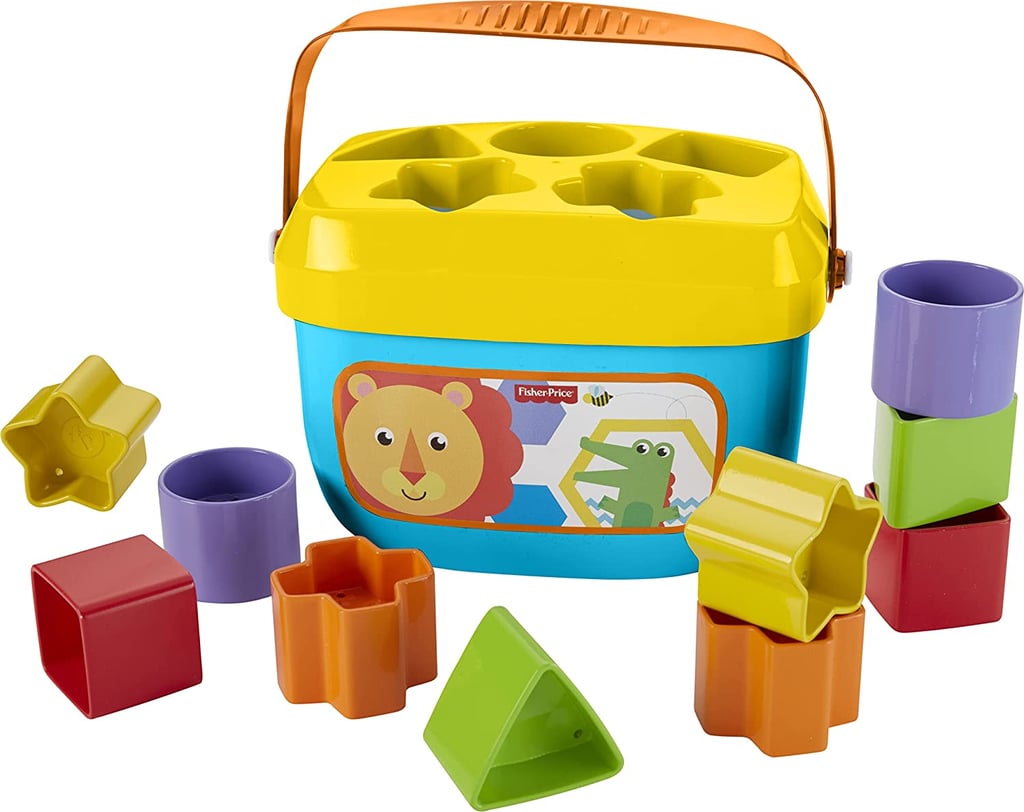
Shape sorting. Shape sorters — like the Fisher-Price Stacking Toy ($10) — teach spatial awareness and work on motor skills.
Sort household items. You don't even really need a shape sorter to teach your kids about things that are the same and different. So many household items work, from coins to different types of produce.
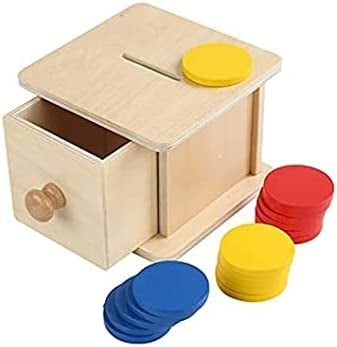
Coin box. Real coins are not required — wooden ones like the Adena Montessori Coin Box ($19) are a staple in Montessori homes. Like shape sorting, they refine motor skills.
Nature arts and crafts. Consider combining a nature walk with creative fun. Pick up leaves, acorns, twigs, or pine cones, and create art together.
Aquarium. A trip to a local aquarium is more than just a way to keep a toddler entertained. They can start to learn about marine life and the world under the sea.
Feed a pet. Young toddlers can start to get involved in helping with the family pet. Having them scoop and pour in kibble or bring you the water when it's empty teaches them about caring for someone else (and math if you count scoops together).
Emotional awareness. Learning how to identify emotions sets the table for relationships and can help minimize toddler meltdowns. Slumberkins' books tackle an array of issues that bring up big feelings, from divorce to conflict resolution.
Mix colors with food coloring. Breathe new life into the food coloring you bought to make Easter eggs. Fill a few cups with water and drop different colors into it, showing your child how, for instance, blue and yellow combine to make green.
Set the table.Older toddlers can put their own plates and silverware out. You can even teach them to safely carry yours (or put napkins out for the family if you're uncomfortable with that).