According to Dr. Helen Hadani, director of research for the Center of Childhood Creativity and EAB member at The Goddard School, "Adventure playgrounds encourage risky play with structures, materials, and a variety of surfaces that challenge children to explore and take risks. They have many "loose parts" for children to create and build rather than play on something that someone else built."
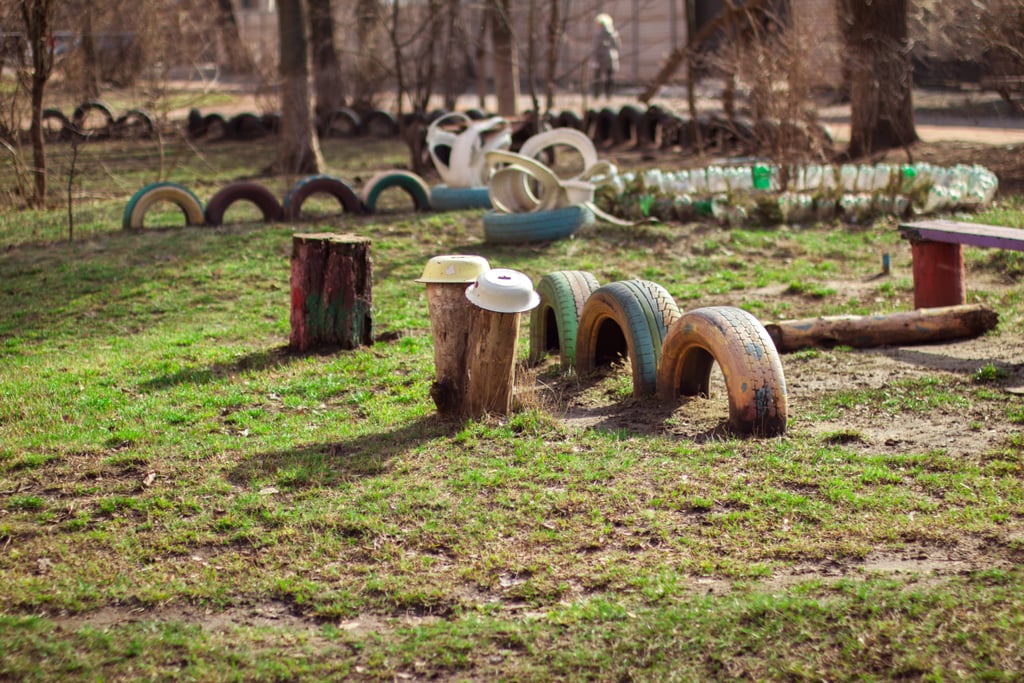
Adventure playgrounds are sometimes even referred to as "junk playgrounds" or "nature playgrounds" because kids can play amongst a hodgepodge of tires, logs, sand pits, mud puddles (bring a change of clothes!), large boxes or blocks, and other untraditional playground elements. This lies in contrast to prefabricated playgrounds, which offer guided play options like swings, slides, and monkey bars, and are built with safety, not creativity, at the forefront.
By utilizing these elements of nature, found objects, and sometimes even tools, adventure playgrounds allow for more self-directed, imaginative, and yes, risky play than most contemporary playgrounds.