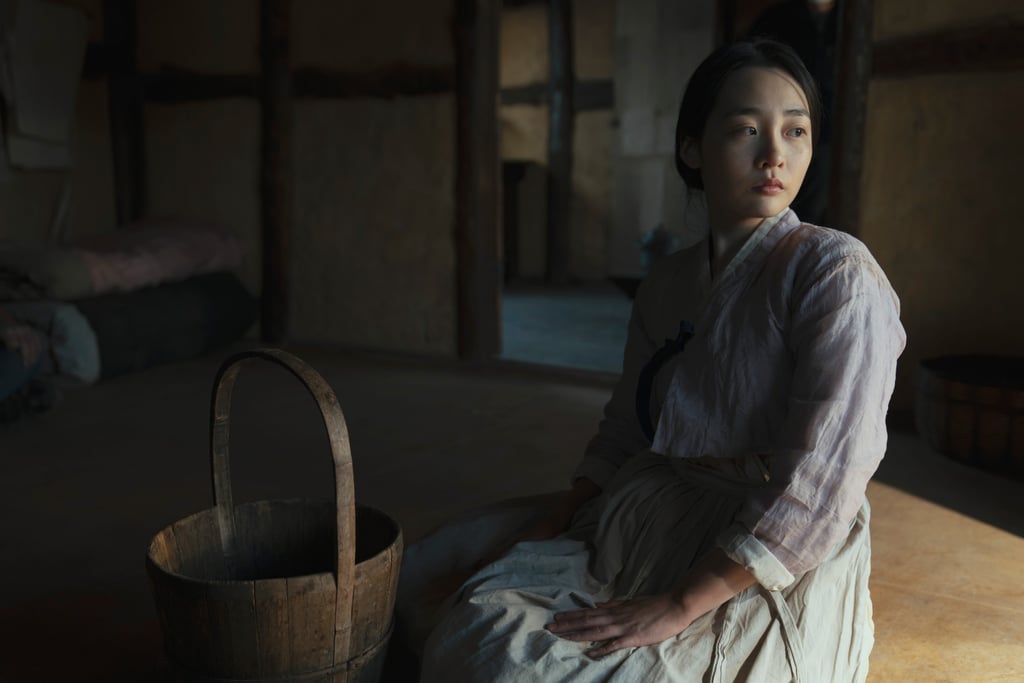
While hanboks are known to most as colorful, traditional Korean dress often worn for special occasions, the mostly custom hanboks we see in "Pachinko" are relaxed, worn-in, and of soft, light hues.
"This traditional garment really captures the story and the identity of the Korean people," Chae says. "The hanbok may seem similar across different time periods, but actually, there is quite a subtle difference in the jeogori (the hanbok top), blouse, skirt, and goreum (the ribbon used to tie the blouse). In these small details, we wanted to make sure everything was accurate, so we received very thorough advice from our historians and our advisors."
She adds: "During the Japanese colonial rule, we were known to wear and love the color white; Koreans are known as 'the people of white clothes.' The basic concept inspiration for the wardrobe started from white, which also symbolizes the people of Yeongdo's resistance to the Japanese. I wanted to make sure the clothing fabric was of soft color tones, like a watercolor kind of vibe. The color of Sunja's purple jeogori is similar to shade of the mugunghwa, Korea's national flower. This is significantly different from those flashy, shiny clothes and hanboks that you would see in other previous period dramas that feature the royal family."