Flu Symptoms 2018
This Year's Flu Is Exceptionally Bad — Here's What to Watch Out For

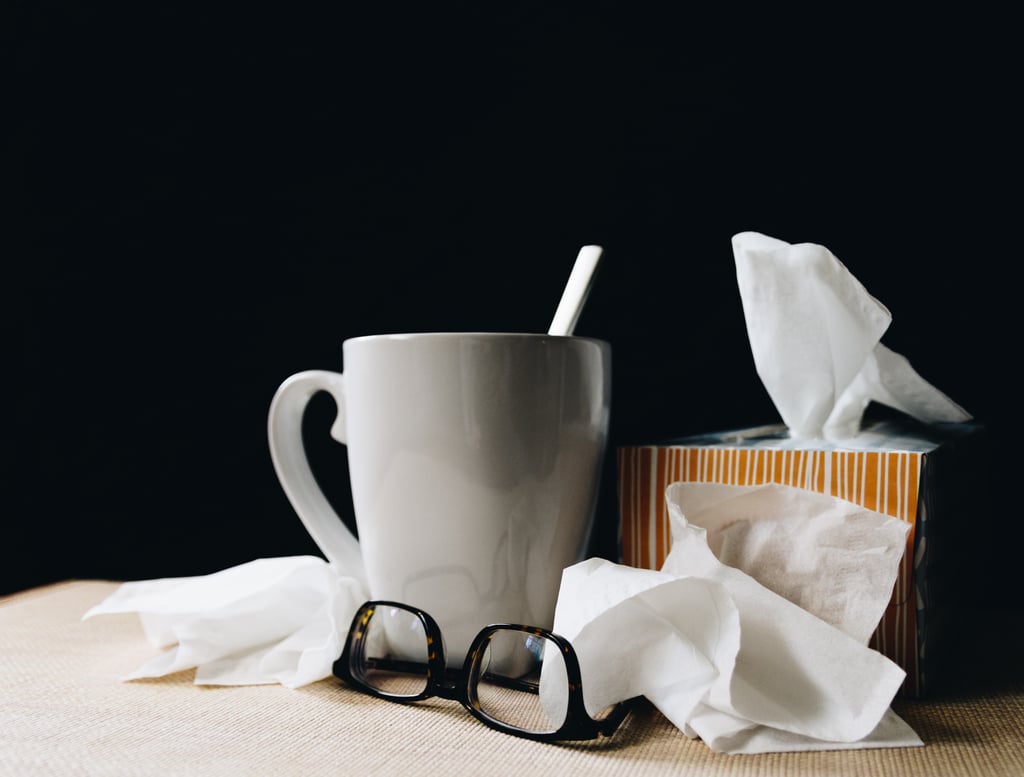
What to Do If You Catch the Flu
Dr. Helen Ewing, Dean of Nursing at Carrington College, told POPSUGAR that treatment for the flu should include getting plenty of rest, drinking fluids to stay hydrated, and taking over-the-counter medications to manage the symptoms.
"Some people find the use of steam helps relieve the coughing and respiratory congestion through adding a teaspoon of an over-the-counter menthol rub to boiling water and breathing in the steam for several minutes," Ewing added.
She said that because your body will typically fight off the virus on its own, it's not usually necessary to seek medical attention — but there are certainly exceptions, and it's crucial to know when it's time to contact your doctor.
"It is important to seek medical attention if you cannot drink enough fluids and become dehydrated, or if the flu symptoms are not going away and are worsening as this may indicate flu complications," Ewing explained. "Pneumonia, an infection of the lungs, is one of the most serious complications of the flu. Untreated, it can be life-threatening. Other possible complications are bronchitis, an infection of the airways, and sinusitis, an infection of the sinuses."

Chopra and Camins also said it's not usually necessary to seek medical attention — but Chopra added the caveat that "high-risk" individuals should get a prescription for antiviral medication. People in the high-risk category include children under 5 years of age, adults 65 years or older, pregnant women, residents of nursing homes, American Indians, and Alaskan Natives.
Camins noted that it's important to speak with a doctor before leaving your home. "If any of your symptoms are abnormally severe, call your healthcare provider to get medical advice on what to do before leaving your home. They may recommend for you to visit your local hospital, or may suggest staying home. It's important to defer to their professional opinion," he said, adding that securing a prescription for an antiviral can be done over the phone rather than by visiting a crowded facility.
When you're infected, Camins said it's essential to practice "respiratory etiquette." This includes avoiding crowds, washing your hands frequently, and staying home from work or school for at least five to seven days.